10 Key Questions to Ask a Builder Before You Hire in 2025
Choosing the right builder is less like hiring a contractor and more like entering a long-term business partnership. You're entrusting someone with your vision, your budget, and the place you’ll call home or build your enterprise. A great builder constructs trust long before they ever pour a foundation. They welcome scrutiny and understand that the most important tool in their belt is clear, honest communication. Asking the right questions to ask a builder isn't about being confrontational; it's about being prepared and creating a solid framework for a successful project.
At South Eastern General Contractors (SEGC), our 21+ years of proven results building legacies across Fayetteville, Lumberton, and beyond have taught us that informed clients are the best partners. As a Native American-owned, 8(a), and HUBZone-certified firm, we've built everything from community centers to complex commercial projects, and every single one started with a conversation rooted in trust. This guide is designed to arm you with a comprehensive checklist of questions that go beyond the surface. These are the inquiries that uncover a builder's true character, process, and commitment to quality. Let's dig in and empower you to find a partner truly worthy of building your future.
1. Licensing, Insurance, and Credentials: What's Your Proof of Professionalism?
Asking if a builder is "licensed and insured" is table stakes, but you need to dig deeper. Think of this step less like a checkbox and more like a background check for the partner you're about to trust with a significant investment. A simple "yes" isn't enough. You want to see the documents, check the dates, and understand what they actually cover. This initial checkpoint separates the legitimate professionals from the risky operators faster than anything else.
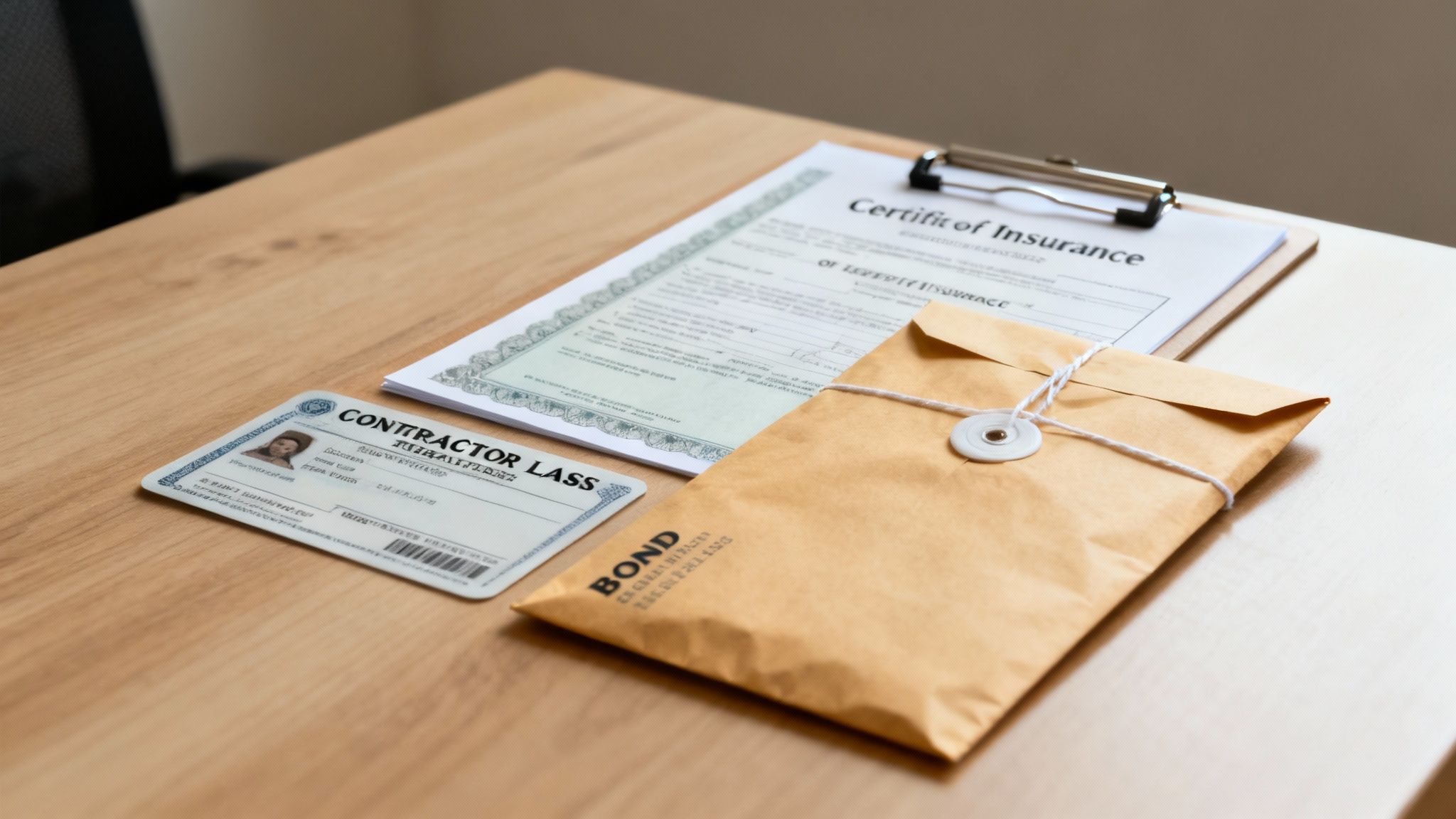
This paperwork is your shield against financial and legal disaster. For instance, without adequate workers' compensation insurance, you could be liable for injuries on your property. Inadequate liability insurance could leave you holding the bag for accidental damage. At SEGC, our transparency is paramount. Our 8(a) and HUBZone certifications demonstrate a level of federal vetting that provides an extra layer of confidence for our clients in Fayetteville and beyond. It’s a core part of our commitment to accountability and building trust.
Your Action Plan
To properly vet a builder's credentials, take these actionable steps to verify everything:
- Request a copy of their state and local business licenses. Then, contact the issuing board directly to confirm the license is active and in good standing.
- Ask for a Certificate of Insurance (COI). Call the insurance agent listed on the certificate to verify the policy is current and the coverage limits are sufficient for your project.
- Verify Electrical Expertise. If electrical work is involved, ensure they meet all electrical contractor license requirements or have a properly licensed subcontractor.
- Check Certifications. Ask about any special certifications like HUBZone or 8(a) status, which indicate a higher level of vetting and commitment to community impact.
2. References and Past Project Track Record
A builder’s portfolio is their resume, but references are the real-time performance review. While fancy brochures and polished websites show their best work, talking to past clients reveals the truth about their process, communication, and ability to handle the unexpected. This step isn't just about getting a list of happy customers; it's about uncovering the patterns in their performance. You want to know if they truly deliver on their promises when the dust settles.

Hearing directly from previous clients provides invaluable insight into what it’s like to work with a builder day-to-day. Did they stick to the budget? Was the site kept clean? How were challenges handled? At SEGC, we encourage potential clients to not only review our portfolio of projects across Fayetteville and Lumberton but also to speak with past clients. We believe our reputation for building lasting relationships is just as important as the structures we create, reflecting over two decades of proven results and trust within our community.
Your Action Plan
To get an unvarnished view of a builder's track record, use this strategy to go beyond surface-level questions:
- Request 3-5 recent references for projects similar in scope and budget to yours. Ask if you can visit a completed project to see the quality firsthand.
- Ask targeted questions when you call references. Go beyond "Were you happy?" Ask: "How did they handle problems?", "Was communication clear and consistent?", and "Would you hire them again without hesitation?"
- Check subcontractor and supplier references. Ask the builder for the names of a few key trades they work with. A builder who pays their partners on time and treats them well is more likely to run a smooth project.
- Investigate their online reputation. Look at reviews on Google, but also ask local leaders or business groups about the builder's community impact and reputation.
3. Financial Stability and Payment History: Are They Financially Sound?
It might feel awkward to ask about a builder's finances, but this is one of the most critical questions to ask a builder before signing a contract. A financially unstable contractor can become your nightmare, leading to project abandonment, shoddy work from unpaid subcontractors, and even mechanic's liens placed on your property. You're not just hiring a crew; you're entering a significant financial partnership. A builder's ability to manage their own money directly reflects their ability to manage yours.
A builder with a history of unpaid suppliers or bankruptcy filings is a major red flag. This indicates poor cash flow management and broken relationships within the local industry. At SEGC, our 21+ years of building in communities like Fayetteville and Lumberton are built on a foundation of financial integrity. We maintain strong, long-term relationships with our subcontractors and suppliers because we pay them on time, every time. This financial reliability ensures your project runs smoothly without delays or legal entanglements. It’s how we build lasting legacies.
Your Action Plan
Dig into a builder's financial health with these actionable insights to protect your investment:
- Ask for trade references. Request contact information for 3-5 of their primary suppliers or subcontractors. Call them and ask if the builder pays their bills on time. This is a direct measure of their integrity.
- Check for mechanic's liens. Visit your county recorder’s office or website to search the builder's name for any past or current liens. This is public information.
- Run a business credit report. Services like Dun & Bradstreet can provide a report on the builder's payment history and overall financial risk profile.
- Inquire about their project load. Ask how many projects they are currently managing. A builder stretched too thin may be using funds from one project to cover costs on another, a risky practice known as "robbing Peter to pay Paul."
4. Construction Timeline and Project Scheduling
"When will it be done?" is one of the most critical questions to ask a builder, but a vague answer won't cut it. A professional builder doesn't just give you a date; they present a detailed schedule showing how they'll get there. This isn't just about managing your own move-in day excitement. It's about understanding how delays are handled, how milestones are tracked, and how your project stays on the rails from groundbreaking to final walkthrough.
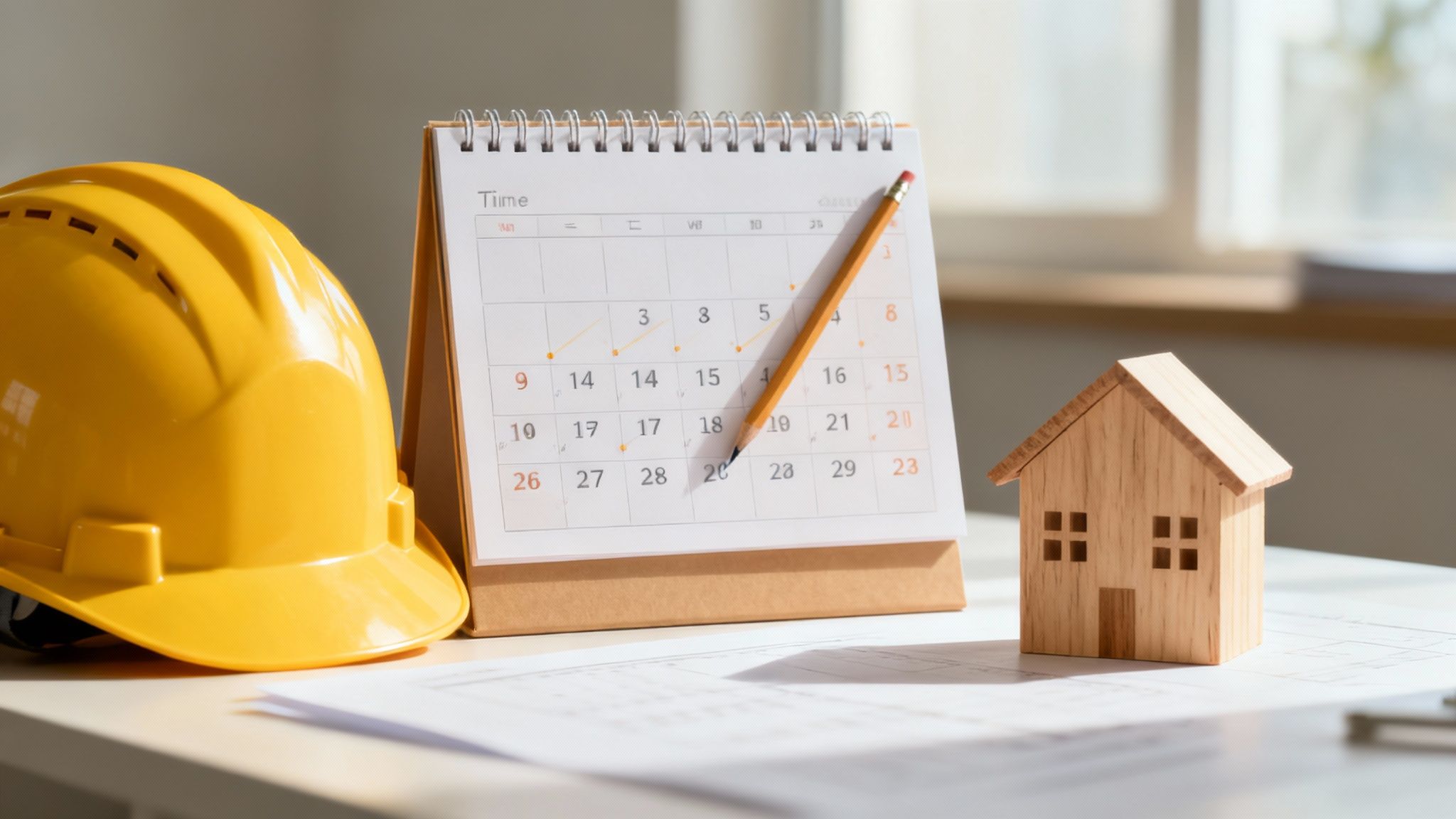
A well-defined timeline is your roadmap to a stress-free build. It prevents costly misunderstandings and holds everyone accountable. For example, a commercial build should have clear monthly goals, from foundation pour to framing to interior finishes. At SEGC, our 21+ years of proven results in the Fayetteville area have taught us the importance of disciplined project management. We use modern tools and a clear process to ensure our clients always know where their project stands, and you can learn more about our approach to effective construction scheduling here. This detailed planning is how we build legacies, not just structures.
Your Action Plan
To ensure your project timeline is realistic and reliable, take these actionable steps:
- Request a written schedule with a firm start date, key milestones, and a projected completion date. Vague estimates are a red flag.
- Discuss the "what-ifs". Ask how they handle delays caused by weather, supply chain issues, or subcontractor availability. Who is responsible for any associated costs?
- Clarify change order impact. Understand how making a change mid-project will affect not just the budget but the overall schedule.
- Ask about a time buffer. A savvy builder will account for potential hiccups. See if they’ve built a contingency buffer into the timeline to absorb minor, unforeseen issues without derailing the completion date.
5. Contract Terms, Warranty, and Change Order Process
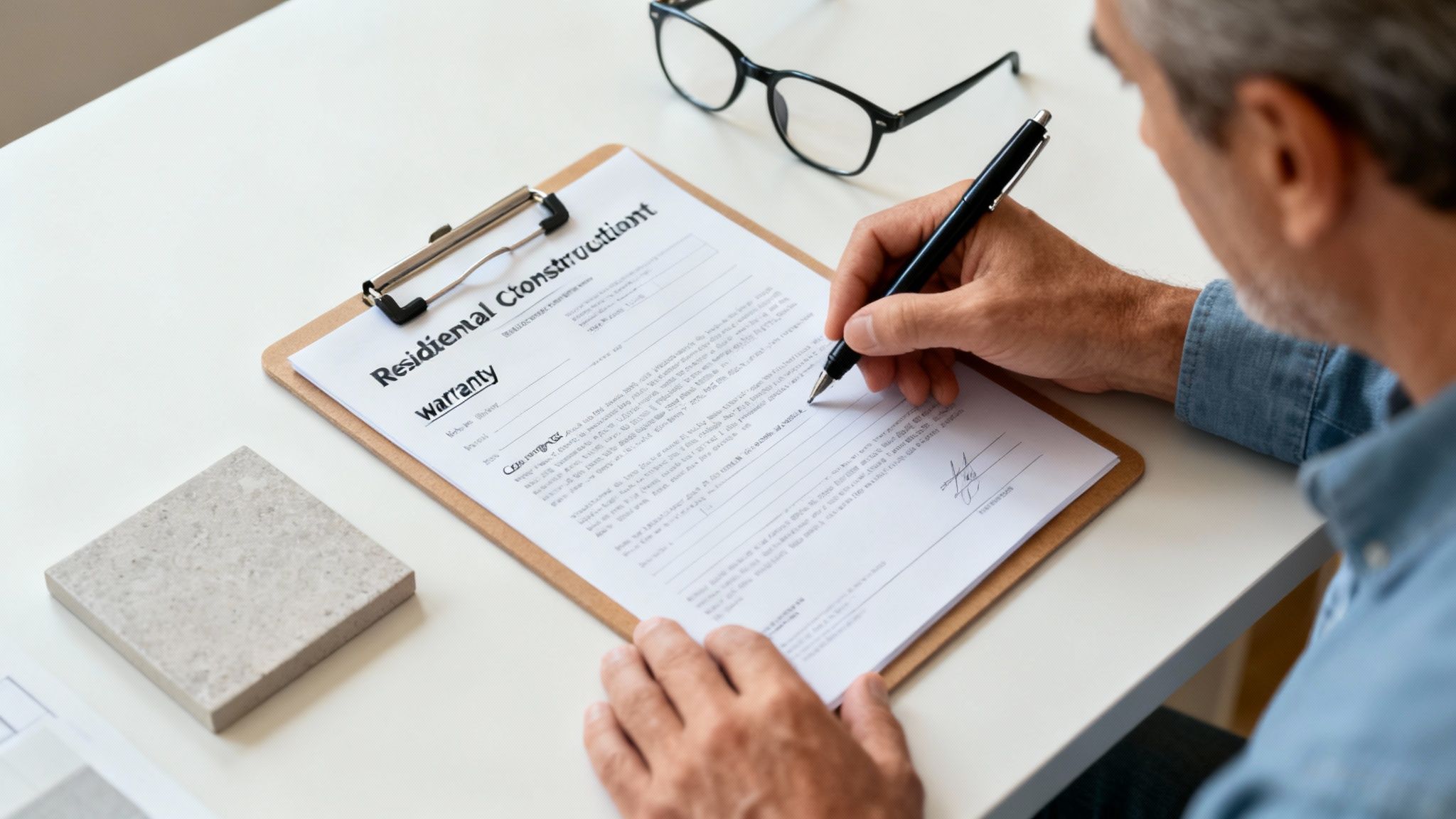
The contract is the rulebook for your entire project, and overlooking the fine print is like playing a game without knowing how to score. This document goes far beyond the final price; it dictates how disagreements are handled, what happens when plans change, and what protection you have after the last nail is hammered. A builder who presents a clear, comprehensive contract is demonstrating a commitment to transparency and setting the stage for a smooth partnership built on trust.
This isn't just paperwork; it’s your project’s constitution. A vague contract leaves room for misinterpretation, which often leads to budget overruns and timeline delays. At SEGC, we use detailed contracts to ensure every client in Fayetteville and Lumberton understands the process, from payment schedules to material specifications. We believe a strong contract is the foundation for a strong client relationship, built on mutual understanding and trust from day one.
Your Action Plan
To ensure your contract fully protects you and your investment, use these actionable insights to scrutinize key areas before you sign:
- Demand a Written Change Order Process: Ensure the contract requires all changes to be documented in writing, including cost and schedule impacts, and signed by you before work proceeds. A verbal agreement is a recipe for disaster. Our guide on construction change order management details why this is non-negotiable.
- Clarify Warranty Details: The warranty section should clearly state what is covered and for how long. A one-year minimum is standard, but you should also be researching warranties for specific components like roofing or HVAC systems, which often carry longer manufacturer warranties.
- Define Scope and Specifications: The contract should list specific materials, brands, model numbers, and finishes. Vague terms like "builder-grade fixtures" are red flags.
- Review the Payment Schedule: Understand the payment milestones and confirm there is a final holdback (typically 5-10%) that is only released upon your final, satisfied walkthrough.
6. Subcontractor Management and Coordination: Who's Actually Building Your Project?
A general contractor is like a film director; they have the vision, but they rely on a cast of skilled specialists to bring it to life. These specialists are the subcontractors: the plumbers, electricians, framers, and roofers. Asking how a builder manages this team is one of the most crucial questions to ask a builder, as poor coordination is the root cause of most delays, budget overruns, and construction defects. You need to know that your builder isn't just hiring the cheapest crew available that morning.
Great builders cultivate deep, long-term relationships with the best local talent. For over two decades in Fayetteville and Lumberton, we've built a network of the region's most reliable and skilled tradespeople. This isn't just about finding someone available; it's about partnering with craftsmen who share our commitment to quality and understand the high standards required for our projects. Our team members, like Project Manager Sarah Thompson, know these partners personally, ensuring seamless workflow and consistent, high-quality results.
Your Action Plan
To get a clear picture of how your project's "cast and crew" will be managed, take these actionable steps:
- Request a list of their primary, go-to subcontractors. Ask why they choose to work with them repeatedly. Longevity signifies trust and reliability.
- Clarify their quality control process. How do they handle a subcontractor's work that isn't up to par? Who is responsible for fixing it, and who pays?
- Verify their credentials. Ask if they ensure their key subcontractors carry their own liability and workers' compensation insurance.
- Understand the chain of command. If a subcontractor has an issue or falls behind schedule, what is the builder's plan to get the project back on track without compromising quality?
7. Materials, Specifications, and Quality Standards
When a builder says they use “high-quality materials,” what does that actually mean? The answer can vary wildly, impacting everything from your project's energy bills to its long-term value. This question isn't just about picking paint colors; it's about the bones of your building. You need to understand the specific brands, grades, and standards that will be used, as these choices dictate the durability, aesthetic, and long-term performance of your property.
The difference between standard and premium materials is significant. For example, Energy Star certified windows can dramatically lower heating costs, while grade A framing lumber provides superior structural integrity. At SEGC, we provide a transparent, detailed specification sheet for every project, whether it's a municipal building in Fayetteville or a commercial build in Lumberton. This ensures our clients know exactly what they are getting, from the R-value of the insulation to the specific brand of HVAC system. This commitment to detail is one of the most vital questions to ask a builder because it prevents unwelcome surprises and guarantees the legacy quality we promise.
Your Action Plan
To ensure you get the quality you’re paying for, use these actionable insights:
- Request a Detailed Specification Sheet. This document should list all major components, including brand names, model numbers, and material grades. Don't settle for vague terms like "builder-grade flooring."
- Clarify Allowances and Upgrade Costs. Understand the budget allocated for items like tile, countertops, and lighting. Ask for a clear pricing structure for any upgrades you might consider.
- Discuss the Substitution Policy. What happens if a specified material is unavailable? The contract should require your written approval for any substitutions to ensure you get equivalent or better quality.
- Ask for Samples. Before making final decisions, request physical samples of materials like flooring, shingles, and siding to see and feel the quality for yourself.
8. Permits, Inspections, and Code Compliance: Who's Handling the Red Tape?
Navigating the labyrinth of building permits and inspections can feel like a full-time job. This isn't just paperwork; it's the official system ensuring your project is safe, legal, and built to last. A builder who fumbles this process, or worse, suggests skipping it, is waving a massive red flag. Proper permitting and passing inspections are non-negotiable for protecting your investment and ensuring you can legally occupy and eventually sell your property.
The builder should be the expert here, managing the entire process from application to the final Certificate of Occupancy. At SEGC, we handle all the coordination with local Fayetteville and Lumberton officials, leveraging our 21+ years of local leadership to ensure every phase is inspected and approved. This diligence prevents costly teardowns, project delays, and serious safety hazards. Understanding what a building code actually is clarifies why this process is so critical. It's the rulebook that guarantees quality and safety, and a professional builder plays by those rules without exception.
Your Action Plan
To ensure your project stays on the right side of the law, take these actionable steps to stay informed and protected:
- Clarify Responsibility: Confirm in writing that the builder is responsible for securing all necessary permits before any work begins.
- Request Copies: Ask for physical or digital copies of all permits once they are issued. The permit should be posted visibly on the job site.
- Review the Inspection Schedule: Ask the builder for the anticipated schedule of inspections. Key stages often include foundation, framing, plumbing, electrical, and a final inspection.
- Keep Your Own Records: Request copies of each passed inspection report for your records. This creates a paper trail proving all work was completed to code.
9. Communication and Site Rules: Who’s in Charge and How Do We Talk?
A project's success often hinges on communication, not just construction. Asking about a builder's communication plan reveals how they manage information, resolve issues, and maintain order on your property. This isn't just about getting updates; it’s about establishing clear protocols for everything from progress reports to who can park where. A builder without a defined communication strategy is a red flag for future chaos and misunderstandings.
This structured approach prevents small issues from escalating. Imagine discovering a framing error after the drywall is up, simply because there was no scheduled check-in. At SEGC, we use modern project management tools to provide daily logs and photo updates, ensuring clients in Fayetteville and Lumberton are always in the loop. This system establishes a single source of truth, minimizing confusion and keeping everyone aligned. It’s one of the key questions to ask a builder because it demonstrates their commitment to a smooth, transparent process that builds client trust.
Your Action Plan
To ensure clear communication and a well-managed site, establish these protocols from the start:
- Designate a single point of contact. Get the direct phone number and email for your project manager.
- Set a communication schedule. Request weekly progress meetings (in-person or virtual) and agree on expected response times for calls and emails.
- Establish site rules. Discuss and document protocols for daily cleanup, designated parking areas, and worker conduct to respect your property and neighbors.
- Clarify the change order process. Understand exactly how changes will be documented, priced, and approved to avoid budget surprises.
10. Problem Resolution, Dispute Handling, and Recourse Options
Even the best-laid plans can hit a snag. The true measure of a builder isn’t that problems never occur; it's how they resolve them when they do. Asking about a builder’s process for handling disputes isn't pessimistic, it’s pragmatic. You need to know their protocol for addressing defects, their warranty process, and what happens if you fundamentally disagree. This is one of the most critical questions to ask a builder, as it reveals their commitment to client satisfaction long after the final nail is hammered.
A builder’s answer tells you everything about their accountability. A vague response is a red flag, while a clear, documented process shows they stand behind their work. At SEGC, we build legacies, which means our relationship with clients in Fayetteville and Lumberton extends far beyond handing over the keys. We provide a detailed warranty and a clear protocol for any issues, ensuring peace of mind is built into every project. It’s about building trust, not just structures.
Your Action Plan
To ensure you're protected if issues arise, get specific answers and contractual commitments:
- Request a Sample Warranty: Ask for a copy of their standard warranty. Understand what’s covered (e.g., structural, workmanship, systems) and for how long.
- Clarify the "Punch List" Process: Confirm they perform a detailed final walkthrough to create a "punch list" of minor fixes before you sign off on project completion.
- Define the Claim Process: Ask how to submit a warranty claim. It should be a simple, written process. Document everything with photos and clear descriptions.
- Include a Dispute Resolution Clause: Insist that your contract outlines a clear, multi-step process for resolving disagreements, such as mediation, before escalating to more formal legal action.
- Know Your State's Protections: Be aware of your rights under state law, like the North Carolina General Statutes that provide protections against defective construction.
10-Point Comparison: Questions to Ask a Builder
| Item | 🔄 Implementation Complexity | ⚡ Resource Requirements | 📊 Expected Outcomes | Ideal Use Cases | ⭐ Key Advantages / 💡 Quick Tips |
|---|---|---|---|---|---|
| Licensing, Bonding, and Insurance Verification | Moderate — multiple agency checks and document review | Low–Moderate (request COI, contact regulators) | Legal and financial protection; regulatory compliance 📊 | All projects; essential for financed or high-value builds | Ensures legal recourse and risk transfer ⭐ / Request certificates, verify expirations 💡 |
| References and Past Project Track Record | Moderate — contacting references, site visits | Moderate (time, travel, review of docs/photos) | Real-world quality and service insight 📊 | Custom homes, quality-focused buyers, new builders | Reveals workmanship and client handling ⭐ / Ask specific questions; visit unaccompanied 💡 |
| Financial Stability and Payment History | High — credit, lien, and bankruptcy searches | Moderate (paid reports, county/federal searches) | Identifies abandonment/liability risk; supplier reliability 📊 | Large projects; builders with short track record | Detects financial red flags before signing ⭐ / Check liens, D&B reports, bankruptcy records 💡 |
| Construction Timeline and Project Scheduling | Moderate — detailed schedule and contingency planning | Low–Moderate (written schedule, monitoring) | Better predictability; fewer surprises to homeowner 📊 | Move-in planning, tight deadlines, seasonal builds | Improves planning and reduces disruptions ⚡ / Get milestones in writing; include buffers/penalties 💡 |
| Contract Terms, Warranty, and Change Order Process | High — legal review and detailed scope definition | Moderate (attorney review, negotiation time) | Clear expectations, warranty recourse, budget control 📊 | Any project; critical for complex or high-cost builds | Protects homeowner rights and clarifies obligations ⭐ / Have attorney review; require written change orders 💡 |
| Subcontractor Management and Coordination | Moderate–High — vetting and coordinating many trades | Moderate (lists, inspections, communication systems) | Improved quality control and schedule adherence 📊 | Projects with many specialized trades or phased work | Ensures trade competency and fewer defects ⭐ / Request primary subs list; verify licenses/insurance 💡 |
| Materials, Specifications, and Quality Standards | Moderate — detailed spec sheets and selections | Moderate–High (samples, allowances, upgrade budgeting) | Better durability, aesthetics, and long-term value 📊 | Finish-focused homes; buyers prioritizing longevity/value | Prevents substitutions; ensures expected quality ⭐ / Obtain spec sheets, samples, and substitution policy 💡 |
| Permits, Inspections, and Code Compliance | Moderate — permit coordination and inspection scheduling | Low–Moderate (filings, inspector fees, attendance) | Legal compliance, safety, and smooth resale/financing 📊 | All builds; essential for code-sensitive jurisdictions | Prevents violations and rework ⭐ / Request permit copies; attend inspections 💡 |
| Communication Plan and Site Management | Low–Moderate — establish protocols and contacts | Low (regular updates, meetings, reporting tools) | Fewer misunderstandings; faster issue resolution 📊 | Remote owners, complex builds, long timelines | Improves responsiveness and clarity ⚡ / Get PM contact, weekly updates, document communications 💡 |
| Problem Resolution, Dispute Handling, and Recourse Options | Moderate — define warranty, punch list, arbitration paths | Moderate–High (legal/arbitration potential, documentation) | Clear remediation path; reduced escalation and liability 📊 | Projects with warranty concerns or high stakes | Provides formal remediation and dispute routes ⭐ / Document defects, keep records, include dispute clause 💡 |
Your Partner in Building More Than a Structure
And there you have it. You've just navigated a comprehensive boot camp on how to interview a potential builder. This isn't about being confrontational; it's about being prepared. Think of it less like an interrogation and more like the first conversation in a long, productive partnership. You're not just hiring a contractor; you’re selecting the team that will transform a blueprint into a physical legacy, whether that's your dream home, a thriving commercial space, or a vital community facility.
The sheer volume of these questions to ask a builder might feel overwhelming, but they all boil down to one core concept: Trust, backed by proof. A truly professional builder won't just tolerate your questions; they will welcome them. They’ll see your diligence as a sign of a committed client and meet your preparedness with their own transparency and detailed answers.
From Questions to Confidence
Let's recap the mission-critical takeaways. Your goal is to move from uncertainty to unwavering confidence by confirming a builder's:
- Credentials and Stability: Are they properly licensed, insured, and financially sound? This is the non-negotiable foundation.
- Proven Track Record: Do their past projects and client references paint a picture of quality, reliability, and satisfaction?
- Process and Planning: How do they handle timelines, budgets, change orders, and the inevitable surprises? A solid plan prevents future chaos.
- Commitment to Quality: What are their standards for materials, craftsmanship, and subcontractor management?
- Communication and Collaboration: Will they be a partner who keeps you informed, respects your input, and resolves issues professionally?
Mastering this inquiry process is invaluable. It empowers you to protect your investment, ensure your vision is realized, and build a relationship founded on mutual respect. This isn't just about avoiding a bad builder; it's about finding a great one who aligns with your values.
For over 21 years, South Eastern General Contractors has built its reputation on proven results by answering these questions before they’re even asked. With deep roots in the Fayetteville and Lumberton communities, and unique certifications as a Native American-owned, 8(a), and HUBZone firm, we understand that building is about more than materials. It’s about building trust, opportunity, and legacies that last.
Choosing the right partner is the most critical decision you'll make for your project. If you're looking for a team that has spent decades proving its commitment to quality, transparency, and client success, we invite you to start a conversation with South Eastern General Contractors. Let us show you how we build legacies, not just structures, by visiting us at South Eastern General Contractors.