Explore Top House Plans in NC | Build Your Dream Home
So, you’ve decided to build your dream home in North Carolina. Fantastic choice. Whether you're picturing a breezy coastal cottage or a rustic mountain getaway, this is where the real fun begins—turning that daydream into a buildable blueprint. This is the moment your vision starts to take shape.
Kicking Off Your North Carolina Home Build
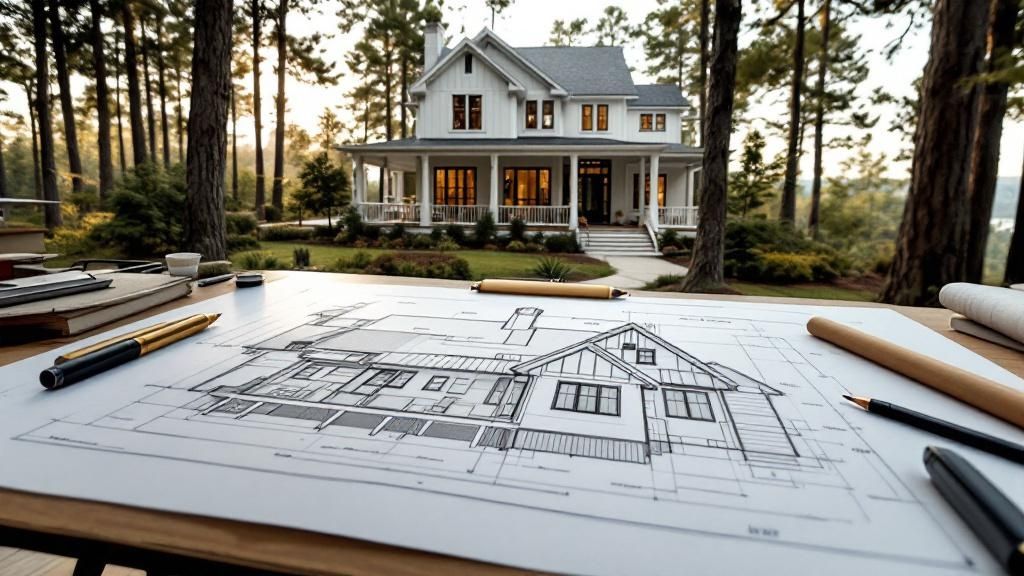
It’s easy to get lost scrolling through endless galleries of beautiful house plans online, but hold on. The most important work happens before you even look at a single floor plan. It's all about understanding your land, nailing down a realistic budget, and finding a builder who's as invested in your home's legacy as you are.
This is where having a local guide makes all the difference. With over 21+ years of proven results, our team at South Eastern General Contractors (SEGC) has walked countless families through this exact journey. Our deep roots in communities like Fayetteville and Lumberton mean we know this land—from the soil types to the quirky local zoning laws—in a way you just can’t Google.
First Things First: The Big Three Questions
Answering these core questions before you fall in love with a plan will save you a world of headaches and unexpected costs. It’s how you make sure the design isn't just stunning, but a perfect fit for your life.
-
What's Your Land Like? Is your lot on a steep hill? Covered in old-growth trees? The unique personality of your property dictates which house plans will work and which are simply non-starters.
-
How Do You Actually Live? Be honest. Do you host big holiday dinners? Work from home full-time? Planning to add kids (or dogs) to the mix? Your day-to-day life should be the ultimate architect of your home's layout.
-
What's the Real Budget? Think beyond just the construction cost. Your total budget needs to cover everything from clearing the land and pulling permits to the final light fixtures and landscaping.
This grounded, thoughtful approach is our bread and butter. As a Native American-owned, 8(a), and HUBZone-certified firm, we’re not just putting up walls—we're building trust and relationships that last.
We've had a front-row seat to North Carolina's incredible growth. In fact, to keep up with the population boom, about 25% of all housing units in the state were built in the 1990s alone. You can dive deeper into North Carolina's housing market trends to see the full story. We bring that historical perspective and forward-thinking expertise to every job, making sure we’re not just building a house, but a true family legacy.
Making Sense of NC Building Codes
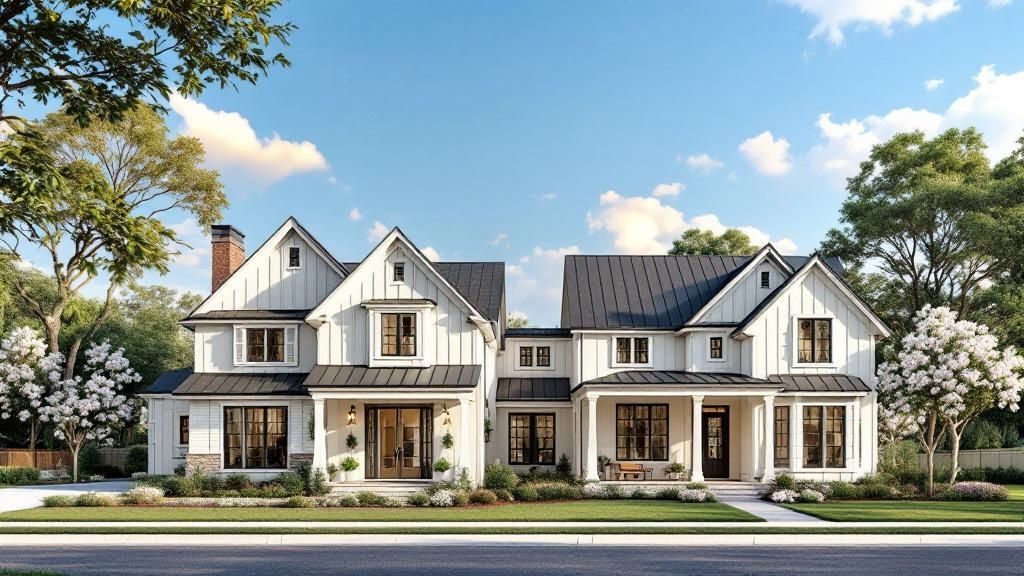
Let’s be honest: cracking open the North Carolina State Building Code is about as fun as reading an appliance manual. It's thick, technical, and can make your eyes glaze over in minutes. But here's the thing—it's not just a bunch of red tape. At its heart, the code is all about keeping your family safe and protecting the massive investment you're about to make.
Think of it less as a rulebook and more as a recipe for a home that will stand strong for decades. These regulations dictate everything, from how your foundation is poured to how energy-efficient your windows need to be. They aren't suggestions; they're the law. This is precisely where so many folks get tripped up by generic house plans in nc bought online. They look great, but they often weren't designed with our state's unique demands in mind.
Why Local Expertise Is Non-Negotiable
North Carolina isn't one-size-fits-all, and neither are our building codes. A house plan that works perfectly in the Piedmont might get blown over on the coast or collapse under heavy snow in the mountains. We're talking about specific requirements for wind loads, snow loads, and even soil conditions.
It’s not a minor detail—it's a critical safety issue. I remember a client near Fayetteville who brought us a gorgeous plan they’d found online. It was their dream layout, but it was designed for a totally different climate. Our team spotted the structural flaws right away, saving them from a mistake that would have been both incredibly expensive and dangerous. That’s what 21+ years of local experience brings to the table. We don't just build houses; we protect the people who live in them.
The fastest way to derail a project is to get tangled up in permitting delays. Working with a firm that knows the local ordinances inside and out is your best defense. Our long-standing relationships in Fayetteville and Lumberton mean we see potential hurdles long before they become full-blown problems.
Turning Code Compliance into a Game Plan
So, how do you make sure that stock plan you love is actually buildable here? It starts with a professional review. A seasoned local builder or designer will put your plans side-by-side with the latest NC code to see what holds up.
Here’s a peek at what that review process looks for:
- Structural Integrity: Does the plan properly account for our regional wind, snow, and seismic forces?
- Energy Code: Are the insulation, window specs, and HVAC systems up to North Carolina’s efficiency standards?
- Local Zoning: Does it follow the specific county or city rules for things like property line setbacks, building height, and utility hookups?
And it’s not just about the big stuff. Details matter, right down to accessibility standards. For instance, making sure you understand the nuances of ADA faucet requirements can save you headaches later.
As an 8(a) and HUBZone-certified firm, we eat, sleep, and breathe this stuff so you don't have to. Our deep understanding of state and federal regulations—a core strength of our Native American-owned company—means we handle the paperwork jungle. You get to focus on the fun part, like picking out cabinets and countertops, knowing your home's foundation is safe, secure, and 100% compliant. We’re here to build your legacy, not just another building.
Finding a Home Style That Fits Your NC Life
North Carolina isn’t a one-size-fits-all kind of state. From the salt-sprayed shores of the Outer Banks to the misty Appalachian peaks, every region has its own vibe, its own climate, and its own way of living. A house that looks perfect nestled in the mountains would probably seem pretty out of place on a coastal lot—and for good reason.
This is where the fun begins. Choosing your home’s style isn't just about picking pretty pictures from a catalog. It’s about finding a design that feels like it belongs right where you’re building it. North Carolina's incredible diversity means we have a rich palette of architectural styles to draw from, whether it's a breezy Coastal retreat, a rugged Mountain Craftsman, or a classic Farmhouse that feels right at home in the Piedmont.
It's More Than Just a Pretty Façade
Here's a secret that experienced builders know: a home's style and its function are two sides of the same coin. It’s not just about curb appeal. It’s about choosing materials that can laugh off the humid, salty air on the coast or designing a roof that can shrug off a heavy mountain snow.
For over 21 years, we've been helping families in communities like Fayetteville and Lumberton figure this out. We’ve seen firsthand how making the right architectural choices from the start leads to a home that isn't just stunning, but also smart, durable, and built to last.
At SEGC, we believe a home's style should tell a story about the family inside and the land it sits on. It's about building a legacy that feels authentic to North Carolina, which is a commitment we bring to every project as a proud Native American-owned firm.
Matching the Right Style to the Right Place
So, how does geography influence design? Let's take a little road trip across the state.
- Life on The Coast: Here, it’s all about the views and the weather. You’ll see elevated foundations to handle potential storm surge, massive porches to catch the sea breeze, and tough siding materials like fiber cement that stand up to the elements.
- Heart of The Piedmont: This rolling landscape is the natural habitat for the Modern Farmhouse and timeless Colonial styles. Think welcoming front porches for sweet tea, clean rooflines, and wide-open interiors perfect for getting the whole family together.
- The Mountain Calling: Out west, homes need to feel like a cozy extension of the rugged scenery. Craftsman and Cabin styles rule the day, with their heavy use of natural stone and wood, huge windows framing mountain vistas, and a sturdy, grounded feel.
To help you visualize the options, we've put together a quick guide to some of the most popular home styles you'll find across our beautiful state.
Comparing Popular NC Home Styles
| Style | Key Features | Best Suited Region | Budget Consideration |
|---|---|---|---|
| Coastal | Elevated foundation, sprawling porches, light colors, hurricane-rated windows, durable siding. | The Coast | Higher due to specialized materials and foundation requirements for weather resistance. |
| Modern Farmhouse | Board-and-batten siding, metal roof accents, large windows, open-concept layout, big porches. | The Piedmont | Moderate, but costs can rise with high-end finishes and expansive open spaces. |
| Craftsman | Low-pitched roof, exposed beams, natural materials (wood, stone), built-in details. | The Mountains | Moderate to High, as the detailed woodwork and natural materials can be labor-intensive. |
| Colonial | Symmetrical design, steep roof, multi-pane windows, central entryway. | The Piedmont & Urban Areas | Varies widely based on size and level of historical accuracy in materials and details. |
Each style offers a unique way to live, and the right choice often comes down to balancing your dream aesthetic with the practical needs of your location and budget.
This image here gives a great breakdown of the cost differences you can expect when deciding between a pre-designed stock plan and going fully custom.
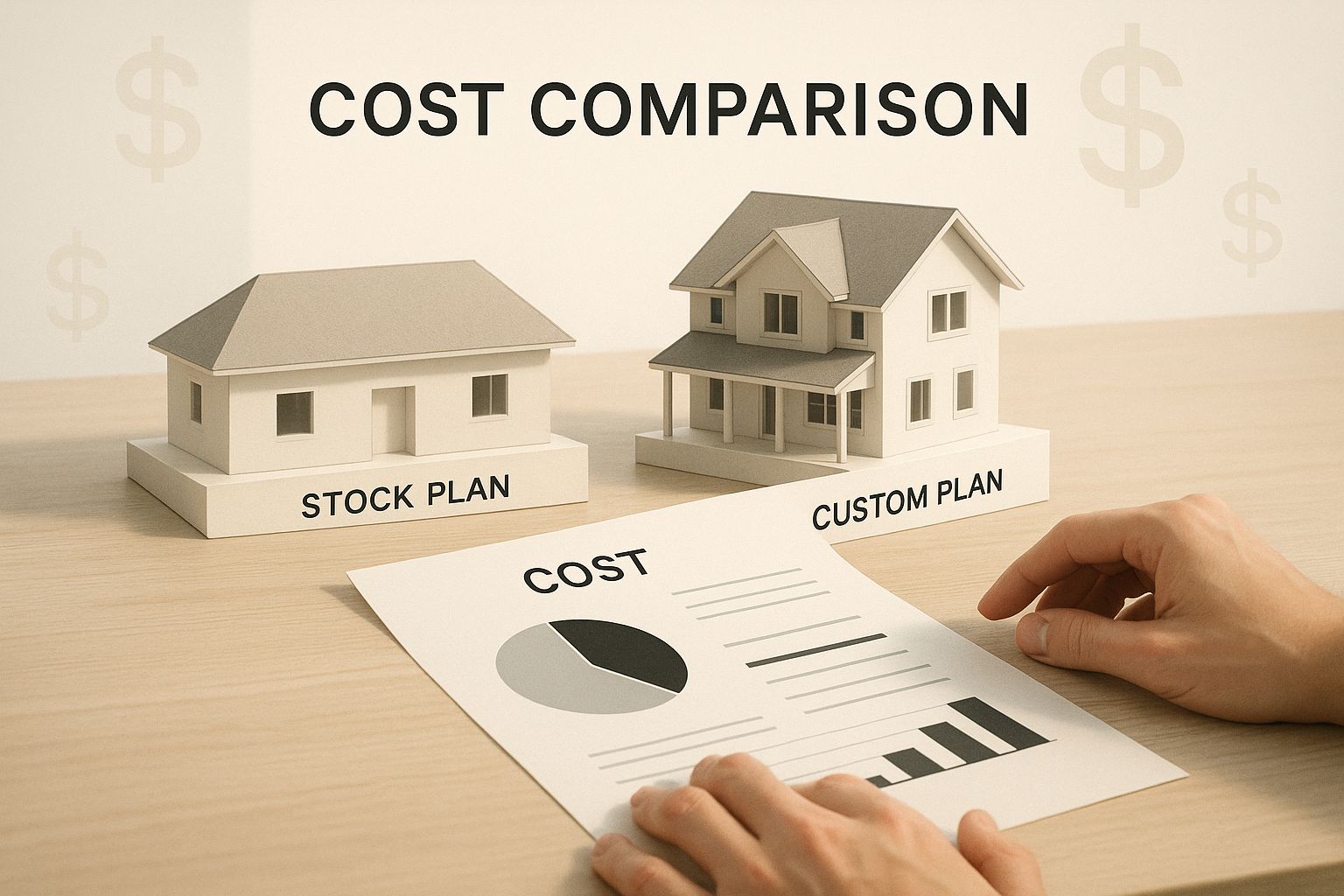
As you can see, stock plans get you started for less money upfront, but a custom plan is where you get the perfect fit and can maximize your long-term value.
This focus on smart investment has never been more critical. The median sales price for a single-family home in North Carolina jumped from about $75,000 in 1990 all the way to over $251,000 by 2020. This isn't just inflation; it shows that people want better-designed, higher-quality homes. If you're a data nerd, you can dive into North Carolina's historic housing price trends and see for yourself.
As a HUBZone-certified contractor, we're dedicated to helping our clients make intelligent, lasting investments in their future. Take a look through our gallery to see how we've tailored popular house plans in North Carolina to create one-of-a-kind homes for families just like yours.
How to Make a House Plan Your Own
Finding a stock house plan that feels almost perfect is a huge win. But that "almost" is where the fun really begins. Think of a stock plan as a great starting point, a well-structured canvas. The customization process is where you get to be the artist, turning that canvas into a home that truly fits the rhythm of your family's life.
This is the part where you go beyond the blueprint and start splashing your personality all over the place. We're not just talking about paint colors and light fixtures. This is about making smart, meaningful changes that improve the flow, add serious function, and ultimately, build real value into your home. The goal? To make every single square foot earn its keep.
From Little Nudges to Major Overhauls
Customizing a house plan can be as simple as moving a door or as complex as adding an entire wing. Our design team has seen it all, helping families with everything from tiny tweaks to total layout transformations. It helps to know what’s possible.
Here are the kinds of modifications we handle all the time:
- Small Nudges: These are usually the easiest and most budget-friendly changes. Maybe you want to flip a bathroom layout for better plumbing access, make a window bigger to capture that perfect morning light, or steal a little space from the garage to create a walk-in pantry. Easy peasy.
- Bigger Moves: Now we're talking about moving non-load-bearing walls to get that wide-open living space you've been dreaming of. Or maybe reconfiguring the kitchen island for a better workflow, or carving out a dedicated home office from an underused closet.
- The Big Kahunas: These are the game-changers, the revisions that fundamentally alter how the home functions. This could be anything from adding a primary suite on the main floor for easier aging-in-place, bumping out the back of the house for a sun-drenched four-seasons room, or even adding a complete in-law apartment.
A Fayetteville Story: Building for the Future
We recently had the pleasure of working with an amazing family in Fayetteville who needed their home to work for three generations at once. They found a gorgeous stock plan, but it was built for a typical family of four. We sat down with them and completely reimagined it.
"SEGC didn't just tweak a floor plan; they listened to our family's story. They helped us re-imagine the main floor to create a private, accessible suite for my parents. It’s more than a house—it's a home where three generations can live together comfortably and with dignity. Their team made what felt like an impossible 'want' an achievable reality." – The Johnson Family, Fayetteville, NC
Their story is the perfect example of what thoughtful customization can do. It’s about looking at a bunch of lines on a piece of paper and seeing the potential to build a home that will serve your family for years to come.
Sorting Your Wants from Your Needs
The secret to a successful customization project is all about priorities. Our team walks clients through a pretty detailed process to help separate the absolute "must-haves" from the "would-be-nice-to-haves." This makes sure your budget is focused on the changes that will make the biggest difference in your day-to-day life.
It’s a crucial step in our custom home building process and helps build trust and clarity right from the get-go. As a Native American-owned and HUBZone-certified firm, we see home building as a true partnership—one built on smart planning and shared goals. We're here to help you make the right calls to turn a pretty good house plan into your perfect North Carolina home.
Choosing the Right Team for Your NC Build
A perfect set of house plans is a fantastic start, but let's be honest—it's just paper. The real magic happens when you find the right people to bring that blueprint to life. Choosing your architect, designer, and builder is hands-down the most critical decision you'll make in this entire process. You're not just hiring help; you're building a partnership.
This is especially true here in North Carolina. As of early 2025, our housing market is doing a bit of a tango. The median home price has nudged up to around $367,800, a 3.8% increase from last year. And while we've seen a nearly 18.1% jump in housing inventory (which is great!), it’s still a market that tends to favor sellers. You can get a closer look at the current state of North Carolina's housing market to see why having a sharp local team in your corner is non-negotiable.
The Advantage of Deep Community Roots
There's something to be said for working with a firm that has dirt under its fingernails from decades of building right here. When a team has deep roots in the community, you get a home-field advantage that’s impossible to replicate. At SEGC, our years of experience in places like Fayetteville and Lumberton aren't just a line on our website—it's a real asset for our clients. We know the best local suppliers by name and have built solid relationships with the most dependable trade partners in the region. That translates directly to smoother projects and higher quality work for you.
We’re also a Native American-owned, 8(a), and HUBZone-certified company, and that’s a core part of who we are. It means we’re not just putting up structures; we’re committed to building lasting legacies. Families choose us because they sense that commitment—they know we’re all-in from the very first handshake.
Key Questions for Your Potential Partners
So, how do you find that perfect fit? It all comes down to asking the right questions. You need to get past the surface-level quotes and really understand how a team operates. A great partner will be able to walk you through their process and show a genuine fire for what they do.
Here are a few things you should absolutely be asking:
- Communication: How are you going to keep me in the loop? Who’s my go-to person when I have a question at 10 PM?
- Project Management: What system do you use to keep track of all the moving parts—my selections, change orders, and the budget?
- Problem-Solving: Tell me about a time a project went off the rails. What happened, and what did you do to fix it?
- Local Network: How long have you been working with your main subcontractors? Do you trust them in your own home?
A true partnership is when your build team champions your vision and guards your investment like it’s their own. It’s about creating an open, honest environment where every single decision is made with your best interests at the forefront.
To make sure you've got all your bases covered, this comprehensive contractor hiring checklist is a fantastic tool to bring to your interviews. And if you want to dig even deeper, check out our own guide on how to find a good contractor specifically for your North Carolina build.
Common Questions About NC House Plans
Let's be honest, diving into the world of house plans can feel like you're trying to read a foreign language. After more than 21 years in this business, we've heard every question imaginable from families in places like Fayetteville and Lumberton. So, let's cut through the noise and get you some straight answers.
How Much Do House Plans Cost in NC?
This is the big one, isn't it? The cost for house plans is all over the map. You can find a generic "stock" plan online for a tempting $1,000 to $3,000. The catch? That plan was almost certainly not designed for North Carolina. It will need some serious work from a local pro to get it up to our state's specific building codes, and those modifications add up fast.
On the other hand, hiring an architect to draw something from scratch can cost you 5% to 15% of your entire construction budget. We've found the sweet spot is usually right in the middle. We take a high-quality stock plan as a starting point and then customize it to fit your family and your land perfectly. It’s the best way to get a personalized home without the full custom price tag.
Do I Absolutely Need an Architect?
Technically, North Carolina law doesn't force you to hire a licensed architect for a simple single-family home. But should you? That's a different question.
Think of it this way: the NC building code is a beast. We've got strict rules for wind loads on the coast and heavy snow load requirements up in the mountains. An architect or a licensed designer is your insurance policy. They're the ones who make sure your home isn't just pretty, but that it's safe, sound, and won't get you in hot water with the building inspector. As a design-build firm, this is baked into our process—we handle it all in-house, making sure every line on the page translates perfectly to the build site.
At SEGC, we believe building a home is a profound act of trust. As a Native American-owned and HUBZone-certified firm, our commitment to quality and integrity is woven into every blueprint and every beam we place. We're here to build your legacy, not just a structure.
What Is the Timeline for a Building Permit?
Getting that coveted building permit in North Carolina can take anywhere from a few weeks to a few months. What makes the difference? It almost always comes down to the quality of the plans you submit.
If your submission is sloppy, incomplete, or ignores local codes, get ready for a long wait. It'll get buried in a pile of paperwork and revision requests. This is where our local experience really pays off. After decades of working with the planning departments in Fayetteville, Lumberton, and the surrounding counties, we know exactly what they’re looking for. A clean, detailed submission from a team they know and trust always gets to the top of the stack faster.
Can I Change Plans After They Are Approved?
Changing your mind after the plans are stamped and approved? It can get complicated. Little interior tweaks, like moving a closet or a non-load-bearing wall, are usually no big deal.
But if you want to change the home's footprint, bump out an exterior wall, or move anything structural? That’s a hard stop. You’ll have to go back to square one, resubmitting new plans for approval. That means more money and a lot more time. It's exactly why we are so meticulous during the design phase. We work with you to nail down every detail before a single shovel hits the dirt, so the only surprises are good ones.
Ready to stop dreaming and start building? The team at South Eastern General Contractors is here to guide you every step of the way, turning your vision for a North Carolina home into a lasting legacy. Let's start the conversation today.