Your Guide to Building a House with a Basement in NC
Deciding on your home's foundation is one of the biggest, most fundamental choices you'll make when building. It's literally the base for everything else. A house with a basement can be an incredible asset, unlocking a ton of extra living space and boosting long-term value, but let's be honest—it’s not the perfect solution for every property or budget.
Getting a handle on the key differences between a basement, a simple slab, and a crawlspace is the first, most important step. It’s all about making a smart decision that fits your family's vision for the future. As your local building partner, our mission is to provide the expert, humble guidance you need to feel educated and empowered in that choice.
Should You Build a House with a Basement in NC?
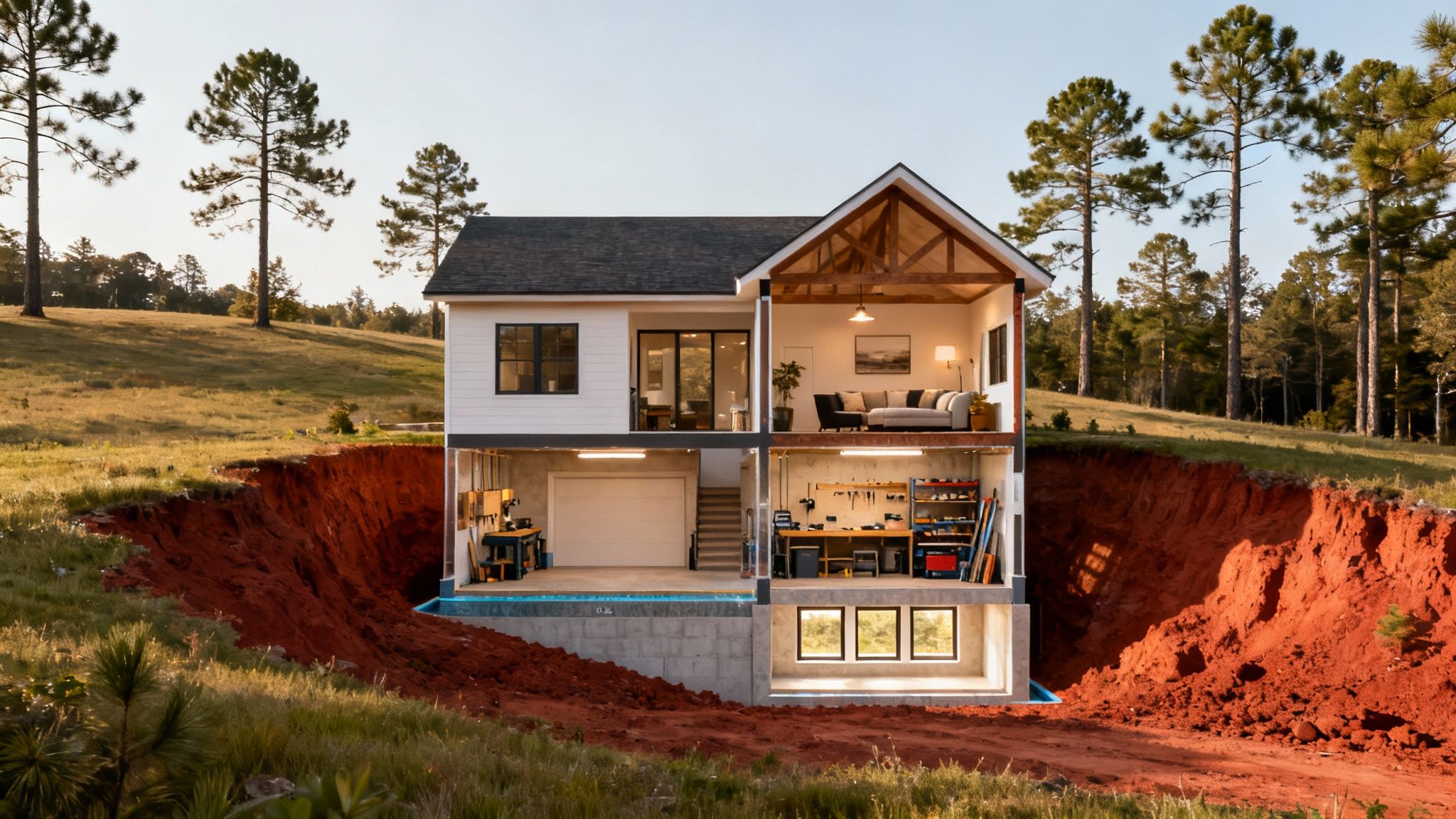
Picking the right foundation is a balancing act between your budget, your lifestyle, and the land you're building on. While a basement is a fantastic way to add a massive amount of square footage, it also represents a much bigger upfront investment compared to the alternatives.
Let's break down the actionable insights you'll be weighing.
Basement vs. Slab vs. Crawlspace At a Glance
To make this crucial choice a little simpler, here's a quick side-by-side look at how the three main foundation types compare.
| Foundation Type | Initial Cost | Added Living Space | Moisture Risk |
|---|---|---|---|
| Full Basement | Highest | Maximum Potential | High (If Not Properly Waterproofed) |
| Slab | Lowest | None | Low |
| Crawlspace | Moderate | None | Moderate |
This little chart gets right to the heart of the matter. Are you ready to invest more at the beginning to gain an entire extra floor of usable space? Answering that question is where having an experienced partner with proven local results becomes absolutely essential.
Why Local Expertise Matters
If you look at the national numbers, you’ll see some interesting shifts. Back in 2000, about 19.6% of new homes were built with basements. Fast forward to 2023, and that figure has dipped to 16.6% as slab-on-grade foundations have gained popularity.
But national stats don't tell you what you need to know about building right here in North Carolina.
The soil composition in the Sandhills, the height of the local water table—these are things that demand real, on-the-ground expertise. That’s exactly where our local leadership comes in.
For over 21 years, we've believed that a foundation is more than concrete and steel; it's the beginning of a family's legacy. We don’t just build structures—we build trust.
As a Native American-owned, SBA 8(a), and HUBZone-certified firm, we bring a deep-seated commitment to quality and integrity to every single home we build. Our 21+ years of proven results in communities like Fayetteville and Lumberton speak for themselves. We know that the process of building a custom home in North Carolina can feel like a lot to take on, which is why we make it our mission to educate and empower you every step of the way.
A house with a basement isn't just a construction detail; it’s a lifestyle choice. And we're here to make sure it’s the right one for you.
So, What Kind of Basement Are We Talking About?
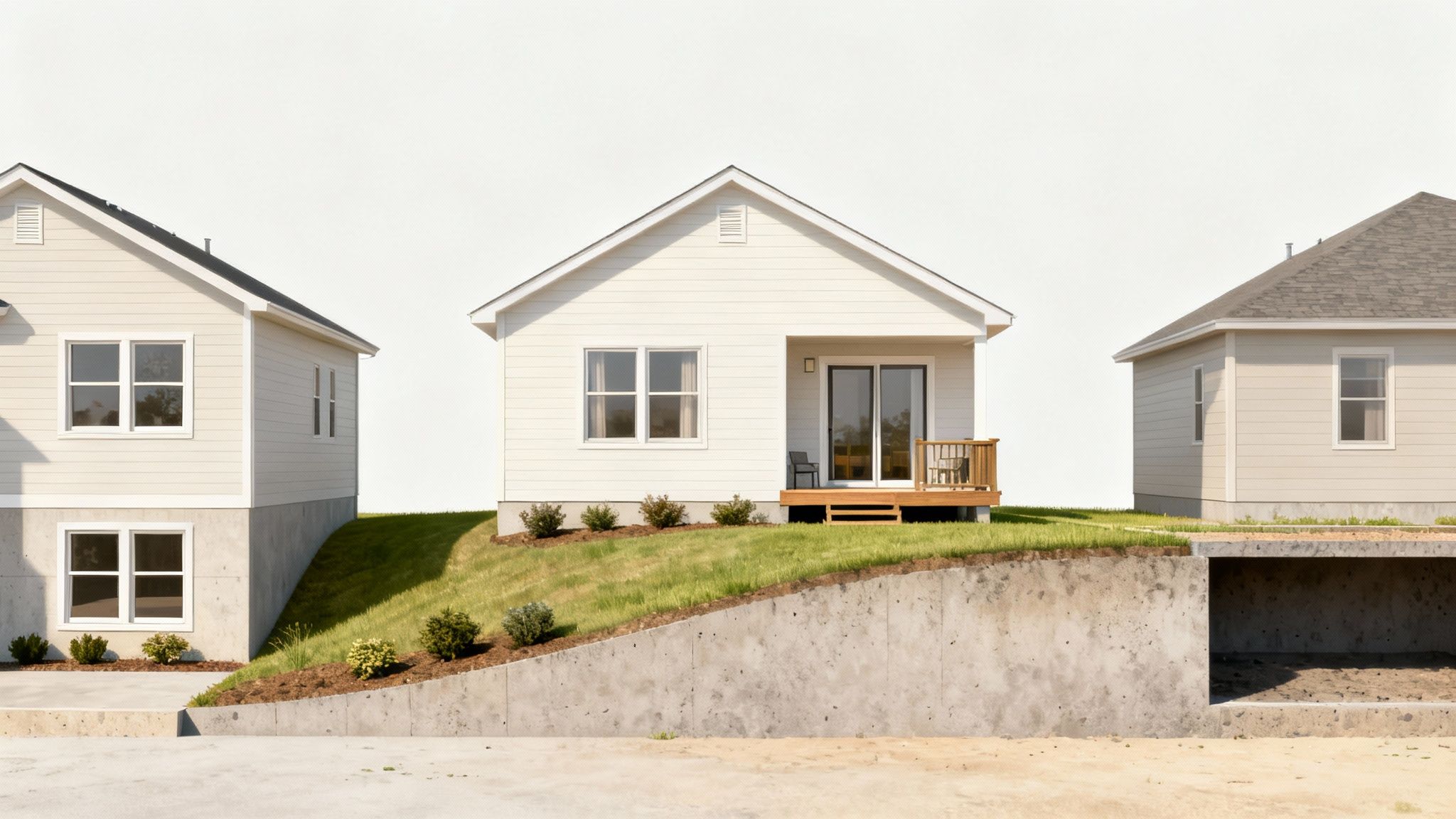
Deciding to build a house with a basement isn't just one decision. It's really the first question in a whole series of exciting possibilities about how you want to live. It’s like picking out a new truck. You know you need one, but do you need a heavy-duty dually for hauling, a comfortable crew cab for the family, or an all-terrain beast for the weekends? Each one serves a different purpose, and it’s the exact same story with basements.
Getting a handle on the three main types is the first step to unlocking all that hidden potential under your home. This is how you start to see past the concrete and envision a future home office, a killer home theater, or a private apartment for the in-laws. In our 21+ years of proven results, we’ve learned that making the right choice here is where a family’s story truly takes root.
The Full Basement: Your Underground Second Story
A full basement is pretty much what it sounds like—a foundation that copies the entire footprint of your home's main level. Just picture your first floor, then imagine an equally massive space sitting right underneath it. This is how you get the absolute maximum square footage, essentially creating a whole other level to your home.
This is the blank canvas of the basement world. It gives you the most room to play with, letting you map out multiple rooms for whatever you can dream up—a guest bedroom and bath, a sprawling game room, a dedicated laundry area, you name it. For anyone looking to double their living space without making the house itself wider or longer, the full basement is almost always the answer.
The Daylight or Walkout Basement: Bringing the Outside In
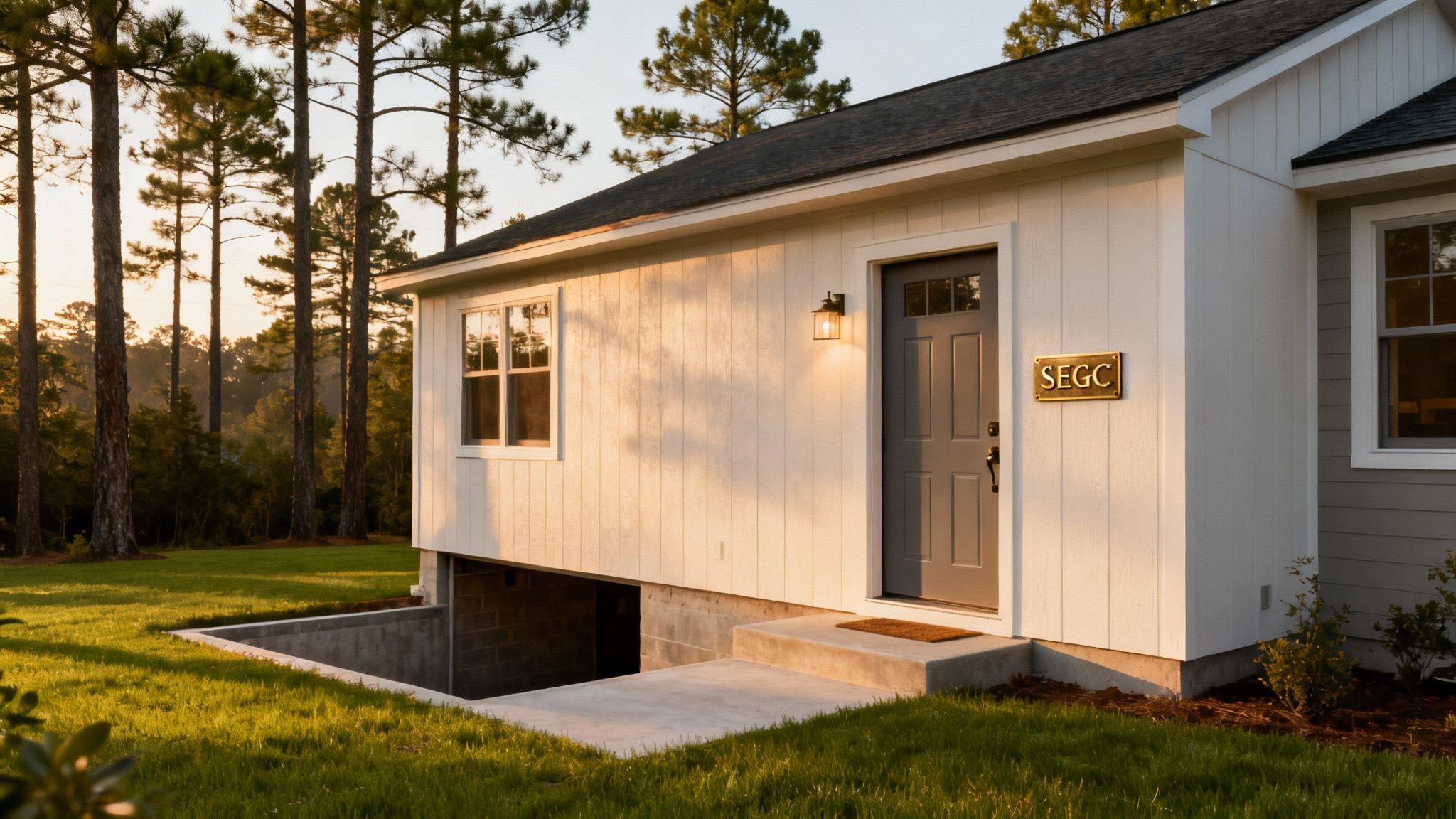
Now let’s talk about the rolling hills we know and love here in North Carolina. A daylight, or walkout, basement is practically tailor-made for a sloped lot. Because the ground falls away, one or more walls of the basement are completely exposed, letting you have full-sized windows and a regular door that opens right into the backyard.
This design is a brilliant way to marry the indoors with the outdoors. It lets natural light pour into the lower level, making it feel less like a basement and more like a sunny main floor. Honestly, this is where we see some of the most amazing and creative spaces, turning what could be a dark foundation into a vibrant, functional part of the home.
A Fayetteville Family's Legacy: We recently had the honor of working with a family in Fayetteville on their dream home, set on a gorgeous sloped property. They needed a private, accessible space for their aging parents. We designed a custom walkout basement that became a completely independent suite—it had its own entrance, a kitchenette, and a living area flooded with sunlight. It wasn't just a basement; it was a solution that brought their family closer together while giving everyone the space they needed.
This is exactly what we mean when we say we are building legacies, not just structures. It’s all about listening to what our clients truly need and using our expertise to build a home that serves their family for generations.
The Partial Basement: The Hybrid Approach
Last but not least, we have the partial basement. Think of this as the hybrid option—it’s part basement, part crawlspace. This route is often taken for very specific reasons, like finding a good spot to tuck away the HVAC and water heater while carving out some dedicated storage space.
While it won't give you the wide-open living potential of a full basement, it can be a smart, cost-effective way to get all the mechanical systems out of your main living area. It's a practical move when you don't need a full-sized lower level or when the budget is a top priority. If you're exploring layouts, you can see how these ideas come to life by checking out different house plans designed for basements.
At the end of the day, picking the right foundation for your house with a basement boils down to your land, your budget, and your vision. Each type has its own set of perks, and our job as your trusted, Native American-owned building partner is to guide you to the choice that best fits your family's story.
Mastering Basement Waterproofing and Drainage
Think of your home's foundation like a ship's hull. It's constantly sitting in a sea of moisture—the soil around it. Without a bulletproof defense, that water is going to find a way inside, and that’s a headache no homeowner wants.
This is where a professional waterproofing and drainage strategy comes in. It’s not a bells-and-whistles upgrade; it’s the single most critical system for protecting your house with a basement and ensuring it lasts for generations. At SEGC, our commitment to quality means we consider this a non-negotiable part of building a home you can count on.
We're not the only ones who see its value. The market for basement waterproofing is exploding, jumping from an estimated $15 billion in 2025 to a projected $25 billion by 2033. That boom reflects a growing understanding among homeowners everywhere: preventing water damage is far smarter (and cheaper) than fixing it.
Your Foundation’s First Line of Defense
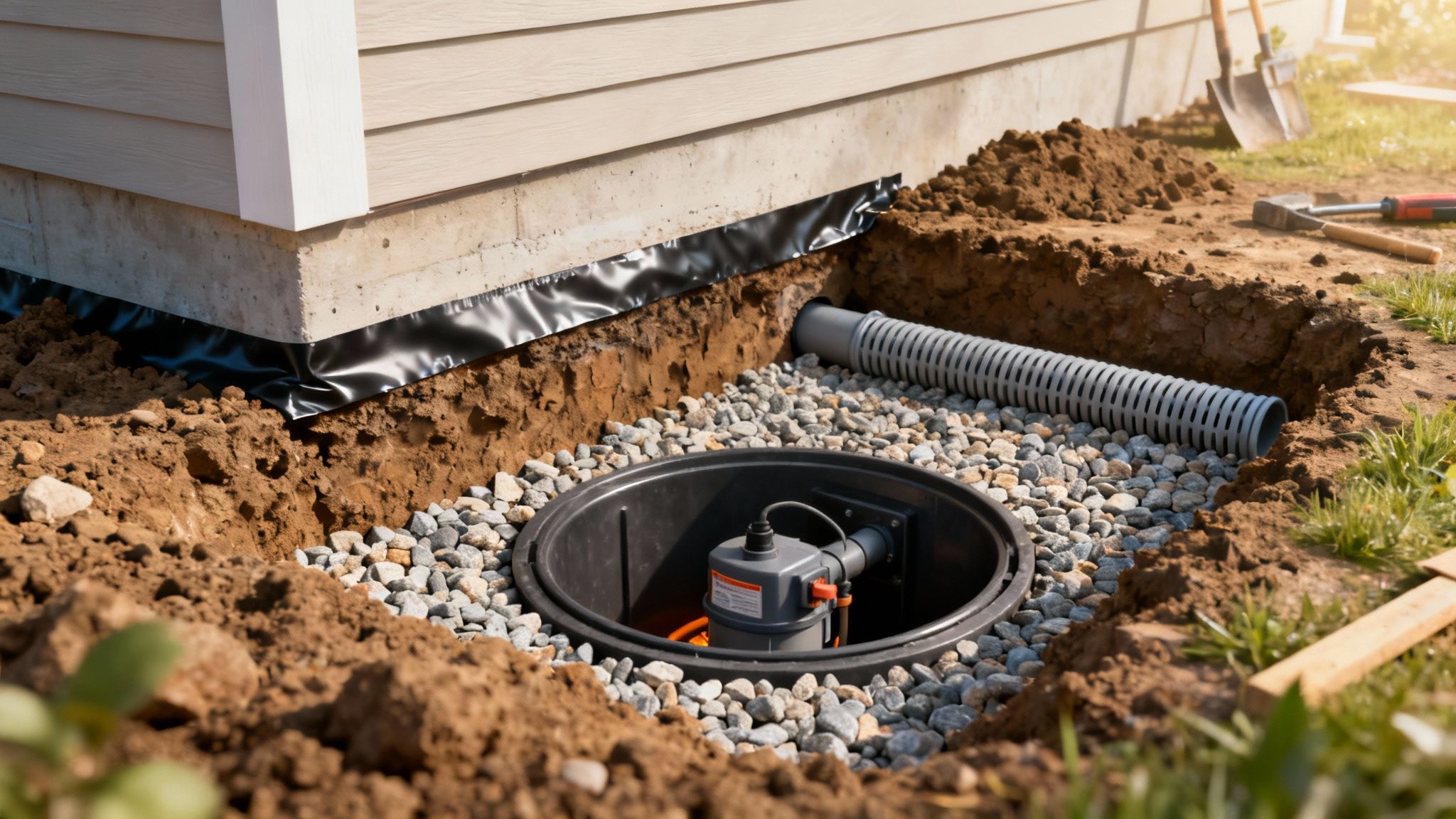
A truly dry basement is built from the outside in. Before a single scoop of dirt is backfilled against your new foundation walls, we install a multi-layered barrier designed to tell water to take a hike.
- Exterior Waterproofing Membrane: This is like a high-tech raincoat for your concrete. We apply a specialized, seamless coating or a heavy-duty membrane directly to the exterior walls. Its only job is to stop moisture from ever touching the foundation.
- Foundation Drain (French Drain): And this is the gutter system for that raincoat. We lay a perforated pipe in a gravel bed around the entire footing of the foundation. It acts like a magnet for any groundwater, collecting it before it can build up pressure against the walls.
This one-two punch works together to intercept and channel water safely away from your home. It’s an actionable insight we share with every client: manage water before it ever becomes a threat.
The Interior Support System
Even with a flawless exterior system, a good backup plan provides total peace of mind—especially here in North Carolina, where a sudden downpour can saturate the ground in minutes.
Enter the sump pump. This is your final, failsafe layer of protection. We install it in a basin (the sump pit) at the lowest point of the basement floor. If any water somehow manages to get under the slab, it flows right into the pit. The pump then automatically kicks on and sends that water far away from your house.
It’s easy to focus on the technical side, but the emotional and financial cost of a flood is immense. Just trying to navigate the complexities of water damage insurance claims is a nightmare. A proactive defense is always the best policy.
A Lumberton Home That Stood Strong
"We chose SEGC because of their reputation for quality, and they proved it when Hurricane Matthew hit. While our neighbors were dealing with flooded basements, ours was bone dry. The peace of mind that came from knowing our home was built right, with a foundation that could handle the worst of North Carolina’s weather, is priceless. That’s the SEGC difference—they build homes to last a lifetime."
– Testimonial from a Lumberton, NC Client
This story from one of our Lumberton clients says it all. It’s a powerful reminder of why we are so fanatical about getting our waterproofing and drainage systems right. As a Native American-owned firm with 21+ years of proven results, we know that building trust means building homes that protect families, no matter the weather. Our 8(a) and HUBZone certifications are just symbols of that deep commitment.
Protecting your house with a basement from water is one of the most important investments you'll ever make. It's the key to turning that below-ground space from a potential problem into a valuable, comfortable part of your family’s home.
Let's Talk Money: What a Basement Really Costs
Alright, let's pull back the curtain and talk numbers. Discussing the cost of building a house with a basement can feel like trying to nail Jell-O to a wall, but it doesn't have to be that complicated. At SEGC, our commitment to client trust means being upfront and honest. We've always believed that a well-informed client is a happy client, and that starts with knowing exactly where your investment is going.
Think of it this way: pricing a basement is like building a custom truck. You have the base model price, but the final sticker price really depends on whether you're adding a V8 engine, an off-road suspension package, or a luxury interior. Your basement is the same deal—the final cost is a direct reflection of the choices you make.
What’s Driving the Price Tag?
A few key factors are doing the heavy lifting when it comes to the budget for your basement foundation. Getting a handle on these early on is the best way to make smart decisions that line up with your family’s needs and your bank account.
Here are the actionable insights on the main cost drivers:
- Digging In (Excavation & Soil): The first thing we do is move a whole lot of dirt. The deeper we go, the more it costs. Our local leadership in the Sandhills, from Fayetteville down to Lumberton, means we understand the sandy, loose soil here. That requires special shoring techniques to keep the walls from caving in during construction—a critical safety measure that adds to the budget.
- Keeping Water Out (Waterproofing): Like we’ve been saying, waterproofing is an absolute must. But there are levels to it. Basic damp-proofing is the bare minimum, but if you want a space you can actually live in without worrying about musty smells, a full-on system is the way to go. We're talking an exterior membrane, French drains, and a sump pump—the gold standard we always recommend.
- The Bones of the Build (Structural Needs): The raw materials—concrete and steel—are a huge chunk of the cost. The bigger your house's footprint, the more material you'll need for the footings and walls. It’s a simple equation.
- Making It Livable (Finishing): An unfinished basement for your holiday decorations and old furniture will cost a fraction of a fully finished one. The moment you start framing walls, running electrical and plumbing, and putting in drywall and flooring, you’re basically building another floor of your home. The cost will naturally reflect that.
You Can't Skimp on Safety and Code
Beyond the big stuff, there are rules we have to follow—building codes designed for one purpose: keeping your family safe. If you plan to have a bedroom in your basement, an egress window isn't a suggestion; it's the law.
And this isn't just any window. It's a lifeline. It has to be big enough and low enough to the floor for someone to climb out of in an emergency. Sure, it adds to the cost, but its value is priceless. This is one place our commitment to quality means we will never, ever cut corners.
"Our whole process is built on open conversation. We literally walk our clients through every line item, from the dirt work to the final doorknob. We want them to see where every single dollar is going so they feel good about their investment. Building a legacy means building with integrity, and for us, that starts with being totally transparent about the costs."
– SEGC Project Manager
As a Native American-owned firm with over 21 years of proven results, that's the kind of trust we've built our name on. Our 8(a) and HUBZone certifications are more than just letters; they’re a testament to our dedication to quality and accountability. Building your house with a basement is a huge step, and our promise is to guide you with the honesty and expertise you deserve.
How to Maximize Your Basement Living Space
A basement foundation is so much more than just a concrete box holding up your house. It's a blank canvas, an opportunity waiting to happen. Once we’ve got it poured, sealed, and perfectly dry, the real fun can start. This is the moment a house with a basement stops being a construction project and starts becoming your home—a place for memories, hobbies, and family.
Honestly, the possibilities are only limited by your imagination.
It’s all about creating a lower level that feels like a natural, intentional part of your home, not some forgotten dungeon. This is where thoughtful design comes into play. As a Native American-owned firm, we take immense pride in helping families in Fayetteville and Lumberton build spaces that tell their story and serve their unique needs for generations.
Turning Dreams into Livable Spaces
So, what’s the big idea for your basement? This is one of our favorite questions to ask clients. Will it be the go-to spot for movie nights? A private getaway for visiting family? Maybe it's the workshop you've always dreamed of. Each of those visions requires a totally different game plan for the layout, lighting, and finishes.
The first, most critical step is figuring out your main goal for the space. That single decision will steer every other choice you make, from where we put the outlets to what kind of flooring goes down.
This simple flowchart is an actionable insight to help you zero in on what you really want, whether it's a space to relax, work, host, or have long-term guests.
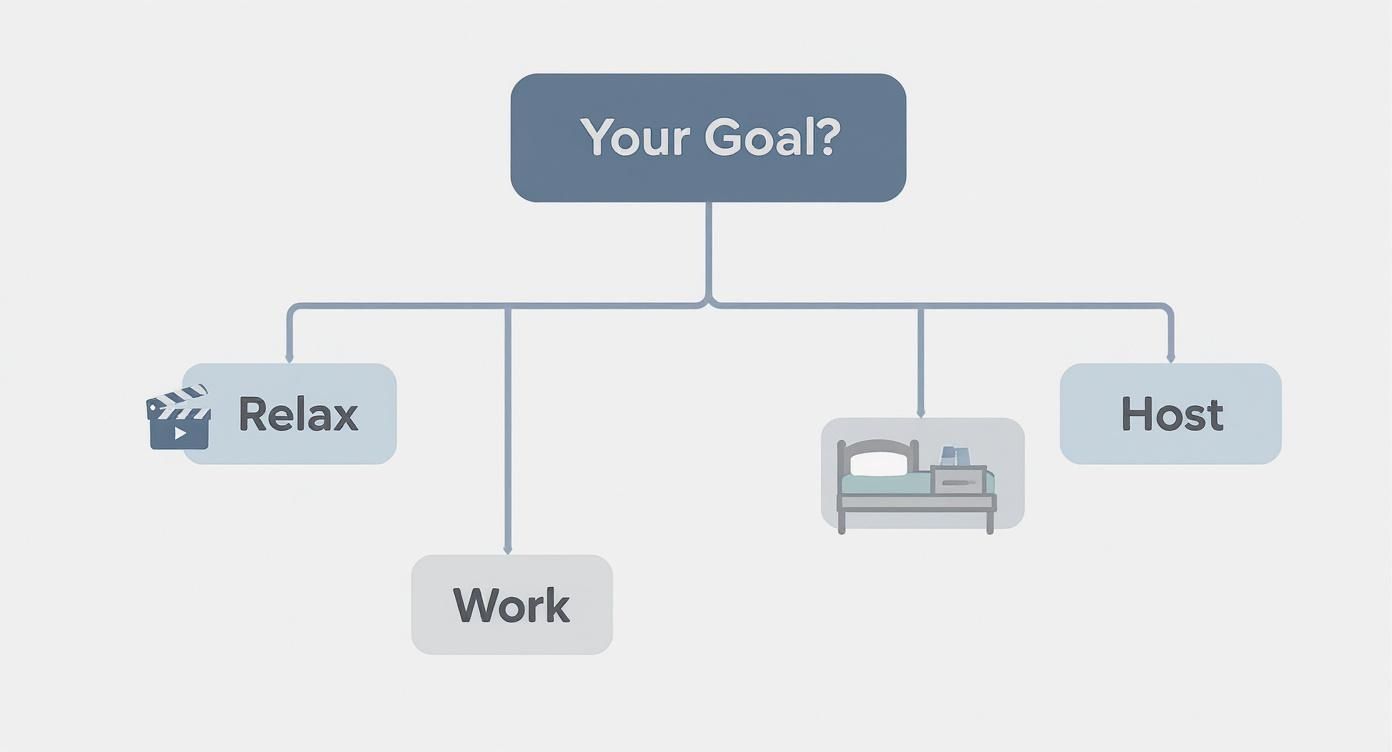
As you can see, when the design truly matches your lifestyle, you end up with a space that gets used and loved every single day.
Popular Basement Transformations
With over 21+ years of proven results in the custom home game, we've seen some truly amazing basement makeovers. Here are a few of the most popular ideas that keep our clients coming back for more:
- The Home Theater: Forget sticky floors and overpriced popcorn. Imagine a dedicated room with killer surround sound, comfy tiered seating, and perfect lighting control. We can build custom nooks for your screen and speakers to create a real cinema experience.
- The Guest or In-Law Suite: A private bedroom, a full bathroom, and maybe even a little kitchenette can transform your basement into a five-star retreat for visitors. It’s a brilliant way to add lasting value and flexibility, especially for multi-generational families.
- The Ultimate Home Gym: No more waiting for equipment at a crowded gym. We’re talking durable rubber flooring, mirrored walls, and dedicated outlets for your treadmill and weights. It's your own private, motivating space to crush your fitness goals.
- The Dream Workshop or Studio: For the tinkerers, crafters, and artists out there, a basement is the perfect escape. We can install heavy-duty workbenches, proper ventilation, and bright task lighting to support any passion, from woodworking to painting.
Details That Make a Difference
Making a basement great isn't just about the big-ticket items. It’s the small, thoughtful details that take the space from "finished" to "fantastic." The right finishing touches are what make a lower level feel warm, bright, and inviting.
Take the HVAC system, for example. Your basement needs its own climate zone to stay comfortable year-round without throwing off the temperature or efficiency of your main floors. And let's talk lighting—a smart mix of recessed cans, track lighting, and accent fixtures can completely bust that old "dungeon" myth. For flooring, Luxury Vinyl Plank (LVP) gives you the gorgeous look of hardwood but stands up way better to moisture, making it a perfect choice for below-grade spaces.
This isn't just a local trend; homeowners everywhere are waking up to the potential under their feet. The global market for basement modifications is expected to hit $5 billion USD by 2025, with private homes driving about 60% of that growth. People want to use every single square foot of their property, and we're here for it.
As an 8(a) and HUBZone-certified builder, quality is in our DNA, from the ground up. We truly believe a well-designed basement is one of the smartest investments you can make—it adds serious financial value and an immeasurable boost to your quality of life.
For some practical, step-by-step advice on getting your new space in order, check out this fantastic guide on how to organize your basement. And when you're ready to get inspired, we have tons of floor plans for basements to get your own creative ideas flowing. Let's build a legacy, not just a house.
So, Should You Build a Basement? Let's Break It Down.
Making the final call on a basement is a big deal, but it shouldn't be a nail-biter. You've learned about the different types, the costs, and all the cool possibilities. Now you’ve got the right info to choose what's best for the home you’re dreaming of. As your building partner, our job here at SEGC is to make sure you walk into that decision feeling confident and clear-headed.
Think of this checklist as your final set of actionable insights before breaking ground—a gut check to make sure your vision and reality are on the same page.
First Things First: Your Life and Your Vision
Let's start with the most important part: you. How you live day-to-day should be the blueprint for your home's design.
- What’s the big idea for this space? Are you dreaming of a killer home theater, a quiet guest suite, a gym, or just a place to finally store all your stuff?
- How important is it to have separate spaces for different activities? Do you need a dedicated man cave or a quiet office away from the main floor chaos?
- Think down the road. What will life look like in 5-10 years? Will the kids need a teen hangout spot? Could your parents need a place to stay?
- Is sunlight a must-have? If you can't stand the thought of a dark lower level, a walkout basement might be calling your name.
Getting Real: Your Land and Your Budget
Okay, now let's talk brass tacks. A great home plan is one where your dreams fit comfortably within the reality of your property and your budget.
- What’s your all-in number for the foundation and any finishing touches you want?
- Take a look at your lot. Does the slope of the land naturally set you up for something like a walkout?
- Are you ready for the upfront cost? Digging a big hole and making it completely waterproof isn't cheap.
- Have you thought about the long game? Heating and cooling a whole other level will show up on your monthly utility bills.
With 21+ years of building beautiful homes in places like Fayetteville and Lumberton, we've learned one thing for sure: the best decisions are made with your eyes wide open. Our commitment to client trust means giving you the straight talk you need to build a foundation—and a home—that you’ll love for a lifetime.
This checklist is just the beginning. The real magic happens when we start talking. We’re not just here to stack bricks and pour concrete; we’re here to help you build a legacy.
Ready to build a home that tells your family’s story? Get in touch with the SEGC team today and let’s talk about how the right foundation can set the stage for your future.
Got Questions About Basements in North Carolina? We've Got Answers.
Even after you've weighed all the options, a few lingering questions are perfectly normal. After more than 21 years of building custom homes here in North Carolina, believe us, we've heard them all. As your local builder, our job is to give you straight, honest answers so you can feel confident about the home you're building for your family.
Here are a couple of the big questions we get all the time from folks thinking about a house with a basement.
Are Basements Really a Good Idea with North Carolina's Weather?
You bet they are—as long as they're built right. Let's be honest, North Carolina's climate isn't always gentle. We get our share of heavy downpours and have areas with a high water table, which can definitely seem like a challenge. But here’s the secret: they're only challenges if your builder doesn't know what they're doing.
A proper site evaluation and a rock-solid, multi-layered waterproofing system are non-negotiable. That's just how we do things at SEGC. A basement built with that level of care will be just as dry and comfortable as any other room in your house. We’ve built gorgeous, bone-dry basements all over the region, from Fayetteville to Lumberton, and our 21+ years of proven results show that our local leadership is key.
What's the Real Value of a Finished Basement?
Financially speaking, a well-finished basement is a smart move. You can typically expect to see a return on your investment somewhere in the 70-75% range when you sell. But the true value isn't something you can stick on a spreadsheet.
What you're really adding is priceless living space that completely changes how your family uses your home. Think about it: a dedicated guest suite, a home gym where you can actually work out, or the ultimate family movie night spot. The daily joy and convenience that space brings is the real ROI. At SEGC, we build homes that are meant to be lived in and loved for generations, and the real value is in the memories you'll make there.
The biggest—and most expensive—mistake we see people make is trying to skimp on waterproofing and drainage during construction. A few thousand dollars saved upfront can easily turn into a nightmare of water damage, mold removal, and structural headaches later on.
As a Native American-owned, 8(a), and HUBZone-certified company, our entire reputation is built on doing things the right way, the first time. We make sure your foundation is solid from day one, protecting your home and giving you total peace of mind. Building with integrity means building a home that stands strong, protecting the family inside. That’s the foundation of the trust we’ve earned in our community.
Ready to build a legacy, not just a house? The team at South Eastern General Contractors is here to guide you every step of the way. Contact us today and let’s talk about how a custom basement can be the foundation for your family’s future.