
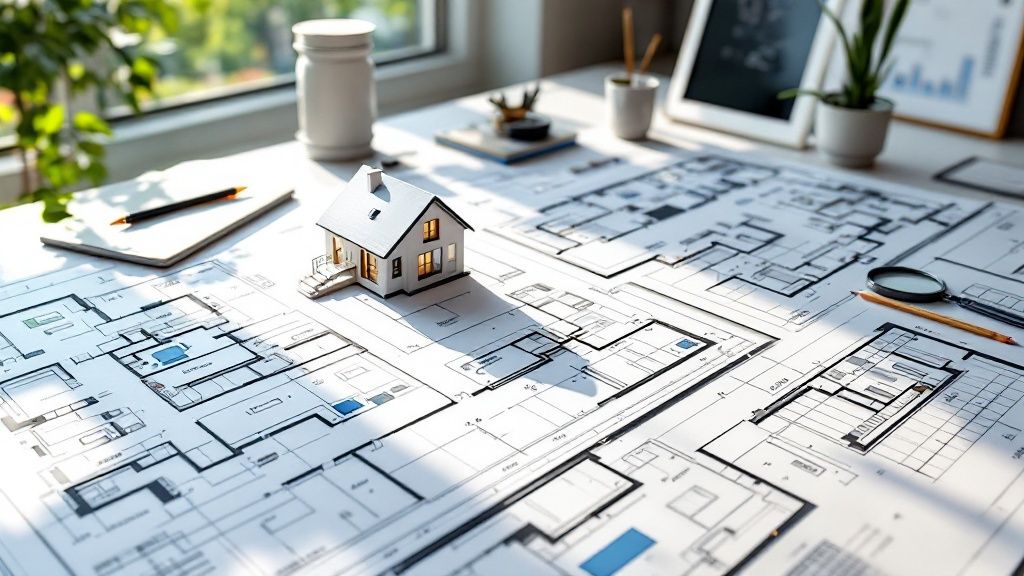
Top 7 Floor Plans for Basement Homes to Maximize Space
A basement is a blank canvas, a foundation of untapped potential waiting to be transformed. But how do you turn that potential into a functional, beautiful, and valuable space? It all starts with the right blueprint. The perfect design can turn a dark, underused area into the most popular room in your house, whether it's a bright home office, a cozy family den, or a full-blown apartment.
As North Carolina's trusted Native American-owned, 8(a), and HUBZone-certified builders, South Eastern General Contractors (SEGC) has spent over 21 years turning visions into legacies in communities like Fayetteville and Lumberton. We believe in building trust, not just structures, and that begins with a solid plan.
In this guide, we're ditching the generic layouts. We’ll break down 7 practical floor plans for basement homes, packed with actionable insights from our local projects. We'll show you exactly how to choose a design that adds lasting value, function, and joy to your home. To truly unlock your home's hidden potential and maximize every square inch, consider implementing some of these Top Basement Organization Ideas as you plan your layout. Let's dig in and build something incredible together.
1. The Fayetteville Favorite: The Walk-Out Basement Floor Plan
If you think basements are just for dusty boxes and spooky spiders, think again. The walk-out basement is here to completely shatter that stereotype, especially in the gorgeous rolling hills of the Fayetteville area. This champion of floor plans for basement homes uses a sloped lot to its advantage, creating a lower level with one or more walls fully exposed to the outdoors.
This means full-sized windows, a door that opens directly to your backyard, and an avalanche of glorious natural light. It transforms the basement from a dark afterthought into a vibrant, fully integrated part of your home. It’s less "subterranean bunker" and more "sun-drenched garden level."
Strategic Breakdown: Why It Works
The magic of the walk-out is its ability to double your home's usable, high-quality living space without doubling the footprint. By building into the terrain, you create a lower level that feels just as inviting as the main floor. For families in North Carolina who love to entertain, this design is an absolute game-changer.
Key Insight: A walk-out basement seamlessly merges indoor and outdoor living. This feature is a massive value-add, creating functional spaces like a patio-level rec room, an in-law suite with a private entrance, or the ultimate entertainment hub.
As a Native American-owned and HUBZone-certified firm deeply rooted in the Fayetteville community, we at SEGC have seen how this plan enhances local lifestyles. We often design these spaces to flow directly onto a covered patio, perfect for those warm Carolina evenings. One of our recent projects just outside Fayetteville featured a walk-out basement that opened to a custom-built fire pit area, creating an entertainment zone that the family uses year-round. This is how a smart plan builds a legacy of family memories.
Actionable Takeaways for Your Home
Thinking about a walk-out basement? Here’s how to get it right:
- Maximize the Light: Use large windows and glass doors on the exposed wall. This is your prime opportunity to flood the space with natural light.
- Create a Destination: Don’t just make it a big, empty room. Designate zones: a media area, a wet bar, a home gym, or a guest suite. Give the space a purpose.
- Connect to the Outdoors: Ensure the exterior access leads to a functional and attractive outdoor space, like a paved patio or a landscaped garden. This creates a powerful indoor-outdoor connection.
This approach is one of the most effective floor plans for basement homes for anyone with a sloped property. It’s an investment that pays off in both lifestyle and property value, turning a simple foundation into a cornerstone of your family’s legacy.
2. The Sunshine Solution: The Daylight Basement Floor Plan
If the walk-out is the superstar of sloped lots, the daylight basement is its equally brilliant sibling, perfect for properties with a more gentle grade. This design is all about strategically capturing sunlight. Instead of one fully exposed wall, a daylight basement typically features a foundation that is partially above ground on two or more sides, allowing for high-set, full-sized windows.
This clever approach turns what could be a dim lower level into a bright, airy space. It’s the ideal compromise when a lot isn’t steep enough for a full walk-out but you still crave that open, well-lit feel. Think less cavern and more "lower-level loft," where every possible angle is used to invite the sun inside.
Strategic Breakdown: Why It Works
The genius of the daylight basement is its versatility and efficiency on subtly sloped properties. It maximizes the potential of a challenging lot, creating valuable, livable square footage that feels connected to the world outside. For homeowners in the varied terrains around Lumberton and Fayetteville, this makes it one of the most practical floor plans for basement homes.
Key Insight: A daylight basement provides the light and ambiance of an upper floor without the cost of adding a full additional story. By elevating the foundation, you create opportunities for bedrooms, offices, or family rooms that are both code-compliant and genuinely pleasant to be in.
As a Native American-owned firm with deep roots in this community, SEGC often incorporates daylight basements into custom homes to solve site-specific challenges. We focus on maximizing window placement to not only capture light but also to frame the best views of the Carolina landscape, a commitment to quality our clients have trusted for over 21 years.
Actionable Takeaways for Your Home
Considering a daylight basement? Here’s the blueprint for success:
- Plan Window Placement Thoughtfully: Work with your designer to position windows to catch morning or afternoon sun. Use high-quality window wells with light-colored finishes to reflect even more light into the space.
- Embrace Light Finishes: Use pale paint colors, light-colored flooring, and reflective surfaces like mirrors to amplify the natural light you have. This makes the entire level feel larger and more open.
- Prioritize Safety and Security: With more windows at ground level, safety is key. For homeowners opting for a daylight basement, the increased window area allows for abundant natural light. When planning these spaces, it's also wise to consider methods to enhance the security of these windows, as outlined in a guide to security film for home windows.
This adaptable design is a fantastic investment, turning a standard foundation into a sunlit sanctuary that elevates your home’s function and value for generations to come.
3. The English Basement Floor Plan
Step back in time to the elegant brownstones of Brooklyn or the stately row houses of Washington D.C., and you'll discover a classic design with modern appeal. The English basement, a hallmark of 19th-century urban architecture, elevates the main living quarters slightly above street level, creating a functional, partially submerged lower level.
This clever design provides a distinct and often private space below the primary residence. Unlike a fully submerged basement, it features windows at the top of the walls, just above ground level, allowing for natural light and ventilation. It's less "dungeon" and more "chic lower-level flat."
Strategic Breakdown: Why It Works
The genius of the English basement lies in its versatility, especially in tight urban or suburban lots where building out isn't an option. It creates a completely separate living unit perfect for a rental apartment, an in-law suite, or a home office with a private entrance, all while maintaining the formal elegance of a raised main floor.
Key Insight: The English basement design is a masterclass in maximizing vertical space. It effectively adds another story of living area without a massive foundation, making it a cost-effective strategy for increasing a home's value and functionality.
As a HUBZone-certified firm dedicated to innovative building solutions in communities like Fayetteville, we at SEGC appreciate how these floor plans for basement homes can provide flexible housing options. This design can support multi-generational living or create rental income, building a stronger financial legacy for the homeowner. Our commitment to quality ensures every project, no matter the style, is built on a foundation of client trust.
Actionable Takeaways for Your Home
Considering an English-style basement? Here’s how to perfect it:
- Prioritize Waterproofing: This is non-negotiable. Invest in a superior interior and exterior waterproofing system to prevent any moisture issues from day one.
- Embrace Window Wells: Use deep, wide window wells to funnel as much sunlight as possible into the space. This simple addition dramatically brightens the lower level.
- Plan for Privacy and Access: If you plan to use it as a separate unit, consider a dedicated entrance and separate utility meters. This adds significant value and convenience.
This floor plan is a brilliant solution for adding valuable, versatile space to your property. To explore how this or other basement home designs on southeasterngc.com can fit your vision, our team is ready to help you build a home that serves your family for generations.
4. Finished Rec Room Basement Floor Plan
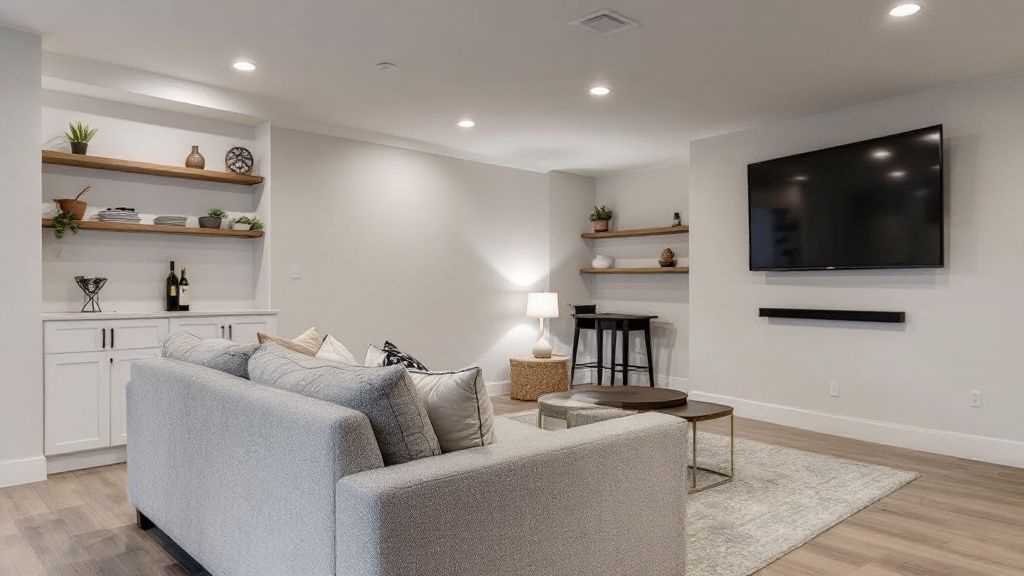
This is the classic, time-tested approach to basement finishing, the one that turns a forgotten lower level into the fun zone of the house. The Finished Rec Room Basement Floor Plan dedicates the entire space, or a large portion of it, to leisure and entertainment. It’s less about adding formal living quarters and more about creating a dedicated escape for family fun, movie nights, and friendly get-togethers.
Instead of a formal living room, you get a sprawling entertainment lounge. Think 1970s suburban split-levels with wood paneling and a pool table, or modern ranch-style renovations featuring a state-of-the-art home theater. It’s a design that says "relax, unwind, and have some fun."
Strategic Breakdown: Why It Works
The genius of the rec room plan is its simplicity and focus. By not trying to cram in bedrooms and full bathrooms, you maximize open space for activities. This creates a casual, comfortable environment that feels distinctly separate from the main living areas upstairs, offering a perfect retreat for kids and adults alike. It’s an incredibly efficient way to add high-value square footage dedicated purely to lifestyle enhancement.
Key Insight: This plan is all about creating a purpose-built fun zone. It’s one of the most cost-effective floor plans for basement homes because it often requires less complex plumbing and fewer partition walls, making it a fantastic return on investment for family enjoyment.
As a Native American-owned firm that has built countless family homes in the Lumberton and Fayetteville areas, we at SEGC understand the importance of having a dedicated space for family bonding. We often design these basements to include a mix of features, like a media corner, a small wet bar for hosting, and durable flooring that can handle everything from spilled drinks to energetic kids. Our proven results over 21+ years mean we know how to build spaces that last.
Actionable Takeaways for Your Home
Ready to build your ultimate rec room? Here’s what to focus on:
- Plan Your Power: Don’t underestimate your electrical needs. Plan for plenty of outlets for TVs, game consoles, speakers, and kitchenette appliances. Consider dedicated circuits for high-draw equipment.
- Master the Lighting: Since natural light may be limited, use recessed lighting to maximize headroom and create a bright, inviting atmosphere. Add dimmers for a true movie theater experience.
- Control the Climate: A basement rec room is only fun if it's comfortable. Prioritize proper insulation, a vapor barrier to control moisture, and a good dehumidification system to keep the space dry and fresh year-round.
This floor plan is a fantastic choice for families looking to add a dedicated space for entertainment and relaxation without the complexity of a full in-law suite.
5. The Basement Apartment Floor Plan
What if your basement could pay for itself, or even turn a profit? The basement apartment floor plan transforms your lower level from a cost center into a powerful asset. This isn't just about adding an extra bedroom; it's about creating a fully self-contained living unit complete with a kitchen, bathroom, living area, and private entrance.
This design is a masterclass in maximizing property potential. It serves as an ideal solution for generating rental income, providing a private space for extended family, or creating an independent suite for adult children. It's less "spare room" and more "smart investment," turning unused square footage into a functional, income-generating home within your home.
Strategic Breakdown: Why It Works
The genius of the basement apartment lies in its versatility and financial return. It addresses the growing need for flexible living arrangements, such as multi-generational housing or affordable rental options in desirable neighborhoods. For homeowners in communities like Fayetteville, it’s a strategic way to build wealth while providing valuable housing.
Key Insight: A well-designed basement apartment offers financial independence and family flexibility. By creating a legal, safe, and comfortable dwelling, you significantly boost your property's value and create a new stream of income.
As a Native American-owned firm dedicated to building lasting legacies in North Carolina, we at SEGC understand the importance of smart, functional design. We ensure these apartments meet all local codes, focusing on safety features like proper egress and soundproofing to ensure privacy for everyone. Our 8(a) and HUBZone certifications reflect our commitment to excellence and community development.
Actionable Takeaways for Your Home
Considering an accessory dwelling unit (ADU) in your basement? Here's the blueprint for success:
- Prioritize Privacy and Safety: A separate entrance is non-negotiable. Ensure you install proper egress windows in every bedroom and use sound-dampening materials between floors for acoustic separation.
- Design for Independence: A successful apartment needs a functional kitchenette, a full bathroom, and distinct living and sleeping zones. Consider separate utility meters if it’s a long-term rental.
- Navigate the Rules: Before you build, thoroughly research local zoning laws and permit requirements. Partnering with a knowledgeable, certified contractor like SEGC is the first step to ensuring your project is compliant and successful.
These actionable steps are essential when considering one of the most financially savvy floor plans for basement homes.
6. The Split-Level Sync: A Harmonious Basement Plan
The split-level home, a beloved icon of mid-century suburban design, offers one of the most unique and integrated floor plans for basement homes. Unlike a traditional basement that feels disconnected, a split-level's lower level is ingeniously woven into the home's very fabric. It sits partially below grade, often just a half-flight of stairs down from the main living area, creating a natural and easy flow between levels.
This design brilliantly avoids the "down in the cellar" feeling. Because it isn't fully submerged, it allows for larger, above-grade windows on one or more walls, inviting in light and providing views. It’s less of a separate basement and more of a cohesive lower living area, perfect for a family den, playroom, or home office that feels like a true part of the house.
Strategic Breakdown: Why It Works
The genius of the split-level basement is its inherent connectivity. It breaks down the psychological barrier between the main floors and the lower level, making the space feel more accessible and frequently used. This layout is a fantastic solution for families who need distinct zones for different activities without feeling compartmentalized.
Key Insight: A split-level basement excels at creating a casual, multi-tiered living experience. It’s an efficient use of vertical space that provides a bonus living area without the deep excavation required for a full basement, making it a cost-effective choice.
At SEGC, we appreciate how this classic design can be modernized for today's families in communities from Fayetteville to Lumberton. As a HUBZone-certified firm dedicated to building lasting local legacies, we often see these plans adapted to include modern features like a dedicated home theater or a private guest suite, enhancing their original charm with contemporary function. A client in Lumberton recently told us, "SEGC didn't just renovate our basement; they understood our family and created a space that brought us closer together." This is the trust we strive to build with every project.
Actionable Takeaways for Your Home
Considering a split-level design? Here’s how to make the basement shine:
- Create Visual Flow: Use consistent flooring and color palettes between the main level and the basement stairs to visually connect the spaces and encourage movement between them.
- Zone the Climate: Split-level homes can have unique heating and cooling challenges. Plan for zoned HVAC systems to ensure the lower level remains comfortable year-round.
- Embrace the Connection: Keep the stairway open and inviting. Consider half-walls or railings instead of full walls to maintain sightlines and a sense of openness between the levels.
This integrated approach makes the split-level one of the most family-friendly floor plans for basement homes, turning a structural necessity into a central and celebrated part of daily life.
7. The Home Office Basement Floor Plan
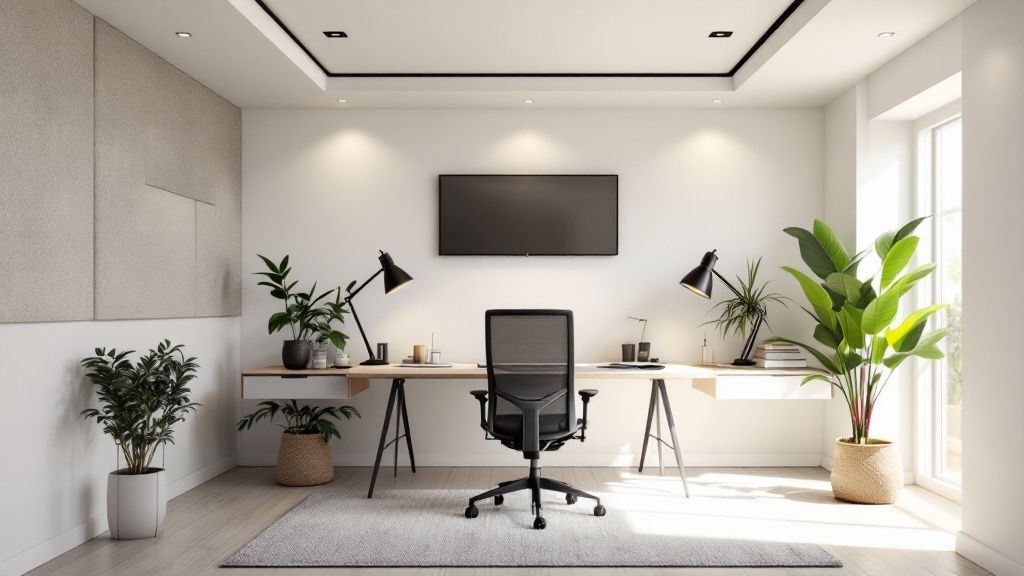
The daily commute from the bedroom to the kitchen table is officially over. The home office basement floor plan has surged in popularity, transforming underused lower levels into professional sanctuaries for focus and productivity. This design moves beyond a simple desk in a corner, creating a purpose-built environment that separates work life from home life, even when they're under the same roof.
It’s about carving out a dedicated, quiet, and fully equipped workspace. For the remote professional, freelancer, or small business owner in Fayetteville, this isn't a luxury; it's a strategic necessity. This plan turns a potential distraction zone into a high-performance headquarters, complete with the privacy and infrastructure needed to conquer the workday.
Strategic Breakdown: Why It Works
The genius of a basement home office is its inherent separation. It provides the quiet and isolation required for deep work, client calls, and video conferences without the interruptions of main-floor family life. This physical and psychological distance is crucial for maintaining a healthy work-life balance, boosting productivity and professionalism.
Key Insight: A dedicated basement office is an asset that adds significant functional and resale value. It addresses the modern demand for flexible work-from-home solutions, making a property far more attractive to a growing segment of professional buyers.
As a HUBZone-certified firm, we at SEGC understand the needs of entrepreneurs and professionals in our community. We've seen firsthand how a well-designed office can empower a home-based business. Our project lead, who has over 15 years of experience in residential construction, emphasizes that "the right office layout isn't just about square footage—it's about creating a workflow that enhances productivity." This is the expert insight we bring to every job.
Actionable Takeaways for Your Home
Ready to build your professional command center? Here’s how to do it right:
- Prioritize Infrastructure: Don't skimp on the essentials. Ensure robust, hard-wired internet connectivity, ample electrical outlets, and dedicated circuits for your equipment.
- Engineer the Environment: Install full-spectrum or "daylight" lighting to combat the typical basement gloom and reduce eye strain. Proper ventilation and climate control are non-negotiable for all-day comfort.
- Design for Professionalism: If you'll be meeting clients, consider a separate entrance for privacy and a professional impression. Incorporate built-in shelving and soundproofing to create a polished, functional space.
This is one of the most practical floor plans for basement homes in today's work-from-anywhere world. It’s an investment in your career that pays dividends in productivity and peace of mind.
Basement Home Floor Plans: 7-Style Comparison
| Basement Plan Type | Implementation Complexity 🔄 | Resource Requirements ⚡ | Expected Outcomes 📊 | Ideal Use Cases 💡 | Key Advantages ⭐ |
|---|---|---|---|---|---|
| Walk-Out Basement Floor Plan | Moderate to High – requires sloped lot and excavation | High – drainage, waterproofing, large windows | Bright, functional living space with outdoor access | Sloped lots, recreational homes, rentals | Maximizes light, seamless indoor-outdoor flow, increases property value |
| Daylight Basement Floor Plan | Moderate – needs partial exposure on multiple walls | Moderate to High – window wells, drainage needed | Brighter basement, better ventilation, flexible layout | Gentle slopes, various lot types | More natural light than traditional basements, flexible design |
| English Basement Floor Plan | High – elevated main floor, masonry construction | High – requires elevation, waterproofing | Distinct zones, rental opportunities, urban lot optimization | Urban settings, historic or traditional homes | Classic appeal, street visibility for basement, rental income potential |
| Finished Rec Room Basement Plan | Low to Moderate – typical basement finishing | Moderate – insulation, lighting, dehumidification | Comfortable entertainment space, added living area | Family homes, entertainment-focused basements | Cost-effective, flexible use, noise separation |
| Basement Apartment Floor Plan | High – fully functional independent unit | High – kitchen, bathroom, utilities, code compliance | Rental income, extended family housing | Rentals, ADUs, in-law suites | Generates income, maximizes functional space, independent living unit |
| Split-Level Home Basement Plan | Moderate – integrated multi-level design | Moderate – windows, heating zones | Seamless flow between levels, distinct living areas | Split-level homes, suburban developments | Natural light, efficient use of sloped lots, flow between levels |
| Home Office Basement Floor Plan | Moderate – requires technical upgrades | Moderate – lighting, ventilation, wiring | Dedicated professional workspace, productivity boost | Remote work, home business | Separate workspace, cost-effective vs. renting external office |
Building Your Legacy, From the Foundation Up
And there you have it, a journey through the subterranean world of basement design! From the sun-drenched possibilities of a walk-out basement to the cozy, self-contained universe of an in-law suite, we've explored how the right layout can completely redefine your home’s functionality and feel. The key takeaway? Your basement is not just leftover space; it's a blank canvas brimming with potential.
We’ve seen how strategic placement of egress windows can transform a dim daylight basement into a vibrant living area. We analyzed how a split-level design ingeniously integrates the lower level, and how an English basement offers a clever solution for urban or sloped-lot properties. Each of these floor plans for basement homes offers a unique blueprint for expanding your lifestyle, whether you’re creating a revenue-generating apartment, a high-tech home office, or the ultimate family rec room.
Key Insights to Build Upon
Let's distill the core strategies we've uncovered:
- Light is Everything: Natural light is the most valuable currency in basement design. Prioritize walk-out, daylight, or English basement styles whenever the landscape allows.
- Function Dictates Form: The best floor plan is one that directly serves your family's needs. Define your primary goal, whether it's entertainment, privacy, or productivity, before committing to a layout.
- Mastering the Mechanicals: Don't let HVAC units, sump pumps, and water heaters be an afterthought. Smart design integrates these essential systems into storage areas or dedicated utility closets, maximizing usable square footage.
The journey from a simple concrete slab to a fully realized living space is complex. It requires more than just a good design; it demands impeccable execution, a deep understanding of local building codes, and a commitment to quality that stands the test of time. This is where a trusted partner makes all the difference.
As a Native American-owned, 8(a), and HUBZone-certified firm, South Eastern General Contractors has spent over 21 years building more than just structures in Fayetteville, Lumberton, and the surrounding communities. We build trust, relationships, and legacies. We understand that a home is the foundation of your family's story, and we bring a level of dedication and craftsmanship to ensure that foundation is rock-solid. Choosing the right floor plans for basement homes is the first step; choosing the right builder is the one that guarantees a beautiful, lasting result.
Ready to transform your basement from an idea into an expertly crafted reality? Partner with South Eastern General Contractors, a trusted local leader with over two decades of proven experience in bringing complex floor plans to life. Contact us today to start building your legacy, from the ground down.