A Practical Guide to Building a Farmhouse
Building a farmhouse isn't just another construction project. It’s about putting down roots and creating a home that feels like it’s always been there, perfectly settled into the land. It's a beautiful dance between timeless country charm and the way we actually live our lives today, and getting it right takes a clear vision and a builder you can genuinely trust. With over 21 years of proven results building dream homes in communities like Fayetteville and Lumberton, we've had the honor of walking countless families down this path.
So, You're Ready to Build Your Farmhouse
Kicking off a custom home build is a huge deal, no doubt about it. But big doesn't have to mean overwhelming. Here at South Eastern General Contractors (SEGC), we’ve always believed that the best projects start with empowering our clients. From our very first chat, we want you to feel informed and in control. This is a partnership, after all—a team effort built on client trust and a shared vision of turning your ideas into a real, tangible home that will be part of your family’s story for generations.
As a Native American-owned, 8(a), and HUBZone certified firm, our connection to quality and community is at the heart of everything we do. We’ve spent more than two decades refining our craft in places like Fayetteville and Lumberton, making sure every single home we build is a true reflection of the family who will live there. Our local leadership is deeply invested in the community's success, because we don't just put up walls; we build legacies.
To give you a better feel for how this all gets started, we’ve mapped out the first critical steps of planning. Think of this as the foundation before the foundation is even poured. It’s all about defining what you want, understanding your land, and locking in that perfect blueprint.
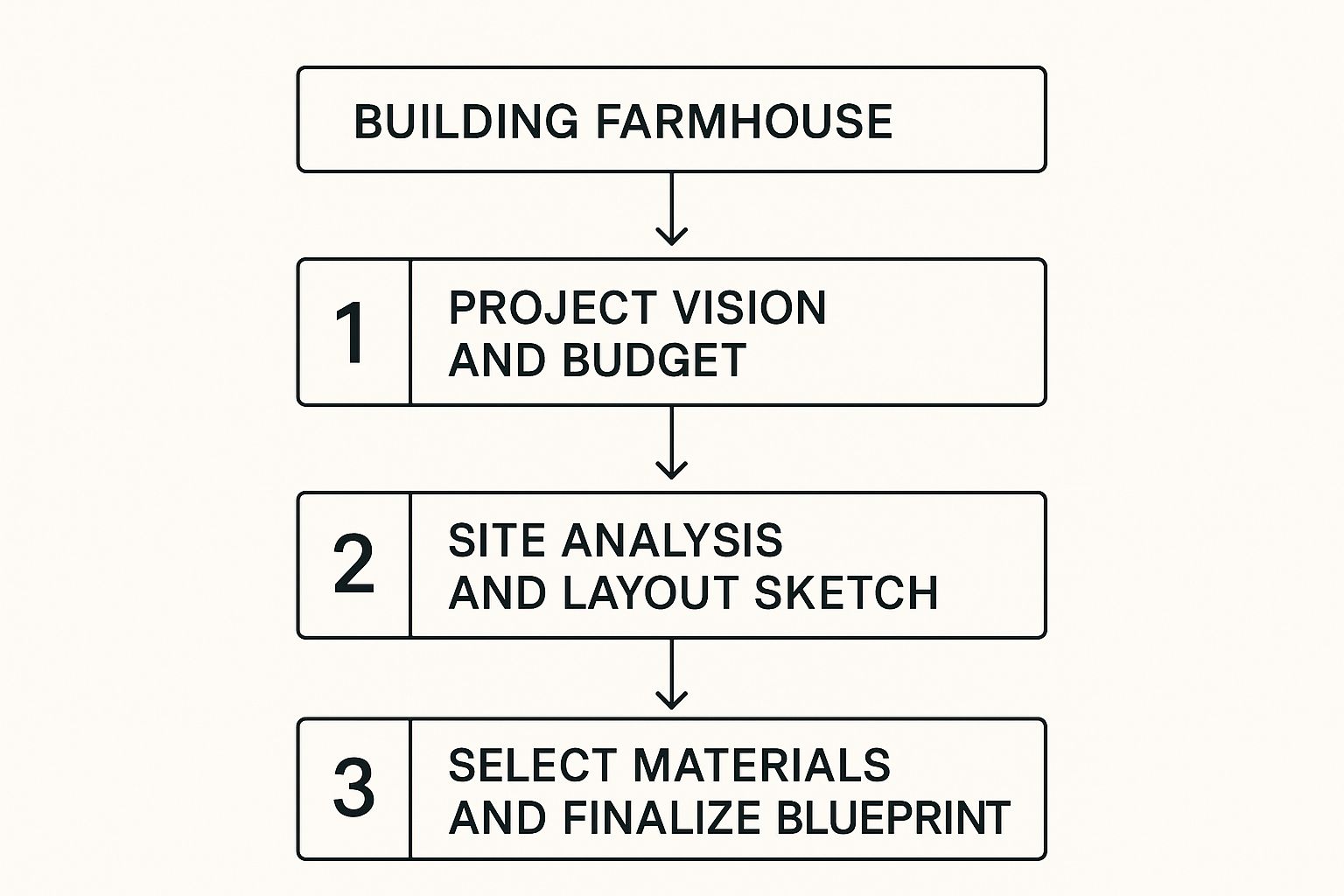
This little roadmap really drives home the point: a successful build starts way before the first scoop of dirt is moved. Solid, thoughtful planning is what makes the rest of the process go smoothly.
The Farmhouse Building Journey at a Glance
Getting a bird's-eye view of the entire process can make it feel much more manageable. While the details of every custom farmhouse are unique, the major milestones are pretty consistent. This table breaks down what you can expect from that first spark of an idea all the way to move-in day.
| Stage | Key Activities | Typical Timeline |
|---|---|---|
| Dream & Discovery | Gathering inspiration, defining your must-haves, setting a rough budget, and finding the right land. | 1-3 Months |
| Design & Planning | Working with architects and designers to create blueprints, selecting materials, and finalizing the site plan. | 3-6 Months |
| Permits & Approvals | Submitting plans to local authorities, getting engineering stamps, and securing all necessary building permits. | 1-4 Months |
| Construction | Site prep, foundation, framing, roofing, mechanicals (plumbing, HVAC, electrical), and exterior/interior finishes. | 9-18 Months |
| Finishing Touches | Landscaping, final inspections, punch list walk-through, and getting your Certificate of Occupancy. | 1-2 Months |
Seeing it all laid out like this helps you prepare for what's ahead and appreciate that building a home is a marathon, not a sprint. Each stage builds upon the last, leading to the moment you finally get your keys.
The Big Three: Our Core Phases
Let's zoom in a bit. Knowing the major phases of the journey is the first step toward a build that feels exciting, not stressful. We've honed our process to bring clarity and confidence to every stage.
-
Phase 1: Vision and Discovery
This is where we just listen. Seriously. We dive deep into your lifestyle, your tastes, and your goals for the home. Are you dreaming of a classic wrap-around porch for lazy Sunday afternoons? Or maybe a wide-open, modern kitchen that’s the heart of the home? This phase is all about getting your dream onto paper in a way that makes sense. -
Phase 2: Planning and Design
Now your ideas really start taking shape. We’ll work together on everything from picking the perfect spot on your land to developing floor plans and choosing materials. Our deep-rooted knowledge of North Carolina's local zoning and land-use quirks helps us turn potential headaches into smart design opportunities. -
Phase 3: Execution and Construction
With a rock-solid plan in hand, our team gets to work bringing your farmhouse to life. This is where our obsession with quality really comes out. Through constant communication and meticulous project management, we keep things moving smoothly, on schedule, and within budget.
At SEGC, we don't just build structures; we build legacies. Our entire process is designed around transparency and client trust, making sure your journey is just as rewarding as the incredible home you'll have at the end.
This guide is your inside look at each of these phases. We'll walk you through it all, sharing practical tips and expert advice from our team. Let’s start creating your forever home, together.
It All Starts with the Right Piece of Dirt
Every great farmhouse story begins with the land. Long before the first nail is hammered, the perfect plot of earth sets the stage. It's more than just a dot on a map; it's the canvas for your entire dream. But finding that sweet spot, especially around here in Robeson or Cumberland County, means looking past the pretty views. This is where the real, boots-on-the-ground work begins, and it's what separates a smooth build from a project full of expensive surprises.
After 21+ years in this business, we've seen it all. We know how the hidden details—the stuff underground—can make or break a budget. Things like soil type, how high the water table is, and where the utilities are can completely change the game. That seemingly perfect, flat field might be hiding a secret that adds tens of thousands to your site prep costs.

Do Your Homework Before You Fall in Love
You wouldn't marry someone without getting to know them first, right? Well, think of buying land the same way. Before you get emotionally attached, you need to ask the tough questions. As a trusted, Native American-owned firm with deep roots in communities from Fayetteville to Lumberton, our commitment to quality means we empower our clients to check every single box.
Here’s your actionable insight checklist:
- Zoning and Covenants: First things first, is the land even zoned for a house? Beyond that, you need to sniff out any neighborhood covenants or restrictions. You don't want to find out later that you can't build your dream workshop or that your house has to be a certain size.
- Utility Access: Find out exactly where the hookups are for electricity, water, and—let's be honest, the most important one—internet. Having to run utility lines a long way can cost a small fortune. If you're going the well and septic route, that's a whole other world of permits and tests.
- Soil and Perk Tests: This one is huge. A percolation (or "perk") test tells you if the soil can handle a septic system. If the soil doesn't drain well, you could be on the hook for a complex and very expensive engineered system.
- Topography and Drainage: Take a good look at the lay of the land. Does it slope? Will it need a ton of grading work just to get a flat spot for the foundation? Good drainage is your best friend in preventing a lifetime of water headaches.
Getting this stuff sorted out upfront isn't just busywork; it's protecting your investment and making sure the land you buy can actually become the home you're picturing.
A Local Story: How We Dodged a $25,000 Bullet
We had a fantastic family come to us a while back, absolutely smitten with a beautiful piece of land just outside Lumberton. On the surface, it looked like a postcard. But when our team walked the property, we saw a few subtle red flags that hinted at a high water table and a lot of clay in the soil—a common challenge in our area.
We urged them to hold off on closing and invest in a full soil analysis. Sure enough, the results confirmed our gut feeling. A standard septic system would have been a swampy, failed mess within a few years. The only solution was a specialized system that would have added an unexpected $25,000 to their budget. With that report in hand, they went back to the negotiating table, adjusted the price, and saved themselves from a massive financial gut punch.
That’s the real value of having a local team in your corner. We know the unique quirks of the land here in North Carolina. It’s how we protect our clients and the reason we've earned their trust for over two decades.
Okay, What Kind of Farmhouse Are We Talking About?
Once you've secured your land, the fun part kicks into high gear: figuring out what your farmhouse will feel like. The word "farmhouse" can mean a lot of different things to different people. Are you picturing the sharp, clean lines and black-and-white look of a Modern Farmhouse? Or are you dreaming of the warm, lived-in vibe of a Rustic Farmhouse? Maybe the balanced, timeless look of a Classic Farmhouse is what speaks to you.
Here are some actionable insights to get those ideas onto paper:
- Make a Vision Board: Jump on Pinterest or flip through magazines and start saving images that catch your eye. Don't limit yourself to just houses! Collect pictures of textures, colors, light fixtures, and even landscapes that capture the mood you're after.
- Think Function Over Form (At First): How does your family actually live? If you love hosting, a big open-concept kitchen and living area is a must. If you have kids and dogs, a dedicated mudroom will be your best friend. Your floor plan needs to work for your real life, not just look pretty in a picture.
- Mix the Old with the New: The best designs feel like they've been there forever but are still fresh. Lean into timeless farmhouse staples like a big, welcoming front porch or classic board-and-batten siding. Then, bring it into this century with modern light fixtures, sleek hardware, and cool finishes.
This vision board becomes your north star. It's the best way to show our design team exactly what you're dreaming of, making sure we're all speaking the same language as we start drawing up the plans for a home that is 100% you. We're not just building a structure; we're building your legacy.
Bringing Your Modern Farmhouse Blueprint to Life
Alright, this is where the magic happens. It’s the phase where all those saved images and daydreams start turning into a real, honest-to-goodness plan. The design process is where your lifestyle, your wish list, and the actual nuts and bolts of architecture all come together.
Let’s be real: the single most important part of this whole adventure is the relationship between you, your architect, and your builder. When that team clicks, everything flows. A great partnership means the final blueprint isn’t just a pretty picture—it's a practical, buildable home that truly reflects you.
For over 21 years, we've been the go-between for families right here in the Fayetteville and Lumberton areas. At SEGC, we see ourselves as translators. We take your vision, make sure it’s captured perfectly in the drawings, and keep one eye firmly on the budget and the realities of construction the entire time.
Weaving Classic Charm into Modern Life
The heart of a farmhouse is in its signature features, right? You can almost picture it: a sweeping wrap-around porch just waiting for a summer storm, or that big, open living space where everyone gathers. The trick is to take those timeless ideas and make them work for the way we actually live today.
A modern farmhouse isn't a historical reenactment; it's a home that has to perform. Here are a few actionable insights for designing a home that really lives.
- Let There Be Light: Massive windows and smartly placed glass doors are a must. They don't just drench the rooms in sunlight; they blur the lines between inside and out.
- Spaces with a Purpose: Let’s face it, country living can be messy. A dedicated mudroom with tough-as-nails flooring and tons of storage isn’t a luxury, it’s a necessity. Same goes for a proper walk-in pantry to handle a family-sized grocery haul.
- The Indoor-Outdoor Connection: Imagine multi-panel sliding doors that peel back to reveal a covered patio. Suddenly, your living room just doubled in size, and you're ready for any party.
A huge part of nailing that farmhouse vibe from the get-go involves selecting the right natural stone for everything from the fireplace hearth to the kitchen island. It’s a foundational choice that sets the tone for the entire home.
Smart Design is Sustainable Design
Building a home that will last for generations means building one that’s efficient, comfortable, and won't cost a fortune to run. I’ve seen it time and again: true long-term value is designed into the bones of a house, long before a single 2×4 is cut.
"Energy efficiency isn't just about the fancy smart thermostat," one of our SEGC project managers always tells our clients. "It’s about how the house sits on the land to catch the sun, the quality of your insulation and windows, and making sure the whole structure is sealed up tight. Those choices will impact your utility bills more than anything else you buy."
This philosophy is baked into who we are. As a Native American-owned firm with deep local leadership, we have a profound respect for our community and the land we build on. Building sustainably is our way of honoring both our heritage and your family’s future. It’s all about building smarter, not just bigger.
A Fresh Look at How We Build
The construction world is always evolving, and the modern farmhouse is no exception. Traditional "stick-built" construction is still the go-to for many, but innovative methods like modular construction are changing the game by offering some serious advantages in speed and control.
Basically, sections of the home are built in a climate-controlled factory and then trucked to your property to be assembled. Here's why this is an actionable insight for your build:
- Blazing-Fast Timelines: No more rain delays! Your foundation can be poured while the modules of your home are being built simultaneously in the factory.
- Top-Notch Quality: Building indoors allows for precision that's tough to match on an open-air job site, with constant quality checks along the way.
- Way Less Waste: Factory building is incredibly efficient, which means less leftover material and a cleaner, tidier construction site.
This isn't some niche idea, either. The global modular construction market was recently valued at around $104 billion and is only getting bigger. For anyone building a farmhouse, it's a fantastic option for cutting down on labor costs and getting the keys to your new home a whole lot faster.
Getting Real with Budgets and Permits
Alright, let's talk about the two words that can make even the most excited future homeowner’s eyes glaze over: budgets and permits. This is the nuts-and-bolts, pen-to-paper part of the process. It’s less glamorous than picking out shiplap, for sure, but getting this stage right is what separates a smooth, successful build from a project plagued by surprise costs and frustrating delays.
Frankly, this is where a builder's true colors show. As a Native American-owned, 8(a), and HUBZone certified firm, we don't just talk about transparency—we live it. With over 21 years of experience building right here in communities from Fayetteville to Lumberton, we’ve learned one simple truth: an informed client is a happy client. We’re here to give you the straight scoop, with detailed proposals and open communication, so you feel in control every step of the way.
Crafting a Realistic Farmhouse Budget
Before a single shovel hits the dirt, we need a budget that sees the whole picture. I've seen it a hundred times: people get laser-focused on the house itself—the framing, the roof, the pretty stuff—and completely underestimate everything else. The reality is, "soft costs" and site work can easily tack on an extra 25-30% to your total.
Here's an actionable insight: think of your budget in buckets. You must account for them all:
- The Land: Pretty straightforward—what you paid for the property.
- The Brain Trust: This is for your architect, engineers (structural, civil), surveyors, and maybe an interior designer.
- The Gatekeepers: Permit and impact fees paid to the county or city. These can vary wildly from one place to the next.
- The Groundwork: This is a huge one. It covers clearing the land, grading, excavation, and running utilities like water, septic, and power to your build site.
- The Main Event: This is the actual construction—foundation, framing, roofing, windows, siding, and all your interior and exterior finishes.
- The Curb Appeal: Don't forget landscaping! Driveways, walkways, sod, and plantings all need to be in the budget.
- The "Oops" Fund: Seriously, do not skip this. A 10-15% contingency fund is your safety net. It’s there for the unexpected issues that always pop up, or for that last-minute upgrade you just can't live without.
Remember, outside forces can ripple into your project, too. We recently saw tractor shipments in North America drop because of soft commodity prices and high interest rates. That slowed down farm profits, which in turn delayed new farmhouse and agricultural construction. It’s a great example of how the bigger economic picture can affect your personal project.
The Not-So-Fun World of Permitting
Navigating the local permitting office can feel like trying to solve a puzzle in a foreign language. The rules in Cumberland County are different from Robeson County, and knowing the local playbook is a massive advantage. This is where a builder’s relationships and on-the-ground experience really pay off.
Our team has been building in this region for decades. We know the specific codes, the common hangups, and who to call to get things moving. That local leadership genuinely saves our clients time, money, and a mountain of stress.
For a new farmhouse in North Carolina, you’re almost certainly going to need these:
- Zoning Permit: Confirms your dream home fits within the local land-use rules.
- Well & Septic Permits: Essential if you're not on city services. This involves soil tests and detailed plans before you can even think about digging.
- Building Permit: This is the big one. It covers the structural integrity, electrical, plumbing, and mechanical systems of your home.
- Driveway Permit: Often required by the county or state if you’re creating a new entrance onto a public road.
The secret to a painless permitting process? Flawless paperwork. The number one cause of delays is an incomplete or inaccurate set of construction documents. Having a top-notch contractor who sweats the details and submits everything correctly the first time is invaluable. This is why it’s so critical to build your team wisely from the very beginning.
For more on choosing the right partner, check out our guide on how to find a good contractor. It’s the single best investment you can make in your project's success.
Bringing Your Farmhouse to Life
Alright, the plans are signed off on and the permits are finally in hand. This is where the real fun begins. The quiet field is about to get loud, and your dream farmhouse will start clawing its way into existence. It's the moment when blueprints become walls, and our obsession with quality and safety kicks into high gear.
For over 21 years, we’ve been choreographing this complex dance of concrete trucks, lumber deliveries, and skilled crews all over North Carolina, from Fayetteville down to Lumberton. As a Native American-owned, 8(a), and HUBZone certified firm, our reputation is everything. We sweat the small stuff so you can just kick back and watch your forever home take shape.
Pouring the Foundation and Raising the Frame
The first real milestone is pouring the foundation. This isn't just a slab of concrete; it's the bedrock of your entire home, and there's zero room for error. Whether we’re doing a slab, a crawl space, or digging out a full basement, our crew is meticulous about getting every measurement and every pour absolutely perfect.
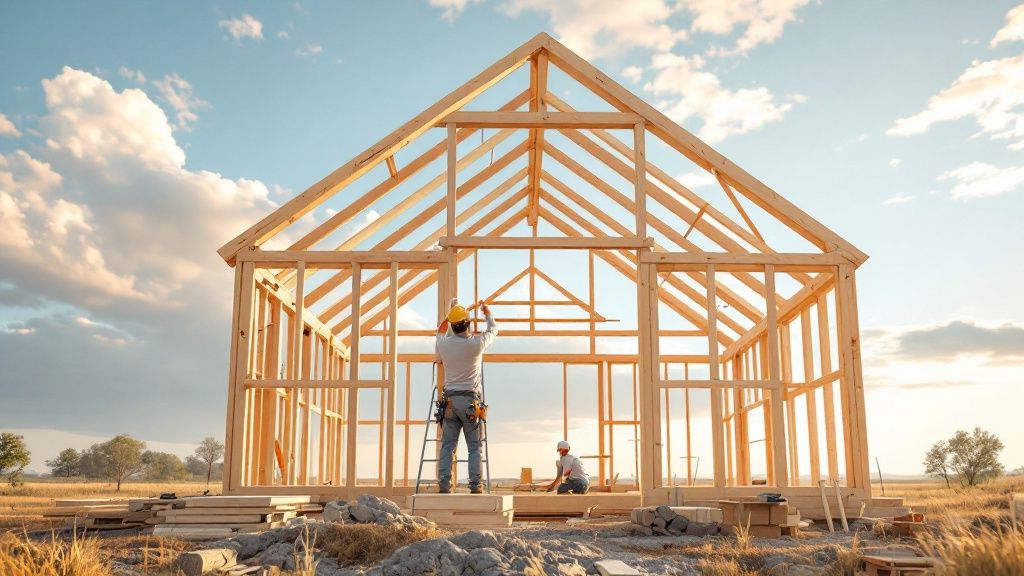
Once that concrete has cured, the skeleton of your home goes up with shocking speed. Honestly, the framing stage is one of the most thrilling parts for our clients. You finally get to walk through the "rooms," feel the flow of the layout, and see your vision in three dimensions. This is the perfect time for a walk-through with your project manager to make sure the window placement feels just right and the rooms are as spacious as you imagined.
Getting Your Home Under Roof
With the frame standing tall, the race is on to create a weather-tight shell. It’s a flurry of activity, with several key steps happening back-to-back:
- Sheathing and House Wrap: The frame gets its skin as plywood or OSB panels are nailed into place. Then comes the house wrap, a tough, weather-resistant barrier that keeps moisture out.
- Roofing Installation: Trusses swing into place, the roof gets decked, and your chosen roofing—be it classic shingles or a standing-seam metal roof—is installed. This is a huge step; it protects the structure so the indoor work can finally begin.
- Windows and Doors: With the windows and exterior doors installed, the house is officially "dried in." Your home is now secure and sealed from the elements.
This is where the role of a general contractor becomes mission-critical. They are the orchestra conductor, making sure the framers, roofers, and window installers all show up on the right day and work together without tripping over each other. It’s a logistical puzzle that takes years of experience to solve efficiently.
If you're curious about everything that goes into juggling a project like this, we break down what a general contractor does to keep things running smoothly.
The Mechanical Rough-In Phase
Before a single sheet of drywall goes up, we have to install the home’s guts. This is the "rough-in" for all the things you’ll never see again: the plumbing, electrical wiring, and HVAC ductwork. Right now, it looks like a chaotic web of pipes and wires, but it's the hidden circulatory system of your home. A crucial part of this is implementing reliable plumbing solutions that will serve your family without a hitch for decades.
This is your last best chance for a walk-through before the walls get closed up. Want to move an outlet? Add a light switch? Now is the time. It’s a simple fix at this stage, but it becomes a major headache after drywall. We live and breathe the details here, because we know that’s what builds lasting trust with our clients.
It's also worth thinking about the bigger picture. Globally, an astonishing 5 billion square meters of new buildings go up every single year. Sadly, more than half of them are built without any real energy codes. That stat is why we’re so committed to not just meeting local codes but blowing past them. Your farmhouse won’t just be beautiful; it will be efficient and built to last.
From that first scoop of dirt to the final shingle on the roof, this is the phase where our experience and local leadership truly make a difference. We aren’t just building houses; we’re building a legacy for your family, one solid step at a time.
Answering Your Top Farmhouse Build Questions
Dreaming about building your own farmhouse is one thing; actually doing it brings up a ton of questions. After more than 21+ years building homes for families in places like Fayetteville and Lumberton, you could say we’ve heard just about all of them. Let's tackle some of the big ones head-on so you can move forward with confidence.
How Long Does It Really Take to Build a Custom Farmhouse?
This is always the million-dollar question, and the most honest answer is, "it depends." But you're looking for a real number, so here it is: a realistic timeline, from that first napkin sketch to the day you get the keys, is usually somewhere between 12 to 18 months.
Why such a wide window? Things like a super-complex design, the speed of your local permitting office, and even a stubbornly rainy season can stretch the schedule.
Think of it in two main chunks:
- Pre-Construction: This is all the planning—design, engineering, getting permits squared away. This phase typically eats up about 4-6 months.
- Construction: This is when the hammers start swinging. The actual build usually takes another 8-12 months.
At SEGC, we hate surprises as much as you do. That’s why we map out a detailed project schedule right from the get-go. As a trusted local builder with deep roots in Fayetteville and Lumberton, we believe in constant communication so you’re never left wondering what’s happening on-site.
What Are the Biggest Hidden Costs I Should Watch Out For?
If there's one place unexpected costs love to hide, it's in the ground beneath your future home. Site work is, without a doubt, the biggest budget variable.
We’ve seen it all: poor soil that needs extra engineering, a beautiful but remote build site that requires a crazy-long driveway, or hiccups with drilling a well and getting the septic system in. These are the things that can really throw a wrench in the budget.
This is exactly why we insist on a thorough site evaluation before a single shovel of dirt is moved. We also build a healthy 10-15% contingency fund right into the budget to act as a safety net for these "what-ifs." Our deep roots in the Lumberton and Fayetteville areas mean we know the land here, which helps us spot potential issues early and protect your bottom line.
Financial transparency is everything. By planning for potential site problems from day one, we help our clients dodge the kind of stressful budget surprises that can sour a project. It’s just how we do business.
If you want to dig deeper into keeping your budget on track, check out our guide on how to reduce construction costs for your custom build.
Can I Customize a Pre-Existing Farmhouse Plan?
Yes! And you absolutely should. Modifying a stock plan is a fantastic, budget-savvy way to get a home that feels custom without starting from scratch with an architect. It gives you a solid, proven layout as your foundation.
From there, the world is your oyster. We can move interior walls, resize rooms, reconfigure the kitchen, and help you pick out every single finish and fixture to make it uniquely yours. When you work with an experienced builder like us, you get the peace of mind that every change is structurally sound and up to code. It's the perfect sweet spot between personalization and practicality.
How Involved Can I Be During the Construction?
As involved as you want to be! Seriously. This is your home, your legacy, and we see ourselves as your partners in bringing it to life.
We’ll schedule regular site meetings at key moments, like right after framing is done but before the drywall goes up. This is a crucial time for you to walk through the space and see how it feels. You'll also have a dedicated project manager who's always your point person. Our Native American-owned, 8(a), and HUBZone certified team handles all the daily nuts and bolts, so you can focus on the exciting parts of watching your vision become a reality.