A Guide to Building a House in NC
So, you’ve decided to build a house in North Carolina. That’s a huge step, and an exciting one! You’re not just buying a property; you’re crafting a home from the ground up, a place that will be uniquely yours. It’s a journey that takes a patch of dirt and turns it into a personal legacy.
The path from an empty lot to your dream home is paved with some big milestones: nailing down a realistic budget, finding that perfect piece of land, putting together a team you can trust, and seeing the project through every single phase. With over two decades of experience building legacies in communities like Fayetteville and Lumberton, we can tell you the whole process boils down to three things: planning, partnership, and patience.
Your Dream Home in North Carolina Starts Here
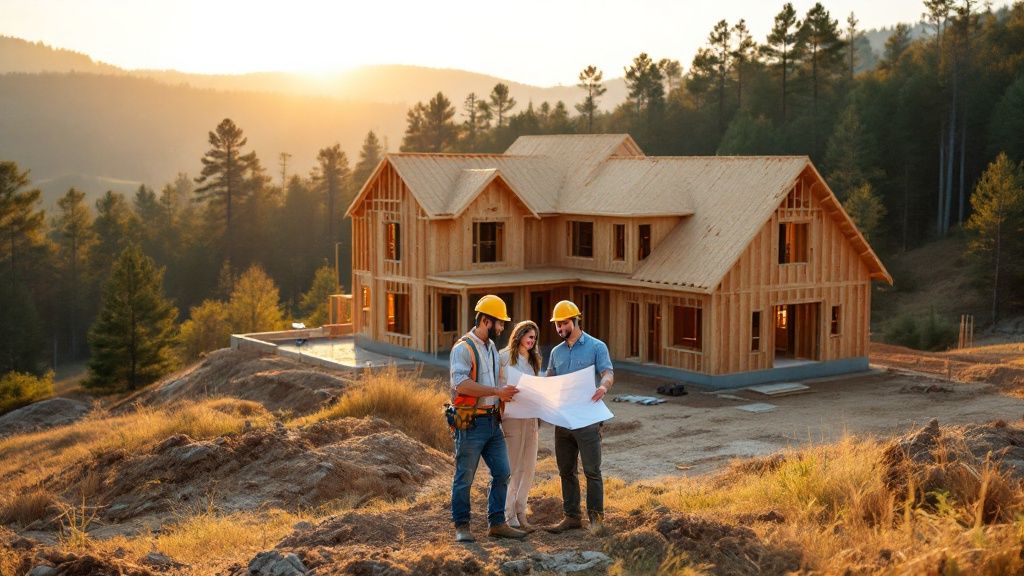
From the Blue Ridge Mountains to the Outer Banks, North Carolina offers an incredible backdrop for a custom home. The possibilities are genuinely endless.
This guide is your roadmap. We’re cutting through the jargon and the fluff to give you a real-world look at what it takes. We'll walk you through everything, from the moment you first stand on your lot to the day you finally turn the key in your new front door.
Why Go Custom in NC?
The biggest advantage of building a custom home is having total control. You get to decide the layout, pick the materials, and fine-tune every aesthetic detail. Forget trying to make a pre-existing house fit your life; you get to build a home that’s designed for your life.
North Carolina has a deep history of incredible craftsmanship. Just think about the Biltmore Estate—a masterpiece that took six years to build—or the stunning modern homes popping up across the state. There’s so much inspiration to draw from.
As you start dreaming, it’s worth looking into Passive House principles for sustainable design. This approach can help you create a home that’s not just beautiful but also incredibly energy-efficient and comfortable. It’s a chance to build smarter, right from the start.
We’re Here to Build a Legacy with You
At South Eastern General Contractors (SEGC), we see home building as something more than just wood and nails. We’re in the business of building legacies. With over 21 years of proven results, our entire philosophy is built on client trust and unwavering quality. We’ve been helping families create their forever homes in communities like Fayetteville and Lumberton for a long time.
We're a Native American-owned, 8(a), and HUBZone certified company, and that identity is woven into everything we do. It’s all about integrity and excellence. We know the ins and outs of building a house in NC, from the soil to the permits.
"Our mission is simple: to be a trusted partner who listens, guides, and delivers. We've seen firsthand in Fayetteville how a well-built home becomes the heart of a family's story, and we bring that same dedication to every client."
We put this guide together to give you that insider knowledge. Our goal is for you to feel completely confident as you move through this process, making smart decisions that lead to a home your family will cherish for generations.
Budgeting and Buying Land in NC
Long before the first nail is hammered, your dream home’s fate is sealed. It all boils down to two things: a budget that’s rooted in reality and the perfect patch of North Carolina dirt to call your own. Get these two things right, and the rest of the journey gets a whole lot smoother.
Let’s be honest about the numbers. The cost to build a house in NC is a far cry from just what you pay for lumber and labor. We’ve seen it time and again—folks get blindsided by the "soft costs" and site work expenses that can completely derail a budget.
Uncovering the Hidden Costs of Building
When you sit down with a lender, you need the full financial picture, not just the rosy one. Your construction loan will cover the house itself, but there's a laundry list of other expenses that need a spot on your spreadsheet.
These are the costs that often sneak up on you:
- Land Preparation: This is way more than just mowing the lawn. We're talking about clearing trees, hauling away rocks, and grading the entire site for proper drainage. Depending on the lot, this alone can run into thousands.
- Utility Connections: Building out in the country? You’ll be paying to bring water, power, and internet from the road to your property, and then all the way to your actual homesite.
- Septic and Well Systems: For many of the most beautiful lots outside of towns like Lumberton, you’re your own utility company. Installing a well and septic system is a major ticket item, often falling in the $10,000 to $25,000 range, sometimes more.
- Permits and Fees: Every county has its own menu of fees for building permits, impact fees, and inspections. It’s a classic "death by a thousand cuts" scenario that can add up fast.
A rock-solid budget always, always has a contingency fund. We’re talking 10-15% of your total construction cost. This isn’t your "fun money" for upgrading the countertops; it's the critical safety net for when you hit unexpected bedrock during excavation or when material prices suddenly jump.
Getting a handle on these variables is everything. We put together a detailed guide to help you really dig into the true cost of building a house in North Carolina, breaking down the numbers so there are no ugly surprises.
The Art of the Land Hunt
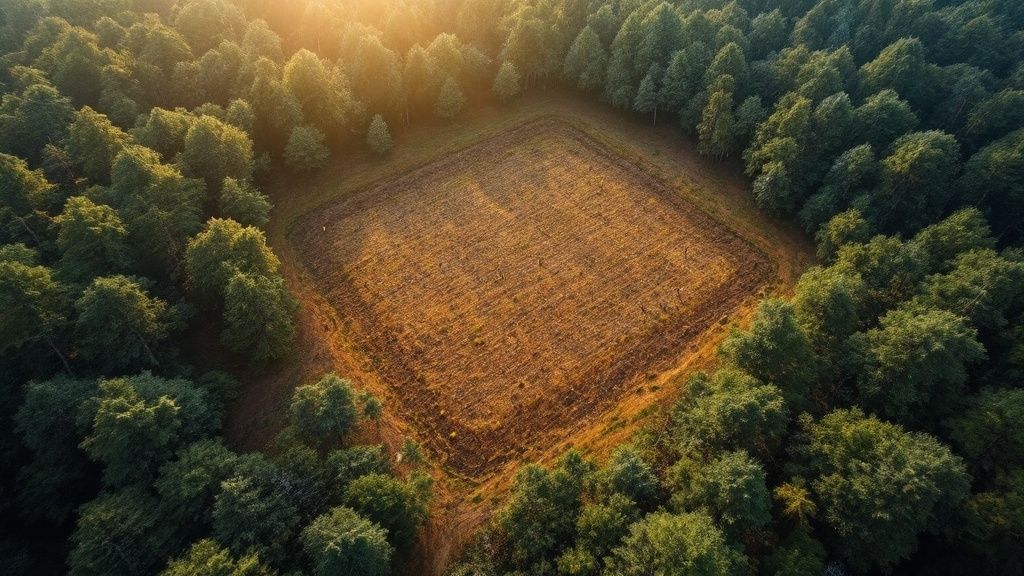
Okay, with a budget sketched out, the fun part begins: the hunt for your slice of North Carolina. This isn’t just about finding a pretty view. It’s about securing a piece of land that's practical, buildable, and a smart investment for your future. With our 21+ years building in communities like Fayetteville, we’ve seen firsthand how the right lot sets a project up for success, while the wrong one can turn it into a nightmare.
It's no secret the North Carolina real estate market has been on a wild ride. After years of steady growth, things took off around 2021 as low mortgage rates sent demand through the roof.
What to Look for in a Building Site
Finding that perfect plot requires putting on your detective hat. Here are a few things that matter a lot more than the curb appeal:
- Zoning and Covenants: First, check the local zoning. Can you actually build the home you've designed? Then, dig into the covenants. Some subdivisions have rules dictating everything from minimum square footage to the color of your front door.
- Soil Quality: You absolutely must get a percolation ("perc") test done. This tells you if the soil can handle a standard septic system. Bad soil can mean you’re on the hook for a wildly expensive engineered system, or worse, that the lot is unbuildable.
- Topography and Drainage: A steep, dramatic lot might look amazing, but it will cost a fortune more to build on. Pay close attention to how the land slopes and where water will naturally run. You don't want to find out your backyard becomes a seasonal pond after the first big storm.
As a HUBZone-certified contractor, we’ve worked on just about every type of site this region can throw at you. We know the local terrain, and we can help you spot potential red flags—like hidden drainage issues or poor soil—before you even think about making an offer. If you really want to go down the rabbit hole of zoning laws and property records, check out these expert insights on property and land acquisition.
Ultimately, choosing your land and setting your budget are the twin pillars of your entire project. Take your time, do your homework, and you'll be building your legacy on a foundation—both financial and physical—that's unshakable.
Assembling Your A-Team: The People Who Will Build Your Home

You can have the perfect piece of land and a bulletproof budget, but let's be real—neither of those can swing a hammer. The single biggest decision you'll make in this entire process is picking the people who will drag your dream home out of your head and into reality.
This isn’t just about hiring a crew. It's about forging a partnership with an architect, designers, and especially the general contractor you’ll trust with your vision and your money.
Building a house in NC is a team sport, and your general contractor is the head coach, quarterback, and team captain all rolled into one. They’re the ones juggling the 22 different subcontractors who might touch your project and making sure everything stays on track. Your relationship with them will make or break your entire building experience.
How to Vet Your General Contractor
Finding the right contractor isn't as simple as getting three bids and picking the cheapest one. That’s a rookie mistake. A suspiciously low bid often screams "I cut corners" or "I have no idea what I'm doing," both of which lead to expensive nightmares later. You need a partner with deep local roots, a rock-solid reputation, and a transparent process.
When you sit down with potential builders, it’s time to get specific. Don’t be shy—ask the tough questions that peel back the curtain.
Here’s what we recommend asking:
- "Walk me through your process for handling a surprise on-site." Their answer reveals everything about how they handle pressure and solve problems.
- "How exactly do you keep clients in the loop during the build?" Vague promises to "keep in touch" aren't good enough. You want a clear, structured communication plan.
- "Can I talk to your last three clients?" Talking to recent customers gives you the unvarnished truth about what it's really like to work with them.
- "Can you provide proof of your license and insurance right now?" This is a deal-breaker. If they hesitate, walk away.
We had a project near Fayetteville where we cleared the lot and discovered a massive underground spring that wasn't on any survey. An inexperienced builder would have panicked, leading to huge delays and budget blowouts. With our 21+ years of local experience, our team engineered a drainage solution right there on the spot. What could have been a disaster became a minor hiccup. That's the kind of proven results and trust you're paying for.
The Invaluable Power of Local Leadership and Trust
A contractor’s connection to the community speaks volumes. A builder who has spent decades working in areas like Lumberton and Fayetteville isn't just a business owner; they're a neighbor with a reputation to protect. They know the best local subs by name and can navigate the quirks of the local permitting offices in their sleep. That’s an asset you can't put a price on.
Here at SEGC, our entire identity is built on trust. As a Native American-owned, 8(a), and HUBZone certified company, we’re held to a higher standard of quality and accountability. Those aren’t just fancy designations; they're a promise that we operate with unshakeable integrity. We’re not just building houses; we’re building legacies.
For a much deeper look into vetting builders, our guide on how to find a good contractor has more detailed questions and checklists.
Spotting the Red Flags Before It’s Too Late
As you interview candidates, keep your antenna up for warning signs that spell trouble down the road.
Warning Signs to Watch For:
| Red Flag | Why It's a Problem |
|---|---|
| Vague or Incomplete Bids | This suggests they either lack attention to detail or are intentionally hiding future costs. |
| High-Pressure Sales Tactics | A good partner wants you to be confident in your choice, not bullied into a quick decision. |
| No Local References | This could mean they're new to the area, have a poor track record, or are hiding something. |
| Demands for Huge Upfront Payments | Reputable contractors are financially stable and don't need a massive deposit to get started. |
In the end, choosing your construction team comes down to finding people who get your vision and respect your investment. You’re trusting them with one of the biggest, most personal projects of your life. So, take your time, do your homework, and choose a partner who is as committed to building your legacy as you are.
Bringing Your Home to Life: The Construction Phases
Alright, this is where the magic happens. All those blueprints, mood boards, and budget spreadsheets are about to leap off the page and become a real, tangible home. Watching a house rise from an empty patch of dirt is an incredible experience, but it can feel like a whirlwind of activity if you don't know the game plan. Let's walk through the actual construction journey, step by step.
Building a custom home in NC isn't random; it's a carefully sequenced process. Think of it as a well-rehearsed play where each actor—the excavator, the framer, the electrician—has their cue, and your general contractor is the director making sure everything happens on schedule and to the highest standard.
From Dirt to Structure: Foundation and Framing
The first day heavy machinery rolls onto your lot is a day you won't forget. After clearing and grading the land, the build officially begins with the most critical part of the entire structure: the foundation. This is the literal bedrock of your home, and there are absolutely no shortcuts here.
Crews will dig and pour massive concrete footings that anchor the home to the ground, followed by the foundation walls or slab. Before a single drop of concrete is poured, essential plumbing and electrical lines are laid in place. Once the foundation cures—a process that takes weeks to reach maximum strength—the real show begins.
Framing is when your home suddenly explodes into three dimensions. A skilled crew erects the entire wooden skeleton, from the floor joists to the walls and roof trusses. It’s amazing how quickly it happens. In just a matter of days, you can go from a flat slab of concrete to a structure you can walk through, finally getting a real feel for the rooms you’ve been dreaming about.
At SEGC, our 21+ years of project management experience is everything during this stage. We once had a project in Lumberton where our site manager, during framing, noticed a small detail in the plans. The window placement would have blocked the best afternoon light in the living room. We hit pause, called the client, and adjusted the framing on the spot. A less experienced builder might have just followed the paper, but we know building a legacy means getting those details just right.
The "Rough-In" and Making it Weatherproof
With the frame up and wrapped in exterior sheathing, the house is officially "dried in." This is a huge milestone. The roof goes on, and windows and exterior doors are installed, creating a shell that protects the interior from the elements. Now, work can continue inside no matter what the famously unpredictable North Carolina weather throws at you.
Inside, the house becomes a hive of activity. This is the "mechanical rough-in," where multiple skilled trades work almost simultaneously to install the home’s vital organs:
- Plumbing: All the supply and drain lines are run through the walls and floors.
- Electrical: Miles of wiring are pulled for every outlet, switch, and light fixture.
- HVAC: The arteries of your heating and air system—the ductwork—are installed.
It's called a "rough-in" because nothing is connected to a final fixture yet; it’s all the behind-the-scenes guts of the house. This phase requires intense coordination, and as a HUBZone certified contractor, we lean on our deep relationships with the best local subcontractors in Fayetteville and the surrounding areas to ensure it all comes together perfectly.
This simplified infographic gives you a good visual of how the major construction phases flow.

As you can see, while getting the foundation in is a relatively quick step, the real time is spent on the finishing stage, where all the character and detail get layered in.
To give you a clearer picture, let's break down the general timeline for a custom build here in North Carolina.
North Carolina Custom Home Build Timeline Overview
This table provides a bird's-eye view of the entire process, from initial thoughts to moving day. Timelines can shift based on weather, material availability, and the complexity of your design, but this gives you a realistic framework.
| Phase | Key Activities | Estimated Duration |
|---|---|---|
| Pre-Construction | Planning, design, financing, lot purchase, permits | 3 – 6 Months |
| Site & Foundation | Clearing land, excavation, pouring foundation/slab | 2 – 4 Weeks |
| Framing & Drying In | Building the structural frame, roof, windows, doors | 3 – 6 Weeks |
| Mechanical Rough-In | Plumbing, electrical, HVAC installation | 2 – 4 Weeks |
| Interior & Exterior | Insulation, drywall, siding, brickwork | 4 – 8 Weeks |
| Finishes & Details | Flooring, paint, cabinets, fixtures, trim | 6 – 12 Weeks |
| Final Touches | Landscaping, punch list, final inspections | 2 – 4 Weeks |
Keep in mind, these phases often overlap. For example, your builder might start on the exterior siding while the drywall team is working inside. A good general contractor keeps this complex schedule moving forward smoothly.
The Finishing Touches: From House to Home
After the rough-ins pass inspection, insulation is packed into the walls and ceilings. Then comes the drywall. This is another massive visual transformation, as the open skeleton of studs and wires disappears behind smooth, solid walls. You finally have real rooms!
From this point on, it’s all about the finishes—the thousands of details that infuse your personality into the space. Your decisions are critical here to keep the project on track. Your builder will be asking for your final selections on:
- Paint colors (both inside and out)
- Flooring, like hardwood, tile, or carpet
- Kitchen and bathroom cabinets and countertops
- Light fixtures, faucets, and sinks
- Trim work, from baseboards to crown molding
The finishing stage can feel like the slowest part of the build because the work is so meticulous, but every new fixture and coat of paint brings you one step closer to the finish line. Outside, the driveway gets poured, and landscaping takes shape. It’s during these final, detail-oriented weeks that our focus on building client trust is most apparent, as we meticulously manage every last item to ensure the final product is truly exceptional.
Handover Day: The Final Walkthrough and Getting Your Keys
You've made it. After all the planning, budgeting, and watching your dream home take shape, you’re finally at the finish line. This is where all the little details come together, culminating in that incredible moment when you get the keys to your new life.
This last phase is more than just a formality. It’s about making absolutely sure the house you're about to move into is the one you’ve been dreaming of all along. At SEGC, this is where our motto of "building legacies, not just structures" really hits home. We’ve seen the pure joy on the faces of Fayetteville families at this stage, and we live for making this moment perfect for you.
Getting the Official Green Light: Your Certificate of Occupancy
Before a single box can be moved in, your new home needs its final, most important seal of approval: the Certificate of Occupancy (or CO). Think of it as the government officially saying, "Yep, this place is safe, up to code, and ready for people to live in."
To earn this, a local building inspector conducts one last, top-to-bottom review of your property. They’ll be checking everything—and I mean everything—from the placement of smoke detectors and GFCI outlets to making sure every handrail is solid and every system works as it should. Your builder handles scheduling this, but it’s the final hurdle between construction and move-in day.
This final inspection isn't optional; it's your ultimate protection. It confirms that all the work, including the stuff you can't see behind the walls, was done right and meets the strict safety standards for building a house in NC. It’s the final quality control check that matters most.
Your Turn to Be the Inspector: The Final Walkthrough
Once the CO is issued, it's time for the final walkthrough with your builder. This is your chance to go through the entire home with a fine-tooth comb and create what we call a "punch list." This is simply a list of any minor fixes or touch-ups needed, like a small paint scuff on a wall or a cabinet door that doesn't close quite right.
A great builder will encourage you to be picky here. Seriously. A detailed punch list is a good thing—it means we can make everything absolutely perfect before you close. Don't feel rushed. Open and close every window, turn on every faucet, and flip every light switch.
To help you know exactly what to look for, we created a handy guide. Take a look at our complete house walk-through checklist to make sure you don’t miss a thing.
A few spots to pay extra attention to:
- Surfaces: Get eye-level with the walls, countertops, and floors. Look for any scratches, scuffs, or blemishes in the finish.
- Fixtures: Test every single faucet, flush every toilet, and check all the lights and outlets.
- Functionality: Open and close all doors, windows, and cabinets. Do they operate smoothly and latch properly?
- Exterior: Walk the perimeter! Check the siding, paint, and any landscaping to make sure it's all looking sharp.
Closing Day: Making It Officially Yours
Closing on a brand-new home is a little different from buying a pre-owned one. The stack of paperwork is a bit taller, usually including things like the builder’s warranty, final surveys, and lien waivers from all the subcontractors who worked on your home. Your lender, closing attorney, and builder will work together to get all the financial and legal details squared away.
This is the moment. It’s the grand finale of all your patience and planning. It’s the culmination of a massive team effort, from that first day surveying your lot in Lumberton to the final polish on the kitchen faucet. As a Native American-owned and HUBZone-certified firm with 21+ years of proven results, we know this is so much more than a business deal.
This is when we hand over more than just a set of keys—we’re handing you the future you've worked so hard to build. We take incredible pride in seeing your vision become a reality, and our job isn't done until you feel confident, thrilled, and ready to start the next chapter in a home built with true integrity.
Welcome home.
Got Questions About Building a House in NC? Good.
Let's be honest, building a custom home is a massive undertaking. If you don't have questions, I'd be a little concerned! It shows you're taking this seriously, and you absolutely should. After building dream homes across North Carolina for decades, we've heard just about every question in the book.
Here are a few of the big ones that come up time and time again.
So, How Long Does This Actually Take?
Ah, the million-dollar question. The straight-up, no-fluff answer is that a completely custom home—from the first napkin sketch to the final walkthrough—is usually a 10 to 16-month journey.
Of course, that’s a pretty wide window. What pushes a project to one end or the other?
- Your Vision's Complexity: A clean, classic ranch is going to come together a lot quicker than a sprawling, multi-story home with crazy rooflines and one-of-a-kind architectural details.
- The Permit Gauntlet: Every county is its own little world. Sometimes, sailing through the permitting office is a breeze; other times, it can take a couple of months of back-and-forth.
- Mother Nature: This is North Carolina, after all. A super-soggy spring can throw a wrench in the schedule right at the start, delaying excavation and foundation pours.
After doing this for 21+ years, we've gotten pretty good at navigating these variables. We build a realistic schedule from day one and keep you in the loop constantly, so you’re never left wondering what’s going on.
Is It Cheaper to Build or Buy a House Here?
This is a classic debate, and the answer isn't as simple as it used to be. While grabbing an existing house might look cheaper on paper, building new often wins out in the long run. Think about it: you’re getting a home where everything is brand new. The HVAC, the roof, the plumbing—it's all backed by warranties, meaning your utility bills will be lower and you won't be facing a surprise $10,000 roof replacement five years from now.
Building also gives you total control over the budget. You decide where to splurge and where to save. Plus, North Carolina is a fantastic place to make this kind of investment. Home prices here are still sitting around 20% below the national average, which gives you a ton of bang for your buck. You can dig into North Carolina's housing affordability data to get the full story.
What Are the "Gotcha" Costs I Need to Brace For?
No one likes surprises, especially when they involve your wallet. That’s why a solid budget always includes a contingency fund—think of it as a "just-in-case" buffer. We typically recommend setting aside 10-15% of your total construction cost. This isn't for upgrading your countertops; it's for handling the true unknowns that pop up when you're turning a piece of raw land into a homesite.
The most common culprit? The ground itself. We were working on a beautiful lot near Lumberton where the initial soil reports came back clean. But once we started digging, we hit a massive patch of unstable soil that had to be completely excavated and replaced. A less experienced crew would have been in panic mode. For us, our deep local knowledge meant we had a plan B ready to go without blowing up the budget or the schedule.
Other potential curveballs could be a sudden spike in lumber prices or discovering you need a more advanced septic system than planned. As a Native American-owned, 8(a), and HUBZone certified firm, we operate with complete transparency. Our job is to help you see around the corners before we even get there.
How Hands-On Can I Be During the Build?
This is your home. You can be as involved as you want to be! In fact, we love it when our clients are engaged in the process. We insist on regular site visits, especially during key phases. Seeing the floor plan on paper is one thing, but actually standing inside the framed-out kitchen you designed? That’s a whole different feeling.
We use modern tools to send you frequent photo updates and keep the lines of communication wide open. Your input is what turns a house into a home, particularly when it’s time to pick out tile, paint, and all the finishes. We’ll give you a clear heads-up on when those decisions need to be locked in to keep the project moving smoothly. It’s that partnership approach that has let us build a legacy of thrilled homeowners in places like Fayetteville for over two decades.
At South Eastern General Contractors, we're not just building structures; we're building legacies. If you're ready to have a real conversation about the home you’ve been dreaming of, we’re here to be your guide from the ground up.