
How to Find the Best Custom Home Builder for Your Dream Home
Picking the right custom home builder is, without a doubt, the single most important decision you'll make when you decide to build your dream home. This isn't just about hiring a contractor; you're choosing a partner for a long, intricate, and deeply personal journey. The best builders bring more than just tools and a crew—they bring a history of proven results, rock-solid financial stability, and a deep-seated commitment to quality and earning your client trust.
Your Blueprint for Finding the Best Custom Home Builder
Building a custom home is one of the most exciting and rewarding things you can ever do. But that journey starts with one foundational choice: selecting the right team to bring your vision to life. This decision is so much bigger than just looking at pretty pictures in a portfolio or comparing bottom-line prices. You’re handing over your dream and a massive financial investment to someone, which means the real cornerstones of your project are partnership and trust.
For over 21+ years, we at South Eastern General Contractors have had the privilege of building more than just houses in communities like Fayetteville and Lumberton. We build legacies. This guide is our way of sharing that insider knowledge, empowering you to walk through this process with total clarity.
Why the Right Builder Matters More Than Ever
Let's be clear: the custom home market is hopping. The industry has seen some serious growth recently, with total custom home starts hitting 47,000 in Q4 2024 alone. That’s a 7% jump from the same time in 2023. With so many builders out there, knowing what really separates the good from the great is absolutely essential.
The image below spells out exactly what you get when you partner with a top-tier builder. It’s not just talk; it's a testament to quality.
These aren't just vanity numbers. They show that a builder obsessed with quality delivers more than just a beautiful house—they deliver a superior living experience and a more valuable, durable asset for your family's future. That unwavering commitment to excellence is what defines the best custom home builder. They don’t just build for today; they build your legacy.
To see how that commitment turns into a real, actionable plan, you can get an inside look at our transparent and detailed custom home building process right here.
Getting a Real Feel for a Builder's Past Work
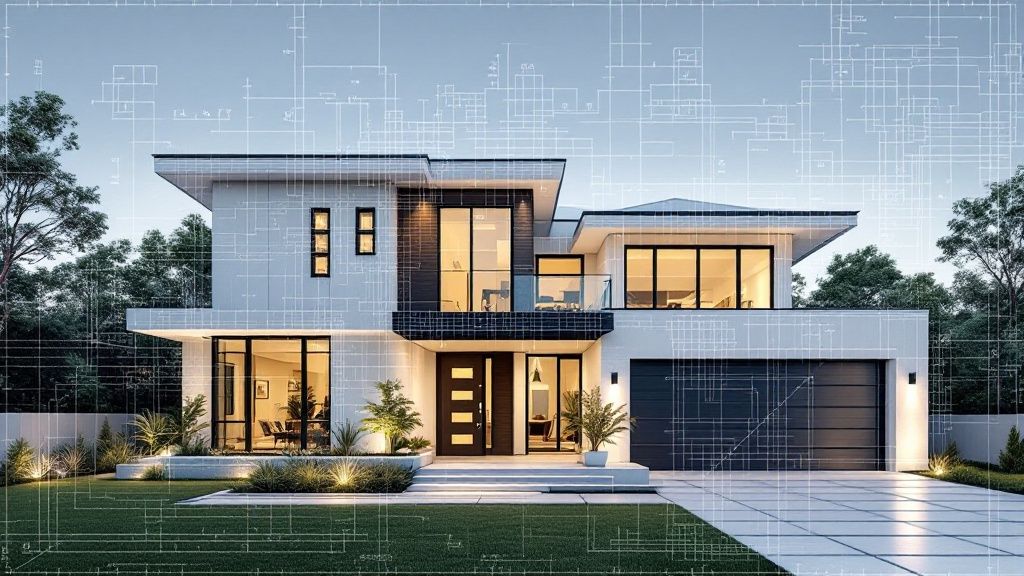
A builder's portfolio is your crystal ball. It’s way more than just a glossy gallery of finished homes; it's a living resume that shows you exactly what they're capable of, how they handle the small stuff, and whether they can actually bring someone's dream to life. When you're on the hunt for the right custom home builder, you've got to learn how to see past the perfect lighting and professional staging to get to the truth of their craftsmanship.
Start by looking for a common thread. Does the builder seem to have a signature style, or can they pivot between different architectural designs? A portfolio that showcases a wide range—say, from a sleek modern farmhouse to a classic, cozy craftsman—tells you you’re dealing with a versatile team. They're more likely to adapt to your vision instead of nudging you toward their comfort zone.
Look Closer Than the Wide-Angle Photos
Okay, now it's time to play detective. Get past the sweeping landscape shots and zoom in on the nitty-gritty details. I'm talking about photos that highlight the tough stuff: intricate trim work, custom built-in shelving, or complex tile patterns in a bathroom. Are the lines crisp and clean? Do the materials look and feel premium, even in a photo? These are the little tells that separate a decent builder from a true master craftsman. The best predictor of future quality is past performance, so make sure you dig into their completed projects and look for this level of detail.
After more than 21+ years of building custom homes around Fayetteville and Lumberton, we know a house has to do more than just look good—it has to belong. As you scroll through a portfolio, ask yourself if the homes seem to sit naturally on their land. Do they complement the neighborhood, or do they stick out like a sore thumb? This gives you a peek into the builder's feel for site planning and respect for the local vibe.
A truly great portfolio answers your questions before you even think to ask them. It doesn't just show you what a builder can do; it shows you how they think, tackle problems, and turn a blueprint into a home with genuine care.
Asking the Smart Questions About Their Projects
Once a portfolio has caught your eye, it's time to start peeling back the layers. Every single one of those gorgeous homes has a story, and trust me, that story always includes a few bumps in the road. A great builder isn't someone who never has problems—it's someone who knows exactly how to solve them.
When you're talking about a specific house in their portfolio, try asking a few of these questions:
- "This project is stunning. What was the biggest curveball you had to deal with, and how did your team handle it?" This is a great way to gauge their honesty and on-the-fly problem-solving skills.
- "Can you tell me a bit more about the finishing work in the kitchen and master bath?" This moves the conversation beyond the pretty pictures and into the real substance of their craftsmanship.
- "How did you and the homeowners work together to make sure their vision came through?" This tells you everything you need to know about their communication style and how much they value client collaboration.
Take, for example, a project we completed right here in Fayetteville. The homeowners wanted to incorporate reclaimed lumber from an old family barn. This required meticulous planning to treat, mill, and integrate the wood seamlessly into a modern design. Hearing that kind of behind-the-scenes story gives you a far better insight into a builder’s process than a perfect photo ever could. A builder who is excited to share these details is one who's proud of their work and transparent about how they get it done.
Time to Play Detective: Checking Credentials and Financial Stability
Alright, you’ve drooled over the portfolio, and you're picturing your family in that gorgeous custom kitchen. Now it's time to switch gears from dreamer to detective. This part isn't as glamorous as picking out granite, but trust me, it’s the single most important step for protecting your investment and your sanity.
A top-tier custom home builder will be an open book. They should be proud to show you they’re legit, stable, and ready to handle your project without any drama. A builder's credentials are your first and best line of defense.

Getting the Paperwork in Order
Before you even think about signing a contract, you need to see some essential documents. A pro will have these ready to go. No excuses.
Here's your non-negotiable checklist:
- State License: First things first, make sure they have a current general contractor license for North Carolina. This is the absolute baseline.
- General Liability Insurance: This is what protects your property if something goes wrong during the build. Ask to see the actual certificate of insurance—don't just take their word for it.
- Workers' Compensation: This one is huge. It covers injuries to their crew or any subs on your property. Without it, you could be on the hook.
These three are just the starting point. The truly exceptional builders often have credentials that show they're committed to a higher standard of business and community.
Here at SEGC, our federal certifications are more than just fancy titles. Being an 8(a), Native American-owned, and HUBZone certified firm means we're held to some of the toughest operational and ethical standards in the country. It’s a reflection of our deep commitment to building up our communities in Fayetteville and Lumberton.
This level of accountability is what we bring to every single project. If you're curious about what that really means for you, you can get the full story in our guide to HUBZone certification.
Talking Money Without Being Awkward
Okay, let's talk about the elephant in the room: money. It can feel a little weird to ask a builder about their finances, but it's absolutely critical. You need to know that your builder is financially sound and won't be using your deposit to pay off debts from their last job.
Just look at the big national players like Lennar Corp, which pulled in $32.5 billion in 2023 revenue. While your local custom builder is playing a different game, their financial health is just as crucial to your project's success. The stability of a builder, big or small, directly impacts their ability to get things done right and on time.
So, how do you bring it up? Easy. Just ask for a few references from their main bank and their biggest suppliers. A builder who pays their bills on time will have great relationships with these partners and won't hesitate to let you call them. It's a simple, respectful way to confirm you're partnering with a company that’s built on a rock-solid foundation.
So, You Want the Real Story? Talk to Their Past Clients.
A builder's portfolio is like a highlight reel—it only shows the perfect, sun-drenched final product. But building a custom home is a journey, not just a destination. To see behind the marketing curtain, you need to talk to the people who have actually been in the trenches with them. References are your single best tool for figuring out what it’s really like to work with a builder.
This is where you unearth the truth. How do they handle communication? What happens to the budget when things get complicated? How do they react when the inevitable curveball comes flying their way?
Forget asking, "So, were you happy?" That's a softball question that gets you a polite, useless answer. To find the right partner for your dream home, you have to dig deeper. You need to ask the questions that reveal a builder's true character and process when the pressure is on.
The Questions That Cut Through the Fluff
Your mission here is to get the homeowner talking. You're not conducting an interrogation; you're trying to coax out the stories and anecdotes that paint a complete picture. A builder who is confident in their work will be more than happy to connect you with clients who are willing to sing their praises—and even share the bumps along the way.
Here are a few of my go-to questions to get a real conversation flowing:
- "Tell me about a time something went sideways during the build. What happened, and how did the builder handle it?" This is the golden question. It tells you everything you need to know about their problem-solving skills, integrity, and communication style.
- "How close did the final cost end up being to the initial estimate? Were there any financial surprises along the way?" This gets to the heart of their transparency with money and how well they manage the project's finances.
- "What was the communication really like? How often did you hear from your project manager, and were you ever left in the dark?" This gives you a sense of their customer service and whether their style will mesh with how you like to be kept in the loop.
A builder’s true value isn't in achieving a flawless project—because those don't exist. It's in how they navigate the inevitable imperfections. Their response to a challenge says everything about their character and commitment to you.
Listening for Green Flags (and Red Ones)
In our 21+ years building homes around Fayetteville and Lumberton, we've seen firsthand that real trust is built when things don't go as planned. I remember a project where a set of premium, custom-ordered windows arrived with a tiny manufacturing flaw. It was barely noticeable, but our project lead spotted it.
Instead of hiding it or waiting for the client to find it, he immediately took photos, called the supplier to get a replacement expedited, and then called the client to explain both the problem and the solution we already had in motion.
That’s the kind of story you’re listening for. That proactive honesty didn't just prevent a delay; it cemented the client's trust in our team. It’s a massive green flag that shows a builder sees themselves as your partner, not just a contractor.
On the flip side, be alert for the red flags. If a past client hesitates when you ask about challenges, gives vague answers, or starts telling stories about ghosting project managers, pump the brakes. The right builder will have clients who don’t just love their beautiful home—they genuinely respect and appreciate the people who built it.
Let's Talk About the Contract: Your Project's Blueprint
Alright, let's get into the nitty-gritty: the contract. Think of it less as a scary legal document and more as the official script for your home-building adventure. A solid, detailed contract is the bedrock of a smooth project. A flimsy, vague one? That’s a one-way ticket to migraine city and a budget that’s hemorrhaging cash. Nailing this document is a massive step toward locking in the best custom home builder for you.
So, what does a good contract even look like? It should feel like a handshake on paper—a clear, mutual agreement, not some confusing tome of legalese designed to trip you up. A builder who’s on your team will happily walk you through every line, making sure you get it. You should feel confident, not cornered.
What a Rock-Solid Contract Actually Contains
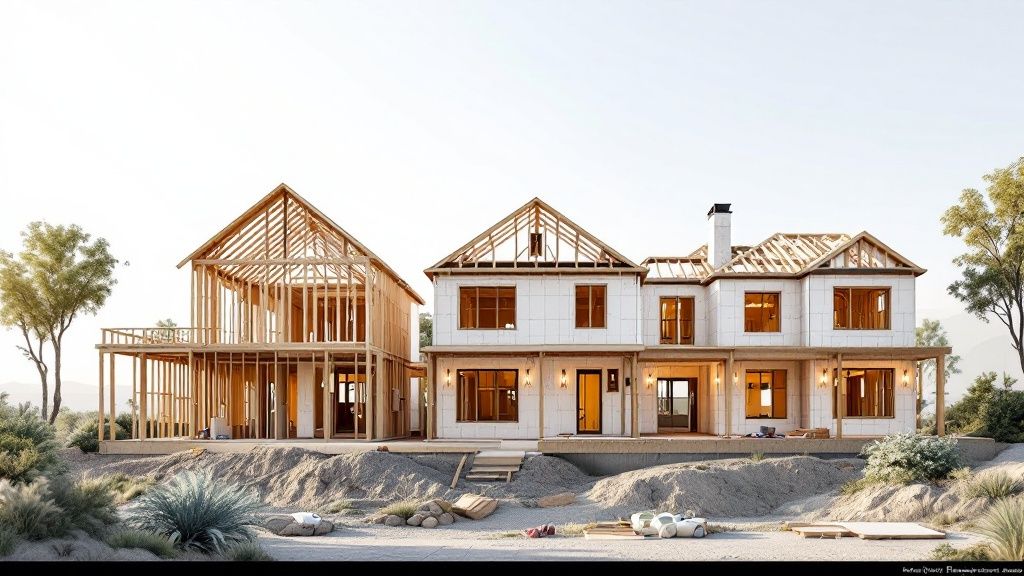
A truly comprehensive contract leaves zero room for interpretation. It spells everything out in black and white, from the first scoop of dirt to the very last doorknob.
Here are the absolute must-haves you need to see in writing:
- A Super-Detailed Scope of Work: We're not talking "build a three-bedroom house." We're talking specifics: the brand of the kitchen faucet, the model number of the windows, the exact type of hardwood flooring. If it’s not in writing, it doesn’t exist.
- A Milestone-Based Payment Schedule: Money should only change hands when real, tangible progress is made. Payments should be tied to verifiable milestones like "foundation poured" or "framing complete," not just random dates on a calendar.
- A Clear Process for Change Orders: Look, plans change. It happens. Your contract must lay out the exact steps for handling these pivots: how they’re priced, how they’re approved (in writing!), and how they’ll affect the timeline.
- A Killer Warranty: A great builder is proud of their work and stands behind it. You should see a clear warranty covering workmanship and materials for at least a year, and major structural components for up to ten years.
If you're staring at a 30-page document and your eyes are glazing over, it might be worth running it through an AI-powered legal contract analyzer to catch anything you might miss.
Pro Tip: Your contract is the ultimate communication tool. If a detail is important to you, get it in writing. This simple act protects both you and the builder, making sure everyone is singing from the same hymn sheet from day one.
The Builder’s Side of the Bargain
Now, the size of the builder's company might change how their contracts are structured, but the core commitment to clarity should always be there. Take a giant like D.R. Horton, which has been the biggest U.S. home builder for 20+ years. In 2024 alone, they closed on a mind-boggling 93,311 homes. Their contracts are naturally standardized to handle that insane volume.
But you're not building a cookie-cutter house. A custom builder’s contract should feel personal and tailored to your project. It’s a reflection of a one-on-one partnership.
Here at SEGC, we build our contracts on the exact same foundation of trust and quality that we pour into our homes in Fayetteville and Lumberton. We’re not just putting up walls; we’re building your legacy. And that all starts with a crystal-clear agreement that respects your vision and protects your investment.
Still Have Questions? Let's Talk About Them.
Alright, you've sifted through portfolios, stalked Instagram feeds, and done your homework. Now it's time for the nitty-gritty questions—the ones that really determine who you’ll trust to build your family's home. We get it. After 21+ years of building dream homes in Fayetteville and Lumberton, we've heard them all.
We've pulled together the most common questions we hear from clients just like you. No fluff, just straight answers to help you make your final decision with absolute confidence.
How Long is This Really Going to Take?
Look, anyone who gives you a hard-and-fast number without knowing your project is just guessing. Building a truly custom home is a marathon, not a sprint. A good rule of thumb is to expect anywhere from 9 to 18 months from the moment the first shovel hits the dirt to the day you're popping champagne in your new kitchen.
But a great builder does more than throw out a timeline. They'll give you a detailed schedule that's brutally honest about the realities of building. For us, here in North Carolina, that means we bake everything into the plan from day one—local permitting quirks, potential delays for that one-of-a-kind tile you fell in love with, and even the notorious summer thunderstorms. Planning for the "what-ifs" is what keeps a project moving forward without nasty surprises.
What's the Deal with Fixed-Price vs. Cost-Plus Contracts?
This is a fantastic question, and the answer gets right to the heart of your budget and your peace of mind. Let’s break it down simply.
A fixed-price contract is exactly what it sounds like. We agree on a number, and that’s the number. It’s predictable and perfect for anyone who wants to know the final cost before the project even starts.
A cost-plus contract is a bit different. You pay for the actual costs of labor and materials, plus a pre-agreed-upon fee for the builder. This approach offers incredible flexibility, making it a great option if you know you'll want to make changes and decisions as you go. At SEGC, we don't have a preference; we sit down with you, walk through the pros and cons of each, and figure out which one feels right for you. It's all about transparency and your comfort level.
What Happens When We Hit a Snag or I Change My Mind?
Let's be real: no matter how perfectly you plan, things happen. Maybe you decide you want a wall moved, or we discover an unexpected issue with the soil. How a builder handles these moments tells you everything you need to know about them.
The magic words are "change order." This isn't just a piece of paperwork; it's our communication lifeline. Any time there's a deviation from the original plan, we document it. The change order clearly spells out:
- Exactly what the change is.
- The precise cost associated with it.
- Any impact it will have on the timeline.
We don't pick up a single hammer to start that new work until you've reviewed it and signed off. This simple process is what prevents "budget creep" and ensures you are always, always in control of the finances.
At SEGC, our entire philosophy is built on immediate, open communication. You will never be left wondering about a decision that impacts your home or your budget. It’s about respecting you and the massive investment you're making.
What Kind of Warranty Should I Expect?
A warranty is so much more than a document. It's your builder's handshake—their promise to stand behind their craftsmanship long after you've moved in and started making memories.
Any reputable builder should offer a comprehensive warranty that’s clearly outlined in your contract. Typically, you should look for:
- A one-year warranty covering workmanship and materials (think paint, fixtures, and finishes).
- A multi-year warranty for your home’s major systems, like plumbing and electrical.
- Up to a ten-year warranty for the big stuff—the major structural components of your home.
This isn’t just a safety net; it’s a direct reflection of a builder's confidence in the quality of their work. For us, our warranty is an extension of our mission. We’re not just building houses; we’re building lasting legacies. Our commitment to you continues long after we hand over the keys.
Are you ready to build your legacy? At South Eastern General Contractors, we combine 21+ years of proven results with a deep commitment to our clients and communities. As a Native American-owned, 8(a), and HUBZone certified firm, we bring a higher standard of quality and trust to every project. Let’s start the conversation about your dream home today.