Building a House in North Carolina: A Complete Guide to Building Your Legacy
So, you’re ready to build a custom home in North Carolina. It’s an incredible journey, turning a piece of land into a place where your family will build a legacy. But before anyone thinks about pouring a foundation, the real work begins. As a firm with 21+ years of proven results, we can tell you this: the initial planning phase is the single most important step you'll take. Getting it right is the secret to a smooth, successful build and a home that lasts for generations.
Your NC Dream Home Starts with a Plan, Not a Shovel
The excitement to break ground is real, but the path to building your dream home in North Carolina is paved with thoughtful preparation. The most critical work happens on paper, in spreadsheets, and in conversations long before the first shovel hits the ground. Our expert, humble approach is focused on educating and empowering you through this process.
This foundational stage boils down to two huge things: locking down the perfect piece of land and building a budget that’s rooted in reality. This is where your dream starts to take shape, guided by practical decisions and the kind of expert insight we've cultivated building legacies in communities like Fayetteville and Lumberton.

Finding and Vetting Your Land: An Actionable Insight
Picking a lot is so much more than finding a pretty view. You have to go full-on detective and investigate every factor that could sink your budget or derail your timeline. With over 21 years of experience building in communities like Fayetteville and Lumberton, we’ve seen how a proper site evaluation can make or break a project. This commitment to client trust is at the core of everything we do.
Here’s what our local leadership and expertise tells you to dig into:
- Zoning and Local Rules: North Carolina's zoning laws can be a maze, changing from one county to the next. These rules control what you can build, where it can sit, and even what it can look like. Verify this first, or you're in for a world of expensive hurt.
- Utility Hookups: Is the land already connected to public water, sewer, and electricity? If not, you’re looking at big-ticket items like drilling a well, installing a septic system, and trenching for utility lines. These "little" things can easily add tens of thousands to your project.
- Soil and Slope: What's under the grass matters. The red clay you find in the Piedmont is a completely different beast from the sandy soil on the coast. A geotechnical survey is a small investment that tells you exactly what you’re building on, preventing costly foundation surprises down the road.
At SEGC, we’re in the business of building legacies, not just structures. Our commitment to client trust means we help you see both the potential and the pitfalls of a piece of land before you sign on the dotted line. This is a core part of our mission.
Crafting a Budget That Actually Works
Once your land is sorted, it's time to talk money. Creating a detailed budget is about more than the cost of lumber and drywall. Think of it as your financial roadmap for the entire build—it provides clarity, reduces stress, and ensures you can finish the project without compromise.
As a Native American-owned, 8(a), and HUBZone certified firm, transparency and meticulous planning are built into our DNA, especially when it comes to your budget.
You have to know the market you’re building in. For example, recent trends in North Carolina's housing market show things are stabilizing. The median home price in January 2025 was $367,600, a 3.8% jump from the year before. You can find more great insights on the NC housing market on Bankrate.com. This kind of data provides a solid baseline for what to expect.
To give you a clearer picture, here's a rough breakdown of where the money typically goes.
Preliminary Budget Breakdown for a NC Custom Home
This table offers a sample budget allocation to help you understand where your investment goes when building a new home in North Carolina.
| Expense Category | Estimated Percentage of Total Budget | Key Considerations |
|---|---|---|
| Land Purchase & Prep | 15% – 25% | Includes surveys, clearing, grading, and soil tests. |
| Foundation | 10% – 15% | Varies based on soil type and if you choose a slab, crawlspace, or basement. |
| Framing & Exterior | 15% – 20% | The "bones" of the house: lumber, roofing, windows, siding. |
| Major Systems (HVAC, Plumbing, Electrical) | 10% – 15% | Non-negotiable systems that keep the home running. |
| Interior Finishes | 20% – 25% | Cabinets, flooring, paint, fixtures—this is where costs can really fluctuate. |
| Permits, Fees & Contingency | 10% – 15% | Covers permits, builder fees, and a crucial "just-in-case" fund for surprises. |
Remember, these are just estimates! Your final numbers will depend entirely on your specific project, location, and the finishes you select.
Your budget needs to cover every phase, from the architect's sketch to the final doorknob. This is the only way to get a clear financial picture. We walk our clients through building this financial blueprint, ensuring it’s as solid as the foundation of their new home.
Assembling Your North Carolina Build Team
Building a custom home is no solo mission. It's a team sport, and picking your players is the single most important decision you'll make. This isn't just about hiring people; it's about building a trusted partnership with professionals who will protect your vision and your wallet.
When you decide to build a house here in North Carolina, the quality of your architect, designer, and builder will define your experience.
Think of it this way: your architect is the visionary. Your designer breathes life into that vision with colors and textures. And your builder? They're the conductor, orchestrating the complex symphony of construction. For your project to be a success, these three must work in perfect harmony.
Key Players on Your Home Build Roster
Your dream team will have a few core experts. Each has a distinct job, but their roles overlap to turn an idea into the place you’ll call home.
- The Architect: This is your big-picture thinker. They’re responsible for the home’s overall design, ensuring it’s structurally sound and creating the detailed blueprints that guide every step. A great North Carolina architect knows how to design for our unique climate.
- The Interior Designer: While the architect designs the bones, the designer focuses on its soul. They master finishes, fixtures, color palettes, and all the materials that make a space feel uniquely you.
- The General Contractor (Builder): Meet the CEO of your project. Your builder runs the show, hiring and scheduling all subcontractors, wrangling permits and inspections, and fighting to keep the project on schedule and on budget.
At SEGC, we believe in building legacies, not just structures. A custom home in Fayetteville demands different skills than one in Lumberton, but our core values of client trust, quality, and rock-solid communication are always the same.
Vetting Your Professionals The SEGC Way
Finding people who can build a house is easy. Finding the right partners for your house? That takes real digging. Don't just flip through a portfolio and jump at the lowest price. You need to understand their process, their reputation, and how they treat their clients.
With over 21 years of proven results, we've learned what separates a decent contractor from a great one.
When you’re interviewing your potential team, ask them how they communicate. Ask what happens when something inevitably goes wrong. Ask about their experience with local building codes. Our 8(a) and HUBZone certifications aren't just badges; they represent our commitment to integrity and a disciplined process—qualities you should demand from anyone on your project. The best projects are built on a foundation of shared values.
For a deeper dive, check out our guide on how to find a good contractor for more specific questions to ask.
Why Local Leadership Matters
Building in North Carolina is a unique adventure. From the stubborn red clay of the Piedmont to the shifting sands of the coast, local knowledge is essential. A builder with deep roots in your community—like our teams in Fayetteville and Lumberton—brings priceless relationships with local suppliers, top-tier subcontractors, and the folks at the permitting office.
This local leadership translates directly into a smoother build. It means knowing which lumberyard has the best wood, which inspector is a stickler for details, and how to navigate the zoning quirks of your specific county. It’s an insider advantage that will save you time, money, and headaches. Your team shouldn't just be experts in construction; they must be experts in building right here in North Carolina.
Getting Through the Red Tape: NC Building Codes and Permits
Let's be honest: the journey from a gorgeous blueprint to groundbreaking is paved with paperwork. For many, this is the most intimidating part of building a custom home. But navigating North Carolina building codes and permits doesn't have to be a nightmare. It just takes a solid game plan and a team that knows the local ropes.
This is the phase where you get the official green light to start digging. It’s a world of zoning approvals, building permits, and specialized sign-offs. These rules can change dramatically from the Blue Ridge Mountains to the Outer Banks, and getting it right is critical to avoiding expensive delays.
What's the Deal with the North Carolina State Building Code?
Think of the North Carolina State Building Code as the official rulebook for home construction. Its job is to ensure every new house is safe, structurally sound, and built to last. It covers everything from foundation depth to the wiring behind your drywall. It’s the minimum standard for safety and quality.
It’s actually a collection of different codes for building, plumbing, mechanical, and electrical systems. While the state sets the main rules, each county's inspections department enforces them. This is why having a builder with deep local knowledge is your secret weapon.
Local Project Story: On a recent custom build in Fayetteville, a local setback ordinance nearly held us up. Because our team has built strong relationships with the Cumberland County planning office over two decades, our Project Manager, a long-time local resident, resolved it with a minor tweak in a single afternoon. That could have easily become a weeks-long delay. That's the power of local leadership and experience.
The Permits You Absolutely Can't Build Without
Getting permits is like a series of dominoes. The exact list can vary by county, but nearly every custom home project in NC will require these big three.
- Zoning Permit: This is your first stop. The local planning department ensures your home’s proposed location, size, and use all play by local zoning rules.
- Septic and Well Permits: If you're building in a rural area, you'll work with the county health department. They’ll require soil testing (a "perc test") to ensure the ground can handle a septic system and help you find a safe spot for a well.
- Building Permit: This is the big one. To get your building permit, you must submit your complete architectural plans. The inspections department will review them to ensure every detail meets the NC State Building Code.
Timing this paperwork is crucial. Data from mid-2025 showed that homes in North Carolina were sitting on the market for a median of 47 days—a noticeable jump from the previous year. You can explore more housing trends on Redfin.com to see how these shifts might impact your build.
Tips from the Trenches for a Smooth Permitting Process
After more than 21 years in this business, we’ve learned that being proactive with permits saves incredible time and headaches. A builder with HUBZone and 8(a) certifications like SEGC lives and breathes this kind of disciplined process management.
Here are a few actionable insights to help you sidestep common holdups:
- Submit a Flawless Package: Double- and triple-check your application. A single missing document is the number one cause of permitting delays.
- Think Like an Inspector: Don’t wait until you're ready for an inspection to schedule it. A great builder knows the local inspectors' rhythms and books them in advance to keep the project flowing.
- Relationships Matter: Your builder should have a professional rapport with the local permitting office. That relationship is priceless when you need to clarify a tricky code interpretation.
The permit and inspection process is a vital quality-control check that protects your investment. Understanding how these steps influence your custom home builder cost is key to building a realistic budget. A builder who has mastered this dance ensures your home is built not only to your vision but to the highest standards of safety—creating a legacy that will last.
The Construction Timeline From Foundation to Finishes
Alright, the blueprints are approved, permits are in hand, and the budget is locked. Now for the fun part! This is where planning pays off, and you get to watch your dream home rise from the ground. It’s a genuinely incredible experience.
The construction phase is like a tightly choreographed ballet, with different expert teams swooping in at just the right moment. Knowing the sequence helps you understand what’s happening on-site and manage your own excitement. A smooth, transparent process is everything.
Site Prep and Laying the Foundation
Before any concrete arrives, we have to get your land ready. This involves clearing the lot, grading the soil for proper water drainage (a huge deal in NC), and digging for your foundation. You can't skip corners here—a poorly prepped site is a recipe for disaster.
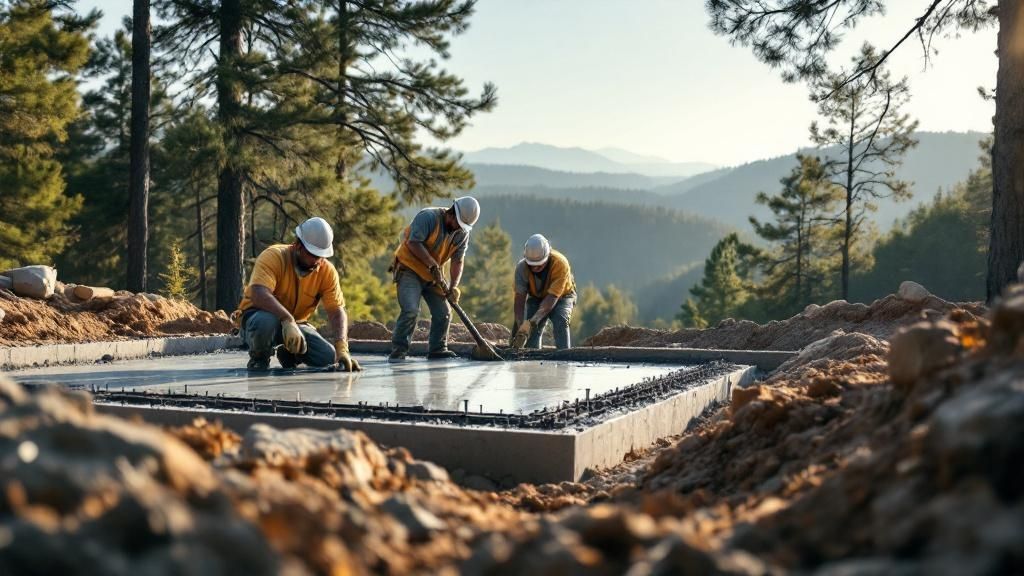
Once the ground is perfect, the foundation crew gets to work. Whether you've opted for a slab, a crawlspace, or a full basement, this is the literal bedrock of your future home. They’ll set up the forms, run initial plumbing and electrical conduits, and pour the concrete. This stage is peppered with inspections to ensure everything from rebar placement to the concrete mix meets North Carolina’s tough building codes.
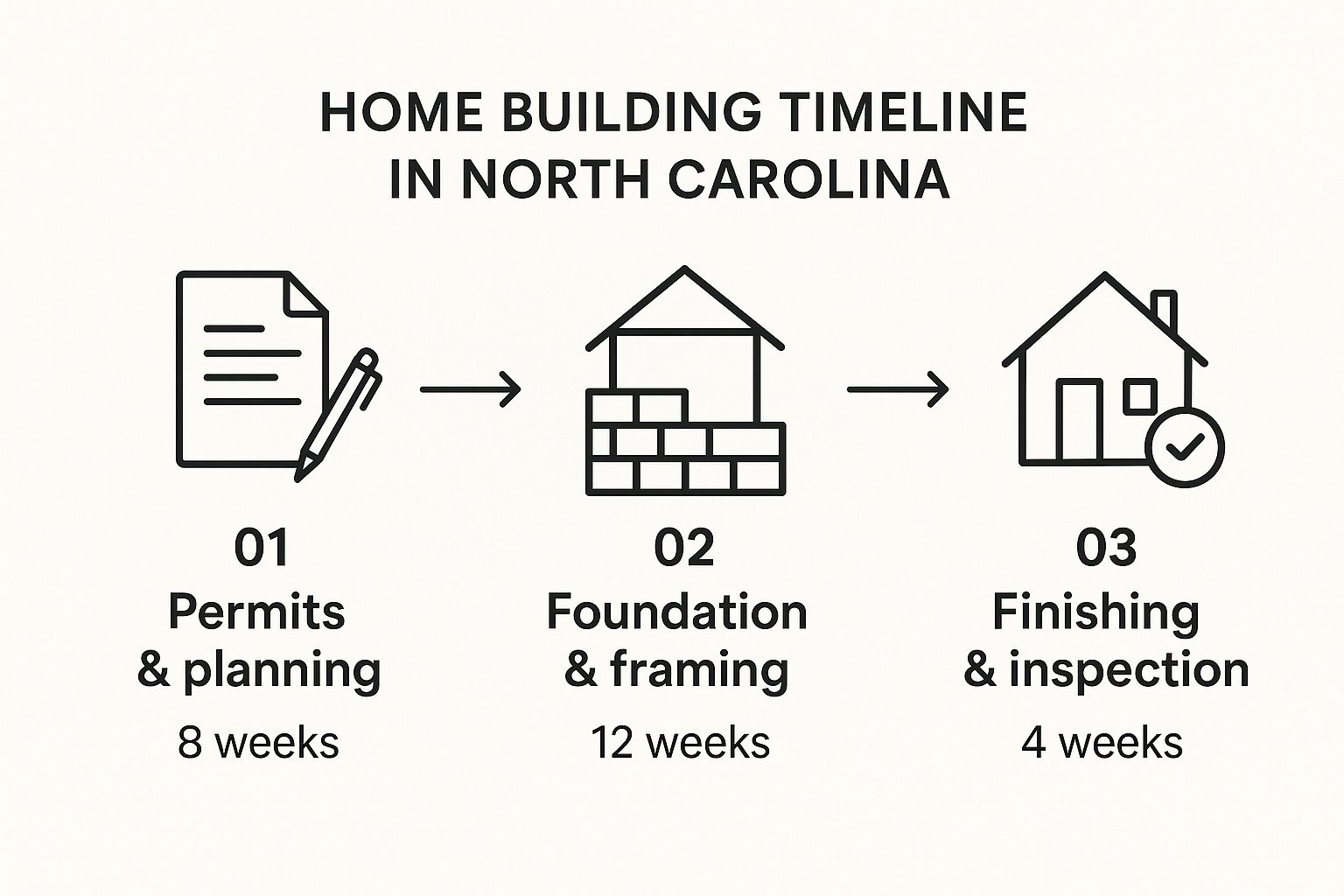
As you can see, a huge chunk of the timeline is dedicated to getting that foundation and frame just right. It’s the bones of your home, and it has to be perfect.
From Skeleton to Shell: The Framing and Rough-Ins
This is when things get really exciting. The framing crew arrives, and what was a concrete slab starts to look like a house. They build the floors, raise the walls, and construct the roof system. For the first time, you can walk through the rooms and get a real feel for the layout.
From our Staff: Our project manager on a recent build in Lumberton always says, "The framing stage is where Carolina weather really tests you. One unexpected week of rain can soak your lumber and throw the whole schedule off. That’s why we obsessively watch the forecast and always have a backup plan. It’s not just about building; it’s about building smart."
After the frame is complete, we install the roof, siding, and windows. This milestone is called being "dried-in," and it's a big deal. It means the inside of your home is protected from the elements. Next, plumbers, electricians, and HVAC technicians weave a complex web of pipes, wires, and ductwork through the walls. These are the vital organs of your home.
The Final Stretch: Finishes and Fixtures
Once all behind-the-walls work passes inspection, the house is ready for its personality. The focus shifts to the beautiful finishes that truly make it a home. First, insulation goes in, followed by drywall. The drywall crew then tapes, muds, and sands every seam to create perfectly smooth surfaces.
From there, it’s a flurry of activity as the fine craftsmanship begins:
- Trim and Millwork: All baseboards, door frames, and window casings get installed.
- Cabinetry and Countertops: The kitchen and bathroom cabinets are set, followed by countertops.
- Flooring: Whether it's tile, hardwood, or carpet, the floors go in.
- Fixtures: Finally, the crew installs sinks, faucets, light fixtures, and appliances.
Every step gets you closer to move-in day. The last phase involves final paint touch-ups, a deep clean, and final inspections. As you’re planning, don’t forget to protect your new investment long-term. It's smart to have a good grasp on understanding the cost of termite treatment right from the start.
Designing for the Carolina Climate
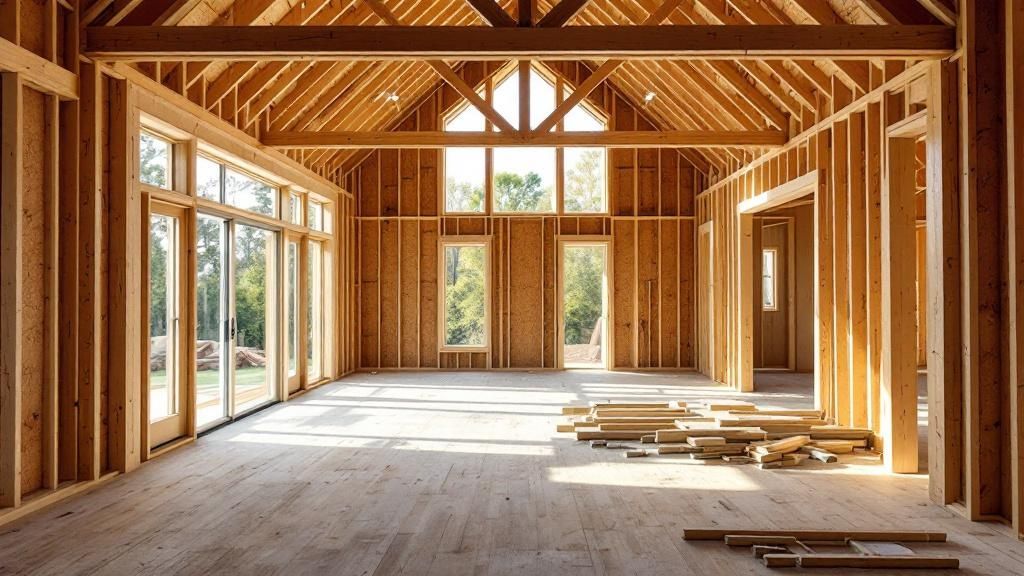
Let's talk about building in North Carolina. It’s not like building anywhere else. You’re bracing for four distinct seasons that swing from sweltering, humid summers to frosty mountain winters. Your home’s design needs to be more than pretty—it needs to be a plan for comfort, durability, and energy efficiency against whatever Mother Nature throws at it.
Making smart choices about materials and architectural styles is how you end up with a house that feels right and performs beautifully without sending your energy bills through the roof. This is a huge part of our philosophy at SEGC. Our commitment to client trust means we show you the long-term value of doing things right the first time.
Finding an Architectural Style That Fits NC
From the Piedmont hills to the salty coast, North Carolina’s landscape begs for certain kinds of architecture. The trick is to pick a style that you love and that also works with the environment.
Here are a few styles we see—and build—that just make sense here:
- Modern Farmhouse: This is a perfect match for the state's rural and suburban soul. Big porches and metal roofs aren't just for looks; they're fantastic for shedding afternoon downpours and creating shade to escape summer heat.
- Coastal Cottage: Down by the shore, you need a different playbook. Elevated foundations, tough siding, and light colors are designed to handle salt spray and high winds while catching the ocean breeze.
- Mountain Craftsman: Head west, and the homes need to hug the landscape. Natural stone, warm wood, and deep roof overhangs offer serious protection from snow and rain.
A home designed with this kind of thought will always have an edge. In mid-2025, active home listings in North Carolina shot up by 25.7% compared to the year before. A climate-resilient home is an easy standout. You can dig deeper into the North Carolina real estate market stats from Superior School of NC.
Picking Materials That Can Take a Beating
The materials you choose are your home's armor. With over 21+ years of proven results, we’ve seen what holds up to the local climate. We're in the business of building legacies, not just structures, and that means choosing materials designed to go the distance.
Here's an actionable insight based on where you're building:
- For the Coast: Hurricane-rated windows are a must. It's a non-negotiable investment. We also push for fiber cement siding—it laughs at moisture, salt, and pests.
- For the Mountains: It's all about insulation. The goal is a tightly sealed thermal envelope. We use high-quality insulation to keep homes toasty in the winter and cool in the summer, slashing energy costs.
- For Everywhere in Between: A high-efficiency HVAC system is essential. We’ll help you find a system perfectly sized for your home’s layout, so you get maximum comfort without wasting energy.
Testimonial from a Fayetteville Homeowner: "SEGC helped us design our dream home. We wanted tons of natural light but were terrified of baking in the summer. They designed a deep porch on the south-facing side and used low-E windows. The result? A bright, airy living space that stays comfortable all year, and our cooling bills are shockingly low. Their smart design paid for itself."
Our Commitment to Quality and Trust at SEGC
As a Native American-owned and HUBZone-certified firm, our process is grounded in integrity and obsessive planning. We don’t just hand you a list of materials; we explain the why. We show you how spending a little more on better windows or a beefier HVAC system now saves you thousands in repairs and energy bills down the road.
Building a home in North Carolina is a chance to create a sanctuary. Our job is to be your expert guide, bringing an unwavering commitment to quality that turns your vision into a home that's as resilient and sustainable as it is stunning.
Got Questions About Building Your NC Home? We've Got Answers.
Thinking about building a custom home in North Carolina is thrilling, but it also brings a ton of questions. After 21+ years building homes in communities from Fayetteville to Lumberton, we've heard them all. Our job is to give you the straight scoop, empowering you with the knowledge to make confident decisions.
We've pulled together the most common questions we get. Here's what you need to know, based on our decades of building trust with every family we work with.
How Long Does This Whole Thing Actually Take?
Ah, the big one. While every custom project has its own rhythm, a solid ballpark for building a house in North Carolina is anywhere from 9 to 14 months. That clock starts the day the excavator arrives and stops when we hand you the keys.
Of course, a few things can affect that timeline:
- Your Home's Personality: A sprawling, multi-level home with custom bells and whistles will take more time than a simpler design.
- Mother Nature's Mood: North Carolina weather can be a fickle friend. A solid week of rain can push the schedule back.
- The Permit Tango: Sometimes inspections and permits hit a snag. It happens.
This is where having a builder with deep local leadership and roots really pays off. Knowing the inspectors and understanding the local process helps us smooth out the bumps before they become roadblocks.
What Are the "Gotcha" Costs I Should Worry About?
If there’s one place surprises hide, it’s in the dirt. The biggest and most expensive curveballs almost always come from the land itself.
We’re talking about things like discovering your sloped lot needs a fortune in excavation, finding the soil is poor and needs to be replaced, or learning you need a complex septic system. This is why you should never buy land without a thorough site evaluation first. It's a non-negotiable.
At SEGC, our whole business is built on trust. As a Native American-owned and HUBZone-certified firm, we don't do surprises. That’s why we give every client this actionable insight: bake a contingency fund of at least 10-15% of the total build cost into your budget. It's not fun money; it's your financial shock absorber. It’s for peace of mind.
Is It Really Cheaper to Build or Just Buy Something Already Standing?
This is the million-dollar question. The answer boils down to what you value most. The initial price tag for a custom build might be higher than buying pre-owned, but you’re paying for something a resale home can never offer.
Think about it this way:
- Zero Compromises: You get the exact floor plan you’ve dreamed of, with the finishes you picked, on the lot you love. You skip the cost and headache of a massive renovation.
- 21st-Century Efficiency: Your new home will be packed with the latest energy-saving windows, high-tech insulation, and an efficient HVAC system. Your utility bills will thank you for years.
- No Weekend Worries: Everything is brand new and under warranty. You won’t be spending your weekends fixing a leaky roof or facing a surprise furnace replacement.
Building a house in North Carolina isn't just a transaction; it's an investment in your family's future and your daily happiness. It’s about crafting a legacy, one two-by-four at a time.
Ready to stop dreaming and start planning? The team at South Eastern General Contractors is here to be your expert guide. We bring the integrity and quality that have been the bedrock of our business for over two decades. Let's build your legacy together.