Blog
Cost to Build a House North Carolina: A Realistic Guide
Published
Category
Planning & Budget
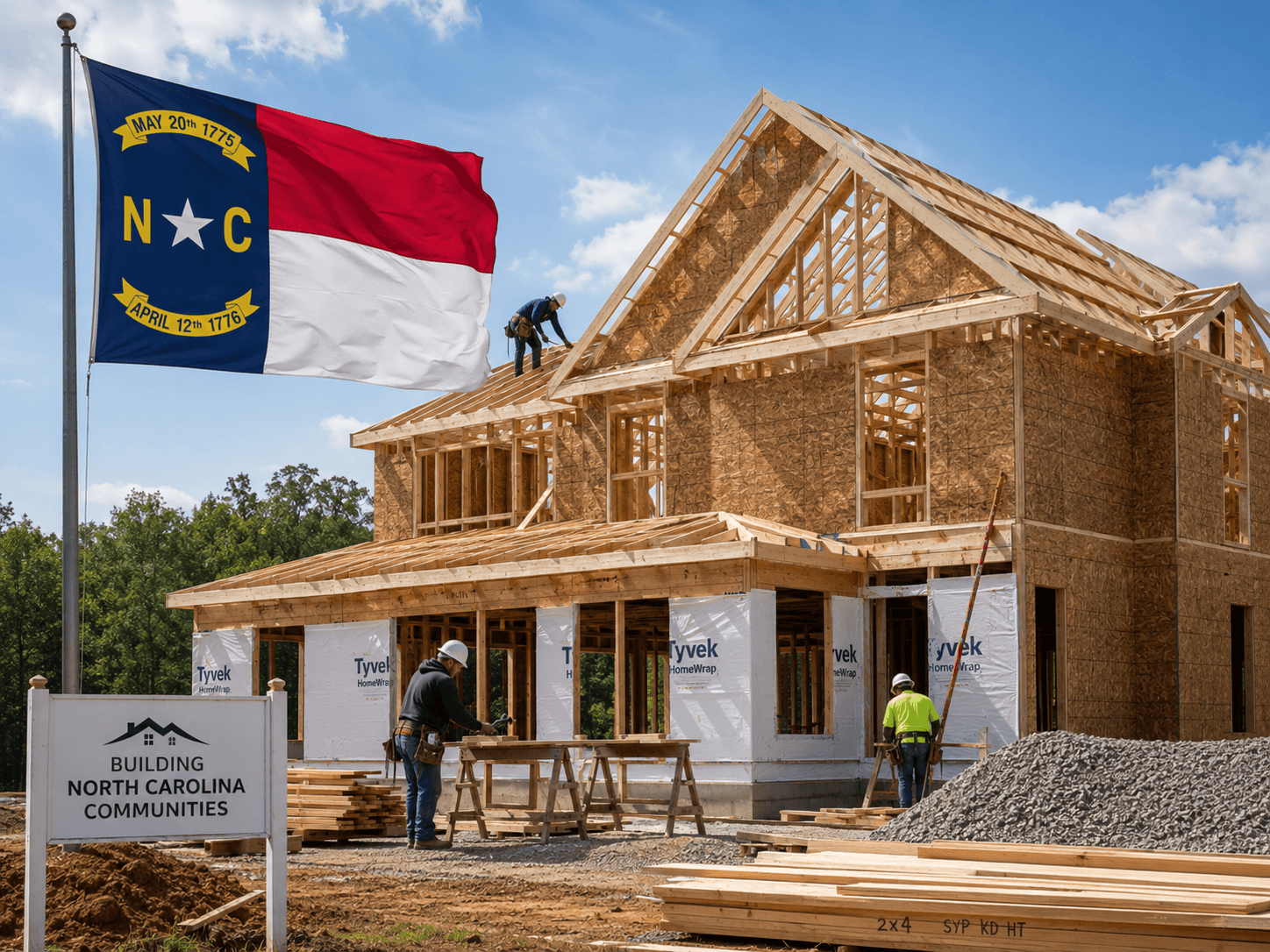
In 2026, the realistic cost to build a house in NC runs $135–$200+ per square foot—$320K–$600K before land. But the all-in number is 20–30% higher once soft costs, loan interest, and contingency are added. SEGC breaks down what brochures skip.
In 2026, the cost to build a house in North Carolina realistically runs $135 to $200+ per square foot for the construction itself, putting most projects between $320,000 and $600,000 before land. But that range is only the construction line. The number that actually shows up on your closing statement is 20–30% higher once soft costs, financing carry, and contingency get folded in. This guide is the realistic version—the one that accounts for what builders see on the ground every day in Fayetteville, Lumberton, and the surrounding counties.
What "Realistic" Actually Means in 2026
A square-foot number is a starting point, not a budget. The brochure version of building a home tells you "$150 a foot times 2,000 square feet equals $300,000." The realistic version tells you that $300,000 is just the hard construction bucket—the lumber, the labor, the drywall, the roof. It does not include the land, the design work, the construction loan interest you will pay every month for the next year, the impact fees, the well or septic if you are rural, the driveway, or the appliances you have to put inside the house before you can move in.
After 21+ years building in Cumberland, Robeson, and Hoke counties, the lesson is the same every time: budgets fail because of the line items nobody mentioned, not the ones on the spreadsheet. The goal of this guide is to put those invisible lines back on the page.
The Three Buckets Every NC Build Actually Has
Forget the single "total cost" number for a minute. Every home build in North Carolina has three separate cost buckets, and the mistake most first-time builders make is treating them as one.
Bucket 1: Land & Site Costs
This is what it takes to own a piece of ground and make it buildable. It is wildly variable. Two lots in the same zip code can differ by $100,000 or more depending on what is underneath them.
Raw land in NC: $5,000/acre (rural) to $150,000+ for a half-acre in a premium suburb
Land survey: $400–$1,800
Soil & perc testing: $500–$2,500
Clearing & grading: $1,500–$10,000 (easy lots); $20,000+ (sloped, rocky, or heavily wooded)
Well: $5,000–$12,000 / Septic system: $5,000–$20,000 (if no municipal hookups)
Utility hookups & impact fees: $3,000–$15,000+ depending on county
Driveway: $3,000 (gravel) to $25,000+ (long, paved)
Bucket 2: Hard Construction Costs
This is what most people mean when they say "cost to build." It is the sticks, bricks, labor, and systems that turn the lot into a finished house. In 2026 NC pricing, this bucket runs $135–$200 per square foot for a mid-grade build with conventional finishes. Custom features push it well past $250.
Bucket 3: Soft Costs (The 20–30% Everyone Forgets)
These are the professional, administrative, and financial expenses that surround the build. They are not optional, they are often invisible until the invoice arrives, and they can easily add 20–30% on top of your hard construction number.
Architectural & design fees: 5–15% of construction cost
Engineering (structural, geotechnical): $1,500–$8,000
Permits & inspection fees: $1,500–$5,000 depending on municipality
Construction loan origination, appraisal, and inspection draws: $3,000–$8,000
Builders risk & liability insurance: $2,000–$6,000
Construction loan interest carry (see below): often the single biggest soft cost line
Property taxes during construction
Two closings (construction-to-perm avoids this; standalone construction loans do not)
2026 Cost Snapshot: What NC Homes Actually Cost This Year
The 2026 market has cooled from the 2021–2023 lumber and labor frenzy but has not returned to pre-pandemic levels. Material prices are mostly stable, but skilled-trade labor remains short—plan for 6–10 week subcontractor scheduling delays. The AIA consensus forecast for 2026 puts U.S. building construction spending growth at just 1%, which barely keeps pace with inflation.
2026 Cost Per Square Foot by Finish Level (NC, Construction Only)
Finish Level | Cost / Sq Ft | 2,500 Sq Ft Home (Build Only) |
|---|---|---|
Builder-grade / spec | $135 – $165 | $337,500 – $412,500 |
Mid-range custom | $165 – $225 | $412,500 – $562,500 |
High-end custom | $225 – $325 | $562,500 – $812,500 |
Luxury / fully custom | $325 – $500+ | $812,500 – $1.25M+ |
Figures reflect 2026 NC market data (HomeGuide, RSMeans-adjusted state index, AIA forecast). Add land + soft costs separately.
The Realistic 2,500 Sq Ft NC Build Budget, Line by Line
Below is what a realistic all-in budget looks like for a 2,500 sq ft mid-range custom home in the Sandhills region (Fayetteville/Lumberton corridor). Numbers move up or down with finishes and lot conditions, but the proportions hold.
Line Item | Realistic 2026 Range |
|---|---|
Land (half-acre, suburban) | $40,000 – $90,000 |
Site work, clearing, grading | $8,000 – $25,000 |
Foundation (slab, most common in NC) | $15,000 – $30,000 |
Framing (incl. roof trusses) | $45,000 – $75,000 |
Roof & siding | $22,000 – $48,000 |
Windows & exterior doors | $12,000 – $30,000 |
Plumbing rough-in + fixtures | $14,000 – $26,000 |
Electrical rough-in + fixtures | $12,000 – $22,000 |
HVAC system + ductwork | $9,000 – $18,000 |
Insulation & drywall | $14,000 – $24,000 |
Interior finishes (flooring, cabinets, counters, paint) | $55,000 – $110,000 |
Appliances | $6,000 – $20,000 |
Driveway, landscaping, sod | $8,000 – $25,000 |
Permits & impact fees | $2,000 – $5,000 |
Design & engineering | $8,000 – $25,000 |
Construction loan costs (origination, interest carry, inspections) | $15,000 – $35,000 |
Subtotal | $285,000 – $608,000 |
Contingency (10–15%) | $28,500 – $91,200 |
Realistic All-In Total | $313,500 – $699,200 |
The Budget Killers Most Guides Skip
These are the line items that wreck more NC builds than any other. None of them appear on the bid sheet on day one.
1. Construction Loan Interest Carry
Construction loan rates in NC in 2026 are running 10.5–11.5% APR—well above traditional mortgage rates. The loan is interest-only during the build, which sounds gentle until you do the math: on a $400,000 build drawn down gradually over a 10-month construction window, you can easily pay $15,000–$22,000 in interest alone before you move in. Long permitting delays or weather-driven schedule slippage extends the carry. Every extra month of construction = real money.
2. Allowance Shortfalls
An "allowance" is a budget placeholder for items you have not picked yet—flooring, fixtures, appliances, countertops, lighting. Builders sometimes set allowances artificially low to make the headline bid look competitive. When you walk into the showroom and pick the quartz counter you actually want, the difference comes out of your pocket as a change order. A transparent, line-item bid with realistic allowances is the single best protection against this.
3. Change Orders
Every time you change your mind after construction starts—relocating an outlet, swapping a door style, adding a window—it becomes a change order. Each one has labor, materials, and administrative cost. Even small changes after the drywall is up can run $500–$5,000 apiece. The fix: front-load your decisions in design phase, not during framing.
4. 2026 Skilled-Trade Delays
The labor shortage in electricians, plumbers, and HVAC techs has not eased. In 2026, plan on 6–10 week scheduling gaps for subcontractors in busy markets. Every week of idle jobsite = more loan interest, more property tax, more general overhead. A builder with long-standing local sub relationships gets prioritized; a new entrant does not.
5. Energy Code & Inspection Surprises
NC has been progressively tightening energy codes—duct sealing, blower-door testing, more insulation, ERV/HRV requirements in some cases. If your plans were drawn under last year's code and permitted this year, you may be on the hook for mid-build revisions. Inspections themselves are routine, but a failed inspection that requires opening up finished work can run $2,000–$10,000+.
How NC Geography Quietly Reshapes Your Budget
Same floor plan, four different prices depending on where you drop it.
Region | Cost Impact | What Drives It |
|---|---|---|
Sandhills (Fayetteville, Lumberton, Pinehurst) | Most predictable | Flat sandy soil, mature supplier base, steady labor market near Fort Liberty |
Coastal Plain (Wilmington, Outer Banks) | +15–35% | Elevated foundations on pilings, CAMA permitting, wind-rated windows/strapping, flood-zone insurance |
Piedmont metros (Raleigh, Charlotte, Greensboro) | +10–25% | High land cost, competitive labor market, longer permitting queues, impact fees |
Mountain region (Asheville, Boone, WNC) | +25–60% | Rock excavation, retaining walls, sloped foundations, post-Helene landslide assessments, logistical premiums for material delivery |
Realistic Contingency: How Much, Where, Why
A 5% contingency is fantasy. Industry-wide guidance in 2026 is 10–15%, and on sites with unknown subsurface conditions or older plans, 20% is not unreasonable.
Site work contingency: 15–25%. This is the single most unpredictable bucket. Rocks, unexpected water tables, buried debris, perc-test surprises—they all show up here.
Allowances contingency: 10–20% on the allowance subtotal. Most owners spend more on finishes than their builder's placeholder predicts.
Schedule contingency: budget an extra 60–90 days of loan interest. Weather, inspection delays, and sub scheduling will eat it.
Material contingency: 8–12% on framing lumber and steel, which remain the most price-volatile line items.
The healthiest projects we run in Fayetteville and Lumberton are the ones where the owner walks in expecting to use their contingency—and then doesn't. The unhealthy ones are the ones where the owner expected zero overruns and treated every surprise as an emergency.
How the Right Builder Quietly Changes the Math
The single biggest budget lever you have is not the finish package or the floor plan. It is the builder. A builder with deep local relationships gets:
Priority access to subs in a constrained 2026 labor market
Better material pricing from suppliers they have bought from for 20+ years
Faster permitting because the inspectors know their work
Honest allowances based on what real finishes actually cost, not optimistic placeholders
Realistic timelines that account for the 2026 schedule reality, not the 2019 one
South Eastern General Contractors has been building in Fayetteville, Lumberton, and the surrounding NC communities since 2004. As a Native American-owned firm with unlimited NC general contractor licensing, SBA 8(a) certification, and HUBZone designation, SEGC brings credentials and 21+ years of local subcontractor relationships that translate directly into a more realistic, more defensible budget.
"We came to SEGC after another builder walked us through a number that sounded too good to be true—and was. The SEGC team built our budget the realistic way from day one: every allowance fully sourced, contingency clearly laid out, a draw schedule that actually matched our lender's requirements. We finished the build under our worst-case number. That kind of honesty is rare." — A recent SEGC homeowner
FAQs: The Realistic Answers
What is the most common reason NC home build budgets blow up?
Soft costs and interest carry, in that order. Owners plan around the hard construction number and underestimate everything orbiting it. Build the three-bucket budget from the start and most of this risk disappears.
How long does it actually take to build in NC in 2026?
Plan on 8–14 months from breaking ground to certificate of occupancy for a standard build. Custom homes and complex sites run 16–24 months. Add 2–4 months of pre-construction (design, financing, permitting) before any of that.
Is it cheaper to buy an existing home than to build in 2026?
In most NC markets in 2026, a comparably specced new build runs 10–20% more than a similar resale once all costs are in. You are paying a premium for energy efficiency, warranty, no deferred maintenance, and the ability to design for your life. Whether that premium is worth it depends on how long you plan to own the home.
How much should I have in cash before I start?
Most NC lenders want 10–20% of total project cost down. On a $500,000 project, that is $50,000–$100,000 cash, plus closing costs, plus a contingency you control yourself outside the loan. Get pre-qualified before plans are finalized.
Fixed-price or cost-plus contract—which is more realistic?
Fixed-price gives you a hard ceiling but the builder prices in extra cushion to protect their margin. Cost-plus is more transparent and often cheaper if the project goes well, but the owner carries more of the overage risk. For most NC custom builds, a well-structured cost-plus contract with a guaranteed maximum price (GMP) is the realistic middle ground.
What is the one thing I can do right now to keep my budget realistic?
Ask any builder you interview to give you a line-item bid—not a per-square-foot number, not a single page with a total at the bottom. If they cannot or will not produce one, that is the answer.
Ready to Build the Right Way? Let's Talk.
A realistic budget is the foundation of every successful home build. If you are planning a custom home anywhere in the Fayetteville, Lumberton, Fort Liberty, or surrounding NC markets, the first conversation is free—and it is the most valuable hour you will spend on the project.
Contact South Eastern General Contractors at (910) 224-1505 or visit southeasterngc.com to request a no-pressure consultation and a real, line-item estimate built on 21+ years of NC experience. We build legacies, not just structures.

South Eastern General Contractors
South Eastern General Contractors is a Native American-owned, 8(a) and HUBZone certified construction firm with over 21 years of proven results across Fayetteville, Lumberton, and the surrounding North Carolina communities. We build legacies, not just structures.
Ready to Build With Clarity and Confidence?
Your project deserves more than a contractor who just shows up and starts building. We guide you through a professional design-build process built around clear plans, detailed selections, documented scopes, and construction checklists that help eliminate confusion, mistakes, and missed expectations.
Other Blogs