8 Custom home designs You Should Know
Tired of cookie-cutter houses that look like every other home on the block? Building a custom home is your chance to create a space that’s a true reflection of your personality, lifestyle, and future aspirations. It’s about moving beyond the standard floor plan and crafting a legacy—a place where every detail, from the foundation to the finishes, is intentionally chosen by you. This isn’t just about picking paint colors; it’s about designing a life.
In this guide, we’re diving deep into the most inspiring custom home designs making waves today. We'll skip the generic overviews and get straight to actionable insights and replicable ideas you can bring to your own project. For over 21 years, our team at South Eastern General Contractors has helped clients in Fayetteville, Lumberton, and beyond build their dreams, and we know that the best projects start with a powerful vision rooted in trust and quality.
As an 8(a) and HUBZone certified, Native American-owned firm, we believe in educating and empowering our clients. As you begin your journey, remember that many elements of your dream home, including certain fixtures, can often be tailored through specialized customization services. Let's explore the possibilities and start designing a home that’s uniquely yours.
1. Modern Minimalist Custom Homes
When it comes to custom home designs that make a bold, sophisticated statement, modern minimalism is a powerful choice. This design philosophy champions the idea that "less is more," stripping away unnecessary ornamentation to focus on clean lines, open floor plans, and the inherent beauty of high-quality materials. Think of it as architecture with a clear, confident voice, where every element serves a distinct purpose.
The result is a serene, uncluttered living environment that feels both expansive and calming. Legendary designs like Philip Johnson's Glass House and Mies van der Rohe's Farnsworth House showcase this style's core principles: transparency, structural honesty, and a seamless connection to the natural landscape.
Why It Works for Custom Builds
Modern minimalism excels in custom projects because it demands precision and thoughtful planning from the ground up, a specialty of experienced builders like SEGC. With over 21 years of proven results in communities like Fayetteville and Lumberton, our team understands that the "simple" look of minimalism is achieved through complex, expert execution. The focus on raw materials like steel, glass, and concrete means there’s no room for error, only craftsmanship built on a foundation of trust.
Actionable Insight: Minimalist design isn't about having less; it's about making every element you do have count. This requires a builder with a deep commitment to quality and detail, which has been the cornerstone of our family-owned business for over two decades.
Actionable Tips for Your Minimalist Home
- Prioritize Built-in Storage: Work with your builder during the design phase to integrate extensive, seamless storage solutions. This keeps spaces free of clutter and maintains clean lines.
- Invest in a High-Performance Envelope: Large glass panels are a hallmark of this style. Specify high-performance windows and superior insulation to ensure year-round comfort and energy efficiency.
- Strategic Landscaping: Use thoughtful landscaping to create natural privacy screens. A well-placed line of trees can provide seclusion without obstructing your beautiful, minimalist views.
- Embrace Radiant Heating: Radiant floor heating is a perfect, invisible solution for maintaining comfort in large, open-concept spaces without the visual disruption of vents or radiators.
2. Sustainable/Green Custom Homes
Building a custom home offers the unique chance to create a living space that’s not only beautiful but also kind to the planet and your wallet. Sustainable or green custom home designs prioritize environmental responsibility, weaving together renewable energy, eco-friendly materials, and high-performance technologies. This approach is about crafting a home that minimizes its ecological footprint while maximizing comfort, health, and long-term savings.
The result is a high-performance home that works in harmony with its surroundings. Pioneering examples like Michael Reynolds' "Earthships" in New Mexico demonstrate radical self-sufficiency, while the many Zero Energy homes in California showcase how modern technology can achieve incredible efficiency. These designs prove that sustainability is a powerful and achievable goal.
Why It Works for Custom Builds
Green building is a perfect match for the custom home process because it relies on a holistic, site-specific strategy. A local builder like SEGC, with deep roots in Fayetteville and Lumberton, can analyze the local climate, sun exposure, and landscape to implement passive design strategies effectively. Our 21+ years of proven results in complex project management ensure that all the interlocking systems of a green home, from geothermal heating to rainwater harvesting, are integrated flawlessly.
Actionable Insight: A truly sustainable home is more than just solar panels. It's an entire system designed for peak performance. A local expert can orient the home on your lot to maximize passive solar gain in winter and minimize it in summer, a no-cost decision that pays dividends for life.
The following infographic highlights a few key financial data points associated with investing in sustainable custom home designs.
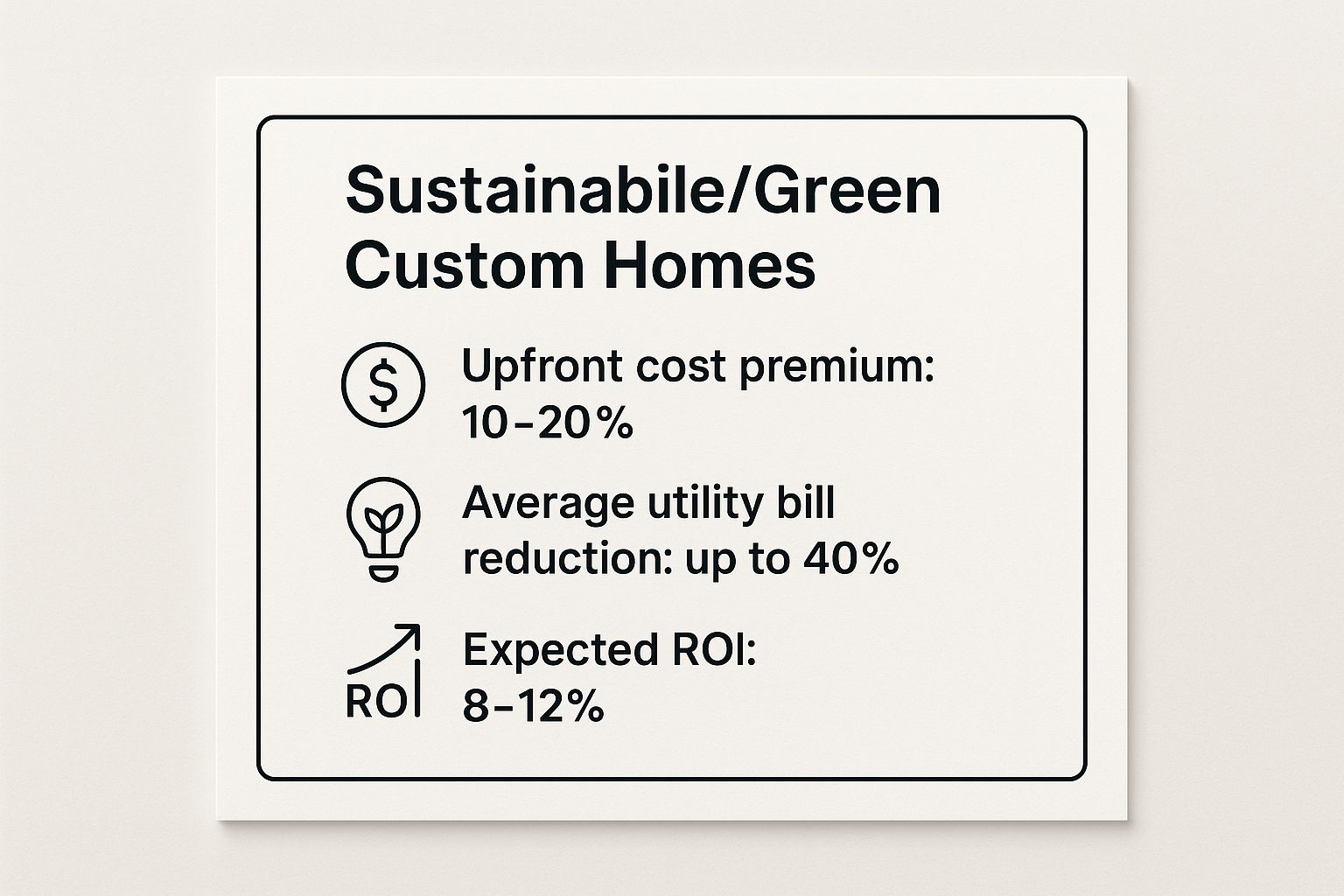
As the data shows, the initial investment often pays for itself through significant utility savings and increased property value over time.
Actionable Tips for Your Green Home
- Start with Passive Design: Before anything else, orient your home to take full advantage of natural light and heat from the sun. This single step can dramatically reduce your reliance on artificial lighting and heating.
- Prioritize Insulation & Air Sealing: A well-sealed and super-insulated building envelope is the single most important factor for energy efficiency. Address this before investing in expensive renewable systems.
- Research Local Incentives: Look into federal, state, and local tax credits or rebates for installing systems like solar panels or geothermal HVAC before finalizing your budget.
- Work with Certified Specialists: Partner with builders and architects who hold credentials like LEED accreditation to ensure your project meets the highest standards of green construction and quality.
3. Luxury Estate Custom Homes
For those who dream without limits, luxury estate custom homes represent the absolute zenith of residential architecture and personal expression. This design tier moves beyond simple comfort and into the realm of bespoke artistry, where expansive floor plans, the finest materials, and resort-style amenities come together to create a truly one-of-a-kind legacy property. These homes are defined by their scale, sophistication, and an unwavering commitment to unparalleled quality.
The grandeur of these homes is legendary, from the opulent Hearst Castle conceived by Julia Morgan to the contemporary masterpieces gracing the hills of Beverly Hills. These custom home designs are not just residences; they are personal resorts featuring everything from private home theaters and wine cellars to sprawling outdoor entertainment areas and spa facilities.
Why It Works for Custom Builds
Luxury estates are the ultimate custom build because they require a master-level orchestration of design, engineering, and craftsmanship. A builder like SEGC, with over two decades of proven results, brings the necessary project management expertise and deep vendor relationships to source rare materials and coordinate elite artisans. Building a legacy home in communities like Fayetteville demands a contractor who understands not just construction, but also long-term performance and client trust.
Actionable Insight: A luxury estate is a complex ecosystem of advanced systems and exquisite finishes. Success depends on a builder with the experience and integrity to manage every intricate detail. For example, a recent SEGC project in Fayetteville required sourcing hand-milled lumber from a specific region to match the client's vision—a detail that makes a home truly unique.
Actionable Tips for Your Luxury Estate
- Plan for Contingency: A successful luxury build anticipates the unexpected. Allocate a contingency fund of 20-30% not just for problems, but for opportunities to upgrade finishes or incorporate new design ideas that arise during construction.
- Prioritize Timeless Design: While trends are tempting, focus on classic architectural elements and materials that will retain their value and appeal for generations to come.
- Invest in Infrastructure: The unseen elements are critical. Insist on top-tier HVAC, electrical, and smart home systems to ensure the home functions as beautifully as it looks.
- Consider Long-Term Upkeep: During the design phase, discuss the practicalities of maintenance and potential staffing needs with your builder to ensure the home is sustainable long-term.
4. Farmhouse Style Custom Homes
Few custom home designs evoke a sense of warmth, comfort, and nostalgia quite like the Modern Farmhouse. This style brilliantly merges rustic, agricultural charm with clean, contemporary functionality. It’s a design that celebrates family gatherings and a strong connection to the outdoors, defined by iconic elements like wraparound porches, board-and-batten siding, and generous, light-filled spaces.
Popularized by designers like Chip and Joanna Gaines, the modern farmhouse isn't just a trend; it's a lifestyle choice rooted in practicality and simple elegance. Think of the inviting kitchens in Southern Living plans or the sophisticated takes by Studio McGee, where every space feels both lived-in and thoughtfully curated. This style is about creating a welcoming haven.
Why It Works for Custom Builds
The Farmhouse style is exceptionally well-suited for custom projects because it’s highly adaptable. As local builders with deep roots in Fayetteville and Lumberton, we at SEGC appreciate how this design honors our region's heritage while accommodating modern family life. Achieving the right balance of rustic and refined requires a builder who understands authentic proportions and high-quality materials, ensuring the final home feels timeless, not trendy.
Actionable Insight: The enduring appeal of the modern farmhouse lies in its balance of comfort with sophistication. For a recent project in Lumberton, we sourced reclaimed heart pine from a local historic mill for the flooring, grounding a new-build home with a genuine piece of North Carolina history.
Actionable Tips for Your Farmhouse Home
- Focus on the Kitchen: The kitchen is the heart of a farmhouse. Prioritize a large island for gathering, durable countertops like quartz or soapstone, and a layout that promotes easy conversation and movement.
- Balance Rustic and Refined: Pair rustic elements like reclaimed wood beams or a barn door with more polished finishes like modern light fixtures or sleek hardware to keep the look fresh.
- Embrace Natural Light: Plan for large, strategically placed windows to flood the home with light and connect indoor spaces with the surrounding landscape.
- Use Authentic Materials: Invest in genuine materials like real wood siding and a standing-seam metal roof to elevate the design and ensure long-term durability and curb appeal.
5. Smart Technology Integrated Homes
Imagine a home that anticipates your needs, streamlines your daily routines, and manages its own security and efficiency. This is the promise of smart technology integrated homes, one of the most exciting frontiers in custom home designs. This approach involves embedding advanced automation, AI, and IoT devices directly into the home’s architecture, creating a seamless, intuitive living experience.
This isn't just about adding a smart speaker; it's about a fully orchestrated environment where lighting, climate, entertainment, and security systems communicate and work together. Legendary examples like Bill Gates' "Xanadu 2.0" showcased the potential for hyper-personalized living decades ago, paving the way for today's more accessible systems from companies like Control4 and Google Nest.
Why It Works for Custom Builds
A truly smart home isn't an afterthought; it’s a foundational element of the design. This is where custom building shines. Planning for smart integration from day one allows builders like SEGC to pre-wire for data, power, and sensors, concealing the complex infrastructure within the walls for a clean, sophisticated finish. Building this digital backbone correctly is critical for reliability and future-proofing your investment.
Actionable Insight: True smart home integration is about infrastructure, not just gadgets. Plan it during the custom design phase to ensure systems are reliable and invisible. A simple, actionable step is to run conduit to key locations (TVs, offices) so you can easily upgrade wiring in the future without opening walls.
Actionable Tips for Your Smart Home
- Plan the Infrastructure First: During the design phase, map out all wiring for data, speakers, cameras, and control panels. This is far more cost-effective than retrofitting later.
- Prioritize Cybersecurity: Work with your builder and installers to secure your home network from the start by using a robust firewall and secure passwords to protect your data and privacy.
- Choose Scalable Systems: Select a central smart home system (like Control4 or Savant) that allows you to start with core functions and add more features over time.
- Integrate High-Definition Security: For unparalleled clarity and detail in your custom smart home, you might explore the best 4K security cameras for your home. You can find more inspiration in our gallery of custom home design ideas.
6. Indoor-Outdoor Living Custom Homes
Blurring the line between the built environment and the great outdoors, indoor-outdoor living is one of the most sought-after custom home designs today. This approach is all about creating a seamless transition from your living room to your landscape, effectively erasing traditional boundaries. It utilizes elements like pocketing glass walls, continuous flooring from inside to out, and covered patios that function as true extensions of the home.
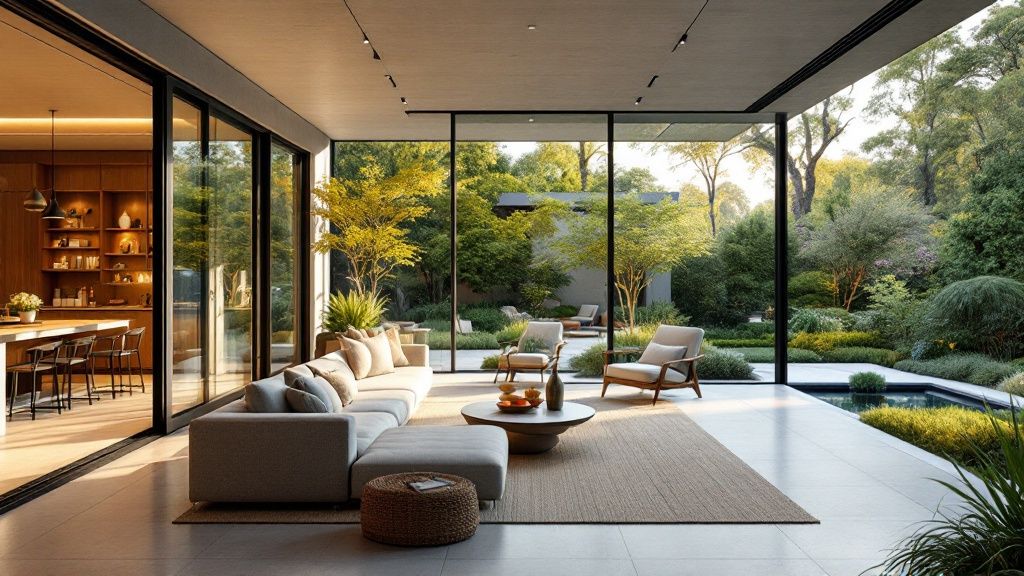
This design philosophy extends your livable square footage while fostering a constant connection with nature. Visionaries like Richard Neutra and Joseph Eichler popularized this concept in their iconic mid-century modern homes, creating spaces that feel expansive, airy, and deeply integrated with their surroundings.
Why It Works for Custom Builds
Indoor-outdoor living shines in custom projects because it requires a holistic design that considers the home and its site as a single, unified entity. This is where a builder with deep local knowledge, like SEGC, becomes invaluable. Designing for the specific climate patterns of Fayetteville and Lumberton is crucial for success. Our 21+ years of experience ensures that your home is perfectly oriented to capture breezes and views while protecting against the elements.
Actionable Insight: True indoor-outdoor living is more than just a big door; it's a comprehensive design strategy. A practical tip for North Carolina homes is to design covered porches with a deeper overhang (at least 12 feet) to ensure the space is usable during both intense sun and summer rain showers.
Actionable Tips for Your Indoor-Outdoor Home
- Design for Your Climate: Plan for adequate shade with deep overhangs or covered lanais to manage the North Carolina sun and ensure usability even during a light rain.
- Invest in Quality Materials: Use high-performance, weather-resistant materials like porcelain pavers or ipe decking that can run continuously from inside to out for a seamless look.
- Ensure Visual Continuity: Use consistent flooring, lighting, and color palettes to visually connect your indoor and outdoor spaces, making them feel like one large room.
- Plan for Pests and Pollen: Incorporate high-quality retractable screens to enjoy the fresh air without inviting unwanted guests or allergens inside.
7. Multigenerational Custom Homes
As families evolve, so do their housing needs, making multigenerational custom home designs an increasingly popular and practical choice. This approach is all about creating a harmonious living space for multiple generations, from grandparents to grandchildren, under a single roof. It thoughtfully balances private, independent living quarters with warm, inviting common areas where everyone can connect.
The goal is to foster togetherness while respecting individual privacy. This can range from a home with a dedicated in-law suite or accessory dwelling unit (ADU) to a fully integrated design with dual primary suites on different floors. Innovations like Lennar’s NextGen homes showcase this concept's potential, providing a "home within a home" complete with its own kitchenette, entrance, and living space.
Why It Works for Custom Builds
Multigenerational living thrives in custom projects because it requires a nuanced understanding of family dynamics, something off-the-shelf plans can't offer. A custom builder like SEGC can tailor the layout to your family’s specific needs, ensuring the design supports both connection and autonomy. As a Native American-owned company, we deeply understand the value of family and have helped numerous Fayetteville clients design homes that honor those bonds for decades to come.
Actionable Insight: A successful multigenerational home is a careful blend of private retreats and shared hubs. A key is to design separate HVAC zones for each distinct living area, allowing different generations to control their own comfort and utility costs independently.
Actionable Tips for Your Multigenerational Home
- Design for Accessibility: Incorporate universal design principles like zero-step entries, wider doorways (36 inches), and a first-floor primary suite to accommodate family members of all ages and mobilities.
- Create Acoustic Privacy: Use sound-dampening insulation in walls between living areas and solid-core doors to minimize noise transfer and give everyone their own quiet space.
- Plan Separate Entrances: Include multiple entrances and designated parking areas to give each generation a sense of independence and ease of access.
- Define Shared vs. Private Zones: During the design phase, clearly map out which areas are communal (kitchen, family room) and which are private, ensuring everyone's boundaries are respected from day one.
8. Net-Zero Energy Custom Homes
For those looking to build a home that is both a personal sanctuary and a forward-thinking investment, net-zero energy custom home designs are the gold standard. This approach is about creating a home that produces as much renewable energy as it consumes annually. It combines an ultra-efficient building envelope with on-site energy generation, resulting in a home that is comfortable, healthy, and incredibly inexpensive to operate.
The concept, popularized by organizations like the Department of Energy and the Passive House Institute, has led to incredible innovations. Examples range from individual Passive House certified homes to entire communities like Sonoma Mountain Village, proving that sustainable living can be achieved at any scale without sacrificing luxury or style.
Why It Works for Custom Builds
Net-zero design is the ultimate expression of customization, as it requires a holistic plan tailored to the specific climate, site orientation, and lifestyle of the homeowner. This is where a builder’s expertise becomes non-negotiable. At SEGC, our 21+ years of local experience means we bring a deep understanding of Fayetteville's climate conditions to the table. We meticulously engineer every detail, from the R-value of the insulation to the angle of the solar panels, ensuring the home performs beautifully.
Actionable Insight: A net-zero home is a high-performance machine. An actionable first step is to prioritize an energy recovery ventilator (ERV) system. In a super-sealed home, an ERV ensures a constant supply of fresh, filtered air while retaining the energy used to heat or cool it, boosting both health and efficiency.
Actionable Tips for Your Net-Zero Home
- Model Before You Build: Insist on a professional energy model (like a HERS rating) to set performance targets and guide all design decisions, from window selection to HVAC sizing.
- Seal the Envelope First: Prioritize a super-insulated, airtight building envelope. It's far more effective to reduce your energy needs first than to simply add more solar panels later.
- Invest in Battery Storage: Pair your solar array with a battery storage system to achieve true energy independence, providing power during outages and at night.
- Monitor and Optimize: Install an energy monitoring system to track your home's performance and make small adjustments that yield significant long-term savings.
Custom Home Design Styles Comparison
| Home Style | Implementation Complexity 🔄 | Resource Requirements ⚡ | Expected Outcomes 📊 | Ideal Use Cases 💡 | Key Advantages ⭐ |
|---|---|---|---|---|---|
| Modern Minimalist Custom Homes | Moderate complexity; requires disciplined design | Premium materials (concrete, steel, glass) | Timeless aesthetic, spacious, energy efficient | Urban professionals, empty nesters, design fans | Low maintenance, natural light, high resale value |
| Sustainable/Green Custom Homes | High complexity; requires specialized expertise | Renewable systems, sustainable materials | Reduced bills, healthier environment, tax incentives | Eco-conscious homeowners, long-term savings | Lower carbon footprint, energy independence |
| Luxury Estate Custom Homes | Very high complexity; extensive amenities | Premium materials, luxury appliances | Ultimate comfort, high property value | High-net-worth individuals, entertainers | Customization, luxury lifestyle, investment value |
| Farmhouse Style Custom Homes | Moderate complexity; traditional with modern mix | Standard materials; cost-effective | Comfortable, family-friendly, broad market appeal | Rural/suburban families, lifestyle-focused buyers | Flexible style, easy maintenance, cost-effective |
| Smart Technology Integrated Homes | High complexity; advanced tech integration | Specialized smart devices and systems | Enhanced convenience, energy efficiency, security | Tech enthusiasts, modern families | Custom automation, remote control, safety |
| Indoor-Outdoor Living Custom Homes | Moderate to high; climate-specific design | Materials resistant to weather elements | Expanded living space, natural light, entertainment | Homeowners in mild or warm climates | Nature connection, entertainment-friendly |
| Multigenerational Custom Homes | High complexity; multiple living zones | Extra kitchens, insulation, accessibility | Cost sharing, stronger family bonds, practical use | Large or extended families | Privacy, economic efficiency, cultural preservation |
| Net-Zero Energy Custom Homes | Very high; advanced energy systems and design | Ultra-efficient materials, renewable tech | Zero/negative bills, energy independence, sustainability | Environmentally conscious, future-focused owners | Maximum sustainability, future-proofing, comfort |
Final Thoughts
We've journeyed through a spectacular gallery of custom home designs, from the sleek lines of Modern Minimalism to the self-sufficient brilliance of Net-Zero Energy homes. Each example offers more than just aesthetic appeal; they are blueprints for a life lived by design, not by default.
The common thread weaving through all these incredible projects is intention. The homeowners collaborated with experts to translate their personal aspirations into a physical structure. This is the true power of custom design: it’s not just about choosing finishes, it’s about architecting your daily experience and building a legacy.
Key Takeaways from Our Design Showcase
Reflecting on these diverse styles, several core principles emerge as universal truths in the world of custom home creation:
- Function Dictates Form: The most successful custom home designs are those where the layout and features are a direct response to the owner’s lifestyle. Always start with how you want to live.
- Sustainability is the New Standard: Green building is no longer a niche trend. Integrating sustainability adds long-term value, reduces operating costs, and creates a healthier living environment.
- Future-Proofing is Essential: Whether it's integrating smart home infrastructure or designing flexible spaces, thinking ahead is crucial. Your home should be built for the life you have now and the one you'll have in a decade.
Your Path to a Custom Home
Embarking on this journey is one of the most significant investments you'll ever make. It's an opportunity to create a legacy, a space that truly reflects your family's story and supports your future. The process is a partnership built on trust, expertise, and a shared commitment to quality.
As a locally-owned, Native American-owned firm with deep roots in Fayetteville and Lumberton, we understand the importance of building something that lasts. Our 8(a) and HUBZone certifications are a testament to our dedication, but our real pride comes from the legacies we help create for families and businesses in our community. Building a custom home is about creating your personal sanctuary, and the first step is finding a partner who values your vision as much as you do.
Ready to turn your vision for a custom home into a beautifully crafted reality? With over 21 years of proven experience, South Eastern General Contractors specializes in building legacies, not just structures, delivering unparalleled quality and client-focused service right here in North Carolina. Let's start the conversation about your dream home today by visiting South Eastern General Contractors.