Find Trusted Home Builders on Your Land Today
You’ve found the perfect piece of land. You can practically see your dream home sitting there, a place where your family will grow and make memories. But with that excitement comes a big, practical question: where on earth do I start? When you're ready to find a home builder for your land, the first and most important step is choosing a partner you can trust—someone with the experience, integrity, and local leadership to bring your vision to life.
Your Guide to Building a Legacy on Your Land
Building a custom home is a massive undertaking, both financially and emotionally. It’s far more than just a construction project; you're laying the groundwork for your family’s future. The whole process can feel like a rollercoaster of big ideas and even bigger questions. With the right team guiding you, though, it becomes a clear, manageable, and genuinely empowering experience.
The market for custom homes is surprisingly strong. Even with economic ups and downs, there were 181,000 custom home starts over the last year, which is actually a 2% increase from the year before. This tells us one thing: families like yours are still choosing to build homes that are uniquely theirs from the ground up. If you're curious, you can explore more data on custom home trends to get a feel for the current landscape.
Taking the First Steps Toward a Custom Home
Before a single foundation is poured, the real work begins. It all starts with finding a builder who truly listens to what you want, understands your budget, and has a solid history of delivering on their promises. For over 21 years, we at SEGC have been that partner for families across North Carolina, from our home communities of Fayetteville and Lumberton to the surrounding areas. We don't just put up walls; we believe in building legacies, not just structures.
What sets us apart? It's our deep commitment to our clients and our community.
- Proven Local Leadership: We’re not just building in North Carolina; we’re part of its fabric. With 21+ years of proven results, our local leadership knows the landscape, regulations, and what it takes to build a lasting home in Fayetteville and Lumberton.
- A Process Built on Client Trust: We believe in complete transparency. From the first conversation to the final walkthrough, our commitment is to keep you informed and empowered, ensuring you always feel confident and in control.
- Certified Excellence: As a Native American-owned, 8(a), and HUBZone certified firm, we meet stringent federal standards for quality, financial stability, and integrity. This isn't just a label; it's a promise of excellence and accountability we bring to every project.
Choosing a builder isn’t just about looking at a portfolio of pretty houses. It’s about finding a team whose values match yours. You need a partner committed to craftsmanship and client trust, someone who wants to build a relationship that lasts long after they hand you the keys.
This guide will serve as your roadmap, turning feelings of uncertainty into confident, actionable insights. We’ll walk you through the essential steps, from preparing your land for construction to navigating contracts and keeping your budget on track.
Embarking on a custom home build is a significant journey, but you don't have to go it alone. The table below outlines the initial phases and shows how a dedicated partner can make all the difference.
Initial Steps for Building on Your Land
| Phase | Key Action | How a Trusted Partner Helps |
|---|---|---|
| Discovery & Vision | Define your goals, "must-haves," and budget. | They listen and help you refine your ideas into a realistic plan, offering expert insights on what’s feasible and where to invest. |
| Land Evaluation | Assess the property for zoning, utilities, soil quality, and topography. | They conduct site visits and due diligence, leveraging local expertise to identify potential challenges before they become costly problems. |
| Builder Selection | Interview potential builders, check references, and review past projects. | A good partner provides transparent quotes, clear timelines, and proof of their credentials, client testimonials, and proven results. |
| Design & Planning | Work with architects and designers to create blueprints. | They collaborate with the design team to ensure the plans are not only beautiful but also practical and buildable within your budget. |
With a trustworthy partner like SEGC at your side, building the home you’ve always imagined isn't just a dream—it's an achievable and deeply satisfying reality. We're here to help you build your legacy, one step at a time.
Preparing Your Land for Construction
So, you’ve found the perfect piece of land. That’s a huge first step, but turning that raw potential into a true homesite is where the real work begins—long before we even think about pouring a foundation. The truth is, not all land is created equal. What you don't know about your property can quickly turn into frustrating delays and serious budget overruns.
This phase is all about doing your homework and getting an expert assessment. With over 21 years of experience as home builders on your land in communities like Fayetteville and Lumberton, we’ve seen it all. Our local leadership means we know the sandy soils near the coast and the clay-rich earth of the Piedmont. Our mission is to educate and empower you by spotting these challenges early, turning potential headaches into a clear, manageable plan.
Beyond the View: Topography and Soil Quality
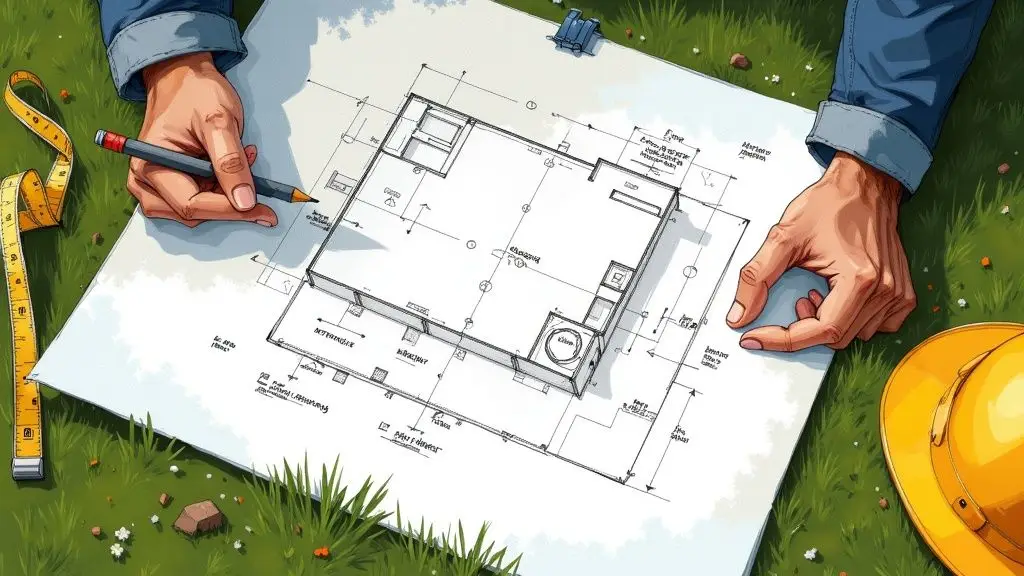
That gentle slope with the beautiful sunset view? It could also create a drainage nightmare right into your future basement. The flat, open field that looks perfect for a sprawling ranch home might be sitting on soil that can’t support a standard foundation. This is exactly why a professional site assessment isn't just a good idea—it's a non-negotiable part of building with integrity.
Local Project Story: We once had a project in Robeson County where the lot looked absolutely perfect on the surface. But a geotechnical (soil) report, a standard part of our due diligence, revealed unstable soil and a high water table just a few feet down. Finding this early meant we could design a specialized foundation to handle it. If that upfront analysis was skipped, the client could have faced catastrophic foundation failure years down the road. This proactive approach is a cornerstone of client trust.
A thorough site evaluation should always cover these two bases:
- Topographical Survey: This is essentially a map of your land’s contours. It shows every slope, low spot, and high point, which is crucial for figuring out the best placement for your home, driveway, and drainage to keep water away from your foundation.
- Geotechnical Soil Testing: This is where a professional engineer takes soil samples to determine its composition, density, and load-bearing capacity. A soil test might cost between $500–$1,500, but it’s a small price to pay to avoid a $50,000 foundation repair.
At SEGC, we treat site assessment as the very first step in managing risk. As a HUBZone and 8(a) certified firm, we’re held to strict federal standards for planning and quality. We bring that same meticulous approach to every family’s homesite, making sure the legacy you’re building starts on solid ground.
Connecting Your Home: All About Utilities
One of the biggest hidden costs when building on your own land is getting utilities to the homesite. If you're building in a more rural spot outside of Fayetteville or Lumberton, you can't just assume water, power, and sewer lines are waiting for you at the property line.
Figuring out utility access is a massive part of your due diligence. Here’s what you need to look into:
- Water Source: Is city water an option, or will you need to drill a well? Drilling a well can run from $5,000 to $15,000 or even more, depending on how deep you have to go to hit a good water source.
- Wastewater Management: If you can’t hook up to a city sewer, you'll need a septic system. The type of system you need depends on your soil's "perc rate"—how fast it absorbs water. A standard system might cost $6,000, but one engineered for poor soil can easily top $20,000.
- Power and Communications: How far away is the nearest power pole? The cost to extend electrical lines can be shocking, sometimes running into the tens of thousands of dollars. It’s also smart to think about internet and cable access from the start.
As your building partner, we help you ask these critical questions and get solid quotes from local utility providers and subcontractors. That financial clarity is key to the client trust we’ve earned over 21+ years. We coordinate all these moving parts to make sure everything is ready before construction starts, preventing expensive downtime. To see how we manage this entire journey, you can explore the details of our proven custom home building process.
How to Vet and Choose the Right Home Builder
Once your land is ready, you’ll hit what is arguably the most critical decision of the entire project: choosing the right home builders on your land. This single choice will shape your whole experience, from the first time you sketch out an idea to the day you’re handed the keys. A builder's portfolio is a great starting point, but a true partnership is founded on something deeper—client trust, proven results, and a shared vision for your home.
This isn't just about hiring a crew to put up walls. You're looking for a guide, a partner for what's likely one of the biggest investments of your life. It's a legacy decision, which is why finding a stable, reputable builder with deep roots in the Fayetteville and Lumberton communities is absolutely non-negotiable.
Look Beyond the Portfolio
A pretty gallery of finished homes is easy to come by. What it doesn't show you is the builder’s process, their communication style, or how they handle the inevitable bumps in the road. To find a real partner, you have to dig much deeper.
Start with the absolute must-haves. Any builder you even consider must be fully licensed and insured in North Carolina. Don't be shy—ask to see their general contractor license and copies of their liability and workers' compensation insurance certificates. This isn’t a mere formality; it's your primary shield against financial and legal risks.
From there, look for credentials that signal a commitment to a higher standard. As a Native American-owned firm with both 8(a) and HUBZone certifications, we at SEGC have passed intense vetting by the federal government. These certifications are a stamp of approval on our financial stability, operational integrity, and dedication to quality—standards we bring to every single custom home we build, ensuring client trust is earned, not just expected.
The Right Questions to Ask References
A list of references is only as valuable as the questions you ask. Go beyond a simple, "So, were you happy?" to get a genuine feel for what it’s really like to work with a builder day-in and day-out.
Here are a few targeted questions to get you started:
- Communication: How did the builder keep you in the loop? Were updates frequent and clear? Did you feel heard when you had questions?
- Budget Management: How did the final cost stack up against the initial estimate? When changes or surprise costs popped up, how were they handled?
- Problem-Solving: Can you give me an example of an unexpected issue that arose? What did the builder do to solve it?
- Timeline: Did the project finish on schedule? If not, were the reasons for the delay explained clearly?
A builder's track record here speaks volumes. For more tips on this, check out our guide on how to find a good contractor, where we break down the vetting process even more.
Client Story: Building Trust in Fayetteville
"We chose SEGC because they felt different from the start. They’re local leaders, not just builders. When a supply chain issue delayed our custom windows, they didn't just tell us we had to wait. Their team, led by their project manager, proactively sourced an alternative from another supplier that was an even better fit for our design and worked to keep our project on schedule. That's the kind of expert problem-solving and commitment to quality you can't see in a brochure." – A satisfied SEGC homeowner in the Fayetteville area.
True Custom Builder vs. Production Builder
It’s crucial to know who you’re talking to. There’s a world of difference between a true custom home builder and a production (or tract) builder, especially when you already own your land.
Production builders work from a set menu of floor plans and build on lots they own inside a larger development. Their business model is built on volume and speed, which means customization is often very limited.
A true custom builder, like SEGC, starts with a blank slate: your vision and your piece of property. We don't have a catalog of models to choose from; our portfolio is a collection of unique homes that began as a client’s dream. With 21+ years of proven results, we have the hands-on expertise to navigate the specific challenges and opportunities your land presents. This journey is a partnership, focused on quality, craftsmanship, and building your legacy—not just another house.
Understanding Contracts and Permits
Let's be honest: tackling legal contracts and navigating local permits can feel just as daunting as building the house itself. It's a world of jargon and deadlines that can easily trip up even the most prepared future homeowner.
This is where experience makes all the difference. With over 21 years guiding homeowners through builds in Cumberland and Robeson counties, we've learned how to make every clause and deadline crystal clear. The goal is to turn that intimidating stack of paperwork into a straightforward roadmap that empowers you.
Builder contracts are not all created equal. What you're looking for is fairness and transparency—things like well-defined allowances, a clear process for handling change orders, and a balanced payment schedule. This means digging into the details to ensure every "allowance" specifies a product or service, not just a vague category that can easily blow your budget.
Your financing is directly tied to this, too. Most construction loans release funds based on the payment milestones outlined in your contract. Aligning these two documents from the start is crucial to preventing cash flow problems and keeping your project moving smoothly.
Key Contract Elements to Watch For
Getting familiar with a few key terms will empower you to understand exactly what you're signing.
- Allowances: These are specific budget amounts set aside for items you'll choose later, like light fixtures, tile, or cabinetry. They give you design flexibility without creating a financial free-for-all. A pro tip? Always ask your builder for real-world examples of what past clients' allowances actually covered to get a true sense of costs.
- Change Orders: This is the formal process for documenting any changes—big or small—once construction has begun. A proper change order should clearly state the cost adjustment and any impact on the timeline, so you know exactly what you're agreeing to before the work starts.
- Draw Schedules: This is your payment map. It outlines specific construction milestones (like "foundation poured" or "framing complete") and ties a payment to each one. A well-structured draw schedule protects you by ensuring you only pay for work that's already been done.
"When clients see a clear draw schedule, they feel secure. That trust is what makes for a smooth, successful build." – SEGC Project Manager
The Local Permitting Process in Fayetteville and Lumberton
Don't underestimate the permitting process. Getting the green light from local authorities can easily add weeks, or even months, to your timeline if you're not prepared. Common hurdles we see are issues with zoning setbacks or delays from health department reviews for well and septic systems.
Generally, you'll need a few core permits to get started:
- Zoning Approvals: Confirms your home's design and placement comply with local land-use regulations.
- Building Permits: Ensures all construction work will meet structural and safety codes.
- Utility Permits: The official go-ahead for connecting to water, sewer, and power grids.
Navigating these municipal offices is part of a good general contractor's job. If you want to dive deeper, our guide on what a general contractor does breaks down how they manage these critical steps. It’s a huge weight off your shoulders. As local leaders, our staff expertise includes team members who attend the weekly review meetings in Fayetteville and Lumberton specifically to keep projects moving and fast-track approvals whenever possible.
Visualizing Construction Cost and Efficiency
The method you choose for your build has a huge impact on cost, speed, and even waste. This chart breaks down the differences between a traditional site-built home and a more modern modular approach.
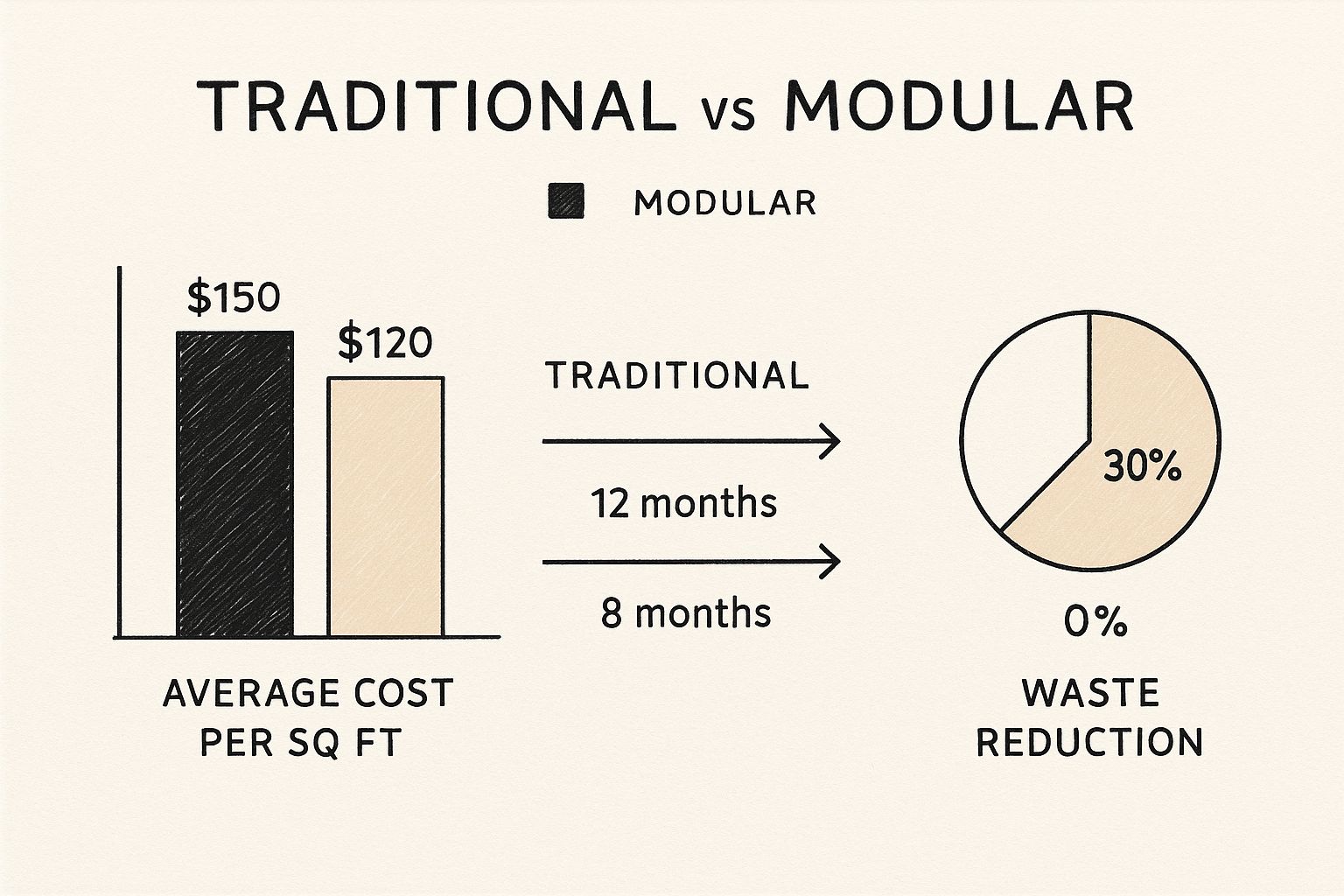
As you can see, modular construction can offer significant advantages: costing nearly 20% less per square foot, finishing up to 33% faster, and creating about 30% less waste. We pass these efficiencies directly on to our clients. Knowing these numbers can also give you leverage to negotiate contract terms that reward your builder for meeting efficiency milestones.
How to Avoid Common Pitfalls
A missed permit deadline or a misunderstood clause can bring your project to a screeching halt. The best defense is good organization and proactive communication.
I always recommend clients maintain a shared digital folder—something simple like Google Drive or Dropbox—for every version of the contract, all permit applications, and inspection reports. It's a single source of truth that keeps everyone on the same page.
Here are a few actionable insights to live by:
- Carefully review every clause in your contract before signing. Make a checklist if you need to.
- Track all permit submission dates and inspection schedules in a shared calendar with your builder.
- Never agree to a change without a formal change order that details the cost.
- Make sure your contract includes a contingency fund of at least 10% for unexpected site work or issues. You'll be glad you have it.
A simple reminder system for deadlines can save you thousands of dollars and weeks of delays. Regular check-in meetings with your builder are non-negotiable for keeping the administrative side of your build on track.
Key Contract Clauses Explained
To help you feel more confident at the negotiating table, here’s a quick breakdown of some of the most important contract terms.
| Clause/Term | What It Means | Why It's Important |
|---|---|---|
| Allowance | A budget placeholder for specific items you'll choose later, like flooring or faucets. | Prevents sticker shock by setting realistic budgets for finish materials from the start. |
| Change Order | A formal document that records any modifications to the original scope of work. | Creates a transparent paper trail for costs and timeline adjustments, avoiding disputes. |
| Draw Schedule | A timeline of payments that are released to the builder as they complete specific construction stages. | Aligns your cash flow with tangible project progress, protecting your investment. |
| Warranty Clause | The builder's guarantee covering defects in materials or workmanship for a set period post-completion. | Protects your new home and gives you peace of mind long after you've moved in. |
Understanding these terms helps you ask smarter questions and advocate for yourself. When the paperwork flows smoothly, the entire build just moves better.
Getting Your Budget Right: Building a Custom Home Without Financial Surprises
Let's be honest: a realistic, transparent budget is the single most important tool you'll have when building a custom home. It’s not just a spreadsheet of numbers. It's the financial blueprint that keeps your project grounded and prevents the kind of stress that can easily overshadow the excitement of creating your dream home.
When you have a clear plan, you can make smart, value-driven decisions that line up with what you can actually afford.
With over 21+ years building homes across North Carolina in communities like Fayetteville and Lumberton, we've learned that financial transparency is the absolute bedrock of client trust. A well-crafted budget means no nasty surprises, empowering you to stay in control from the first shovel of dirt to the final walkthrough. It’s not just about what you spend, but how you plan for it.
Hard Costs vs. Soft Costs: The Two Sides of Your Budget
First things first, you need to understand the two main parts of any construction budget: hard costs and soft costs. It’s a simple concept, but one that many people get wrong.
Hard costs are the tangible, physical expenses of construction. Think of them as the actual bricks and mortar—or in this case, the lumber and concrete—of your project. These include things like:
- Labor for all the tradespeople (framers, plumbers, electricians, you name it).
- All the building materials—lumber, drywall, roofing, windows, and so on.
- Major home systems like your HVAC, plumbing, and electrical wiring.
Soft costs, on the other hand, are all the indirect expenses required to get the project planned, approved, and completed. They're less obvious but just as critical. These include:
- Architectural and engineering design fees.
- Permit and inspection fees required by your local city or county.
- Costs for land surveys and soil tests.
- Construction loan fees and insurance policies.
A classic mistake is focusing only on the hard costs. Doing that can leave your budget short by 15-25% of the true total. A great building partner will walk you through every single line item, both hard and soft, so there are no gaps.
The "Hidden Costs" That Can Derail a Project
What really blows a budget apart are the so-called "hidden costs"—the expenses that are incredibly easy to miss in the early planning stages. Experience has taught us exactly where to look for these potential budget-killers, especially when you are looking for home builders on your land.
I remember a project on a beautiful, seemingly perfect lot just outside Fayetteville. The initial quote for site prep looked completely standard. But when we did our due diligence, we found the land needed significant grading to manage water drainage properly. That discovery added an unexpected $8,000 to the site work. Because we caught it before a single bulldozer was on site, the client could adjust their plan proactively instead of getting hit with a surprise bill later.
At SEGC, our commitment to accountability—backed by our 8(a) and HUBZone certifications—means we dig deep to uncover these potential costs upfront. We believe in providing a detailed, line-item estimate that reflects reality, not just an optimistic number to win a bid. Building client trust starts with financial honesty.
Here are a few other common hidden costs to watch out for:
- Utility Hookup Fees: The price to run power, water, and sewer lines from the street to your homesite can be shocking. It might be a few thousand dollars or, depending on the distance and local rules, tens of thousands.
- Landscaping and Driveways: These are almost never in the main construction contract but are absolutely essential for a finished, livable home.
- Temporary Utilities: Your crew needs power and water to work. Setting up these temporary services on-site comes with its own set of fees.
Your Best Friend: The Contingency Fund
No matter how carefully you plan, stuff happens. It’s just the nature of construction. A supply chain delay might force you to source a more expensive material, or the excavation crew might hit unexpected rock that takes more time and money to clear.
This is exactly why a contingency fund is your most important financial safety net.
We strongly advise every single client to set aside a contingency fund of 10-15% of their total construction cost. This isn’t a slush fund for upgrades. It’s a dedicated reserve specifically to handle the unexpected without derailing your project or forcing you to make painful compromises on your vision. Think of it as insurance for your budget.
To see how we weave financial planning into every step of the journey, you can review our complete custom home building process for a detailed look.
Building a home on your own land should be an exciting and fulfilling journey. By creating a detailed, transparent budget that accounts for hard costs, soft costs, and that all-important contingency fund, you can move forward with confidence, knowing you have a clear financial path to bringing your vision to life.
Common Questions About Building on Your Land
When you decide to build a custom home, the questions start piling up almost immediately. It's completely normal, and honestly, a good sign—it means you're taking this huge step seriously. With over 21 years of building homes in places like Fayetteville, Lumberton, and across North Carolina, we've pretty much heard them all.
This is where we'll tackle the big questions we get from families just like yours. Our goal is to give you clear, honest answers so you can feel confident and empowered on the path ahead.
We've always believed that an educated client is an empowered client. By demystifying the process of finding home builders on your land, we can clear the way for what really matters: focusing on building your family's legacy.
How Long Does It Typically Take to Build a Custom Home?
This is usually the very first thing people ask, and the most truthful answer is: it really depends. Every custom home project has its own unique timeline. The final schedule is shaped by the home's size and complexity, how quickly local permits can be secured, and sometimes, even the weather.
It helps to think of the process in two distinct phases:
- Pre-Construction (3-6+ months): This is all the critical groundwork before we ever move a single shovel of dirt. It covers finalizing your design, getting plans engineered, arranging surveys, and working through the local permitting maze.
- Construction (9-18 months): This is the hands-on building phase, from laying the foundation to applying that last coat of paint. A more straightforward, smaller home might be finished on the quicker end of that spectrum, while a large, intricate home will naturally take more time.
Because we’ve spent so much time in communities like Fayetteville and Lumberton, we know the local planning offices and have built strong relationships. Our local leadership and staff expertise help us keep the permit process moving and your project on schedule. We'll give you a realistic timeline from day one and keep you in the loop with constant updates.
What Is the Difference Between a Construction Loan and a Mortgage?
Getting your financing straight is one of the most important pieces of the puzzle. A construction loan and a mortgage are both for a house, but they function in very different ways.
A traditional mortgage is what you get to buy a pre-existing home. The bank pays the seller, and you start making your monthly payments. It's a single, straightforward transaction.
A construction loan, on the other hand, is a short-term loan designed specifically to fund the building process. The money isn't given out all at once. Instead, it’s released to your builder in stages called "draws" as we hit specific construction milestones. Once the home is complete and you have the Certificate of Occupancy, the construction loan is usually converted or refinanced into a standard mortgage that you'll pay over the long term.
We make it a point to work directly with you and your lender, ensuring our construction schedule aligns perfectly with the loan's draw schedule. It’s a system built on the kind of financial transparency and client trust we've prided ourselves on for over two decades.
Can I Make Changes to the Design Once Construction Starts?
Absolutely. It’s your home, and things come up. In the building world, we handle these modifications using a document called a "change order."
A change order is a simple, formal document that outlines the specific change you've requested, what it will cost (whether it adds to or subtracts from the total), and how it might affect the project's completion date. It's worth remembering that making changes once we're already building can be more expensive and is one of the most common reasons for delays.
We are committed to total transparency here. Before we proceed with any change, you'll receive a detailed change order to review and approve. You will always have the final say, armed with all the information needed to make the right decision for your vision and budget. Our commitment to client trust means no surprises.
Why Do Certifications Like 8(a) and HUBZone Matter for a Homeowner?
This is an excellent question that doesn't get asked enough. While our Native American-owned, 8(a), and HUBZone certifications are often tied to our government projects, they speak volumes about who we are and the quality you can expect as a homeowner.
To earn these federal certifications, a company has to go through an incredibly tough and ongoing vetting process. They scrutinize everything from our financial stability and operational integrity to our business ethics and commitment to quality.
For a family building their dream home, choosing an 8(a) and HUBZone certified builder means you're partnering with a company that has proven it meets the absolute highest standards of accountability and reliability. It’s a powerful, third-party stamp of approval that reflects the same unwavering dedication to client trust that we bring to every single home we build.
At South Eastern General Contractors, we're not just putting up walls and roofs—we're building relationships and legacies. Our mission is to build legacies, not just structures. If you're ready to see your vision come to life on your own land, we're ready to help. Contact us today to begin your journey.