
Win Big on Your Project: How to Negotiate with Contractors
Let's be honest, the idea of negotiating with a contractor can feel a bit like gearing up for a wrestling match. But here’s a secret from our 21+ years of building legacies in North Carolina: the real win happens long before you ever step into the ring. Your power doesn't come from haggling; it comes from doing your homework.
When you've thoroughly vetted your contractor, defined every last detail of the project, and set a budget that's grounded in reality, the entire conversation changes. It stops being about who can squeeze the other guy and starts being about how you can work together to get the best possible result. As a Native American-owned firm built on trust, we know that a successful project starts with a partnership, not a battle.
Laying the Groundwork: Your Pre-Negotiation Game Plan
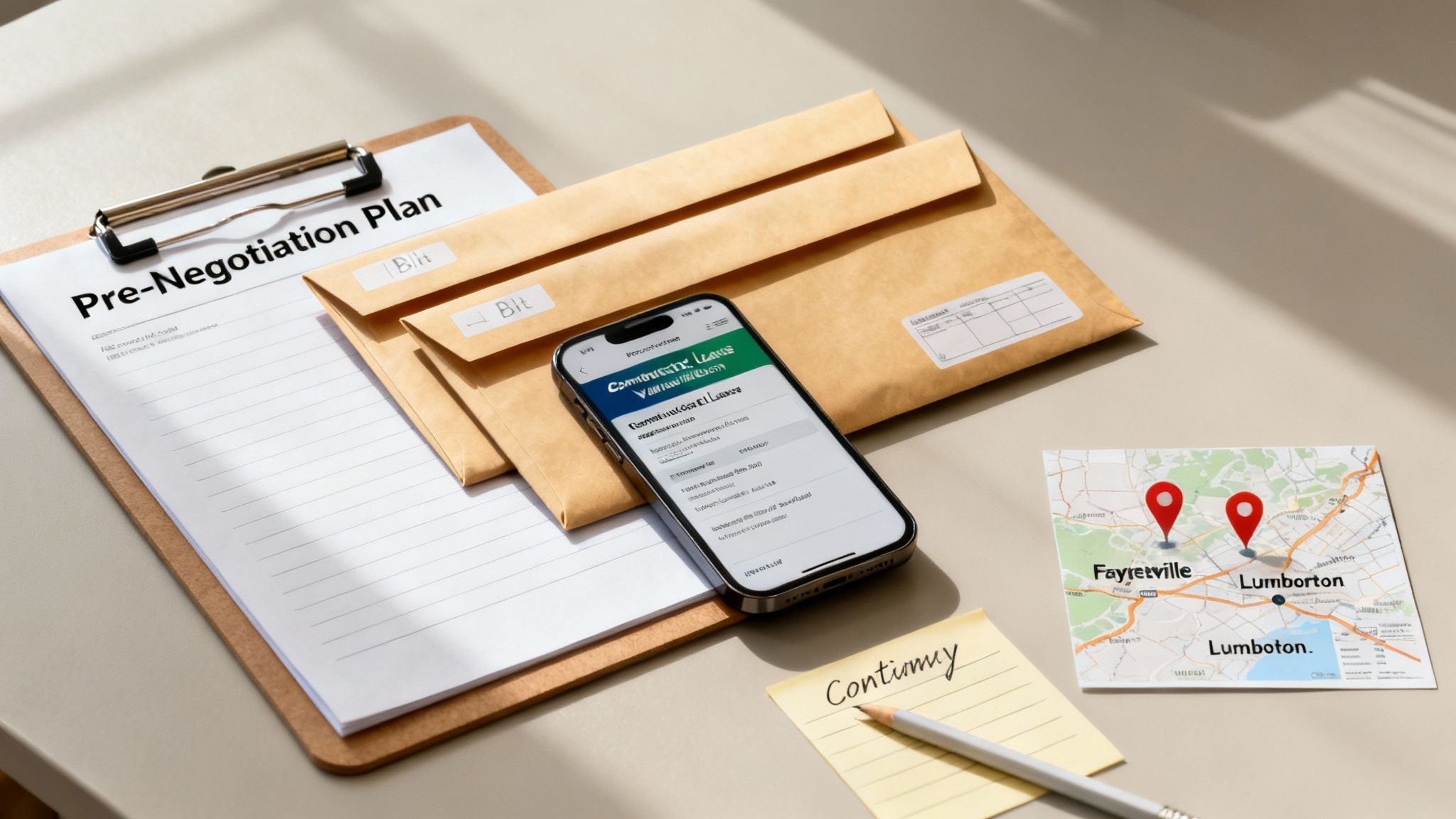
You can’t just wing it and hope for the best. A successful project is built on a foundation of clarity and confidence, and that foundation is poured during this prep phase. We've seen it time and time again in our 21+ years at Southeastern General Contractors (SEGC)—the clients in communities like Fayetteville and Lumberton who get the best outcomes are the ones who come to the table prepared.
Think of it this way: your preparation is your leverage. When you know precisely what you want, have a solid grasp of what it should cost, and are confident in the person you're hiring, you're the one steering the ship.
Contractor Negotiation Prep Checklist
Before you even think about talking numbers, run through this checklist. Spending the time here will save you headaches and heartaches down the road.
| Preparation Step | Why It's Non-Negotiable | SEGC Pro Tip |
|---|---|---|
| Verify Licenses & Insurance | Protects you from liability if something goes wrong. An uninsured worker getting hurt on your property can become your financial nightmare. | Don't just take their word for it. Call the state licensing board and the insurance provider directly. It takes 15 minutes and is worth every second. |
| Check Real, Local References | Online reviews can be faked. Talking to a real person who has worked with them gives you the unfiltered truth about their process and quality. | Ask for references for projects similar in size and scope to yours in the Fayetteville or Lumberton area. A great roofer isn't necessarily a great kitchen remodeler. |
| Define a Hyper-Detailed Scope | "Update the bathroom" is a recipe for disaster. A detailed scope eliminates assumptions, which are the primary cause of surprise costs and project delays. | Walk through the space and create a "decision list." Specify everything: model numbers for faucets, paint colors, grout color, outlet locations. No detail is too small. |
| Set a Realistic Budget (with a Buffer) | A budget based on hope is just a wish. A researched budget gives you a firm baseline for negotiation and keeps the project grounded in financial reality. | Always, always have a contingency fund. Plan for 10-20% of your total budget for the "uh-oh" moments. It's not if they'll happen, it's when. |
Getting these ducks in a row transforms the negotiation from a high-stress confrontation into a collaborative, problem-solving session. You’re not just a client; you’re an informed partner.
Vetting Contractors: Look Beyond the Shiny Website
First things first, you need to know exactly who you're dealing with. A slick truck and a fancy website mean nothing if the contractor can’t back it up. Proper due diligence boils down to three key things: legitimacy, reputation, and experience.
Here’s your action plan:
- Confirm Licenses and Insurance: This is non-negotiable. Check with the state licensing board to ensure their credentials are valid. Then, ask for a copy of their general liability and workers' compensation insurance certificates. A pro will have these ready to go.
- Talk to Real People: Online reviews are a starting point, but you need to speak with actual past clients. Ask for references for recent projects, especially in your area, whether it's Fayetteville or Lumberton. Hearing firsthand experiences is invaluable.
- Gauge Their Professionalism: How do they communicate? Are they responsive? Punctual? The way they handle these early interactions is a crystal-clear preview of how they'll manage your project when things get complicated.
As a Native American-owned firm with 8(a) and HUBZone certifications, we at SEGC understand that credentials are a promise of accountability. Don't be shy about asking for proof. If you're starting from scratch, our guide on how to find a good contractor is a great resource.
Nailing Down a Bulletproof Project Scope
The #1 reason projects go off the rails? A vague scope of work. Phrases like "remodel the kitchen" are black holes where money and timelines disappear. Your scope document needs to be the project's bible—crystal clear and brutally specific.
Your scope of work is the ultimate source of truth. The more detail you include, the fewer assumptions your contractor has to make, which directly translates to a more accurate bid and a smoother project.
Get granular. We're talking model numbers for appliances, the exact brand and finish of the paint, the specific style of the cabinet pulls. Leave zero room for interpretation. This protects you, and it also protects the contractor by giving them a clear roadmap to follow.
Building a Budget You Can Actually Defend
Finally, you can't negotiate effectively without a realistic financial game plan. This isn’t a number you pulled out of thin air. It's a researched, defensible budget.
Start by getting at least three itemized bids from the contractors you’ve carefully vetted. This lets you compare labor, material, and permit costs line-by-line, so you're not just looking at the final number.
Most importantly, build in a contingency fund of 10-20%. Life happens. Walls get opened up to reveal ancient plumbing, a material gets discontinued, or you might just change your mind about a design choice. That buffer means a surprise won't sink your project, allowing you to negotiate from a position of strength, not panic.
Mastering the Negotiation Conversation

Alright, you've done your homework. Now it's time to sit down at the table. The biggest shift you need to make right now is in your mindset. This isn't a battle to be won; it’s about starting a partnership on the right foot. A truly successful negotiation ends with both you and the contractor feeling respected, understood, and genuinely excited to get started.
For over 21+ years, we at SEGC have built our reputation as local leaders in Fayetteville and Lumberton on that very idea. Real trust isn't built by squeezing every last penny out of a deal. It comes from an open, honest dialogue where everyone is aiming for the same thing: a fantastic project. This first conversation sets the tone for everything that follows.
Kick Things Off on a Collaborative Note
How you start this conversation matters. A lot. Instead of jumping straight into the numbers, begin by reinforcing your shared goal. You both want a beautiful, well-built project. Acknowledge their expertise and tell them you’re excited about the possibility of working together.
You'd be amazed how far a little genuine respect goes. Try phrases like these:
- "I was really impressed with the [specific project] you did. I’m excited to see how we can bring that same level of quality to our home."
- "Thanks for putting together such a detailed bid. I’d love to walk through it with you to make sure we're on the same page from the get-go."
This simple pivot immediately frames you as a partner, not an opponent. It shows you value their skill and are invested in a positive relationship—a core principle for our team at SEGC.
Talk Money Without Making It a Fight
Let's face it, talking about money can be awkward. But it doesn't have to be a confrontation. Your goal isn't to just slash the price; it's to understand the value behind the numbers. Drop the accusatory language and lead with curiosity.
The most powerful tool in any negotiation is simple curiosity. Instead of saying, "Your price is too high," try asking, "Can you walk me through this line item? I want to make sure I understand everything that's involved."
See the difference? One shuts the door, the other opens it. This invites the contractor to explain their costs—the materials, the specialized labor, the overhead. It’s your chance to work with them to align the project scope with your budget.
Our Project Manager, David, recalls a custom home we were planning near Hope Mills. The client had a very firm budget. Instead of arguing over the final number, David calmly reviewed the material selections together. By switching from a custom-milled hardwood to a premium engineered option, we saved them nearly $15,000 without sacrificing the look they wanted. That’s a win-win, achieved through conversation, not confrontation. To help you get comfortable with these discussions, check out our guide on the top questions to ask a general contractor.
Negotiate More Than Just the Final Price
A great negotiation is about so much more than the bottom line. The operational details—the "how" and "when"—are just as crucial for a smooth project and your own peace of mind. And honestly, these are often the areas where contractors have the most wiggle room.
Turn your focus to these key points:
- Payment Schedule: Propose a payment plan based on milestones. This is standard practice for reputable pros. You release funds only when specific, verifiable stages of work are complete. It protects you, and it keeps them motivated.
- Timeline & Start Date: Get clear on the proposed start date and the estimated completion date. Ask about potential delays and how they’re typically handled. Sometimes, a contractor can offer a better price if you can offer a flexible start date that helps their schedule.
- Communication Plan: This one is huge. How often will you connect? Will it be a weekly call or a site visit? Who is your main point of contact for daily questions? Nailing this down now prevents a world of frustration later.
As an 8(a) and HUBZone certified firm, we live by the principles of absolute clarity and documentation. Bringing that same level of detail to your project negotiations ensures everyone is on the same page from day one. To dig deeper into the art of the deal, these effective contract negotiation strategies are a great resource. By focusing on collaboration and clarity, you're not just signing a contract; you're laying the foundation for something that will last.
Getting the Contract Right: Your Project’s Foundation
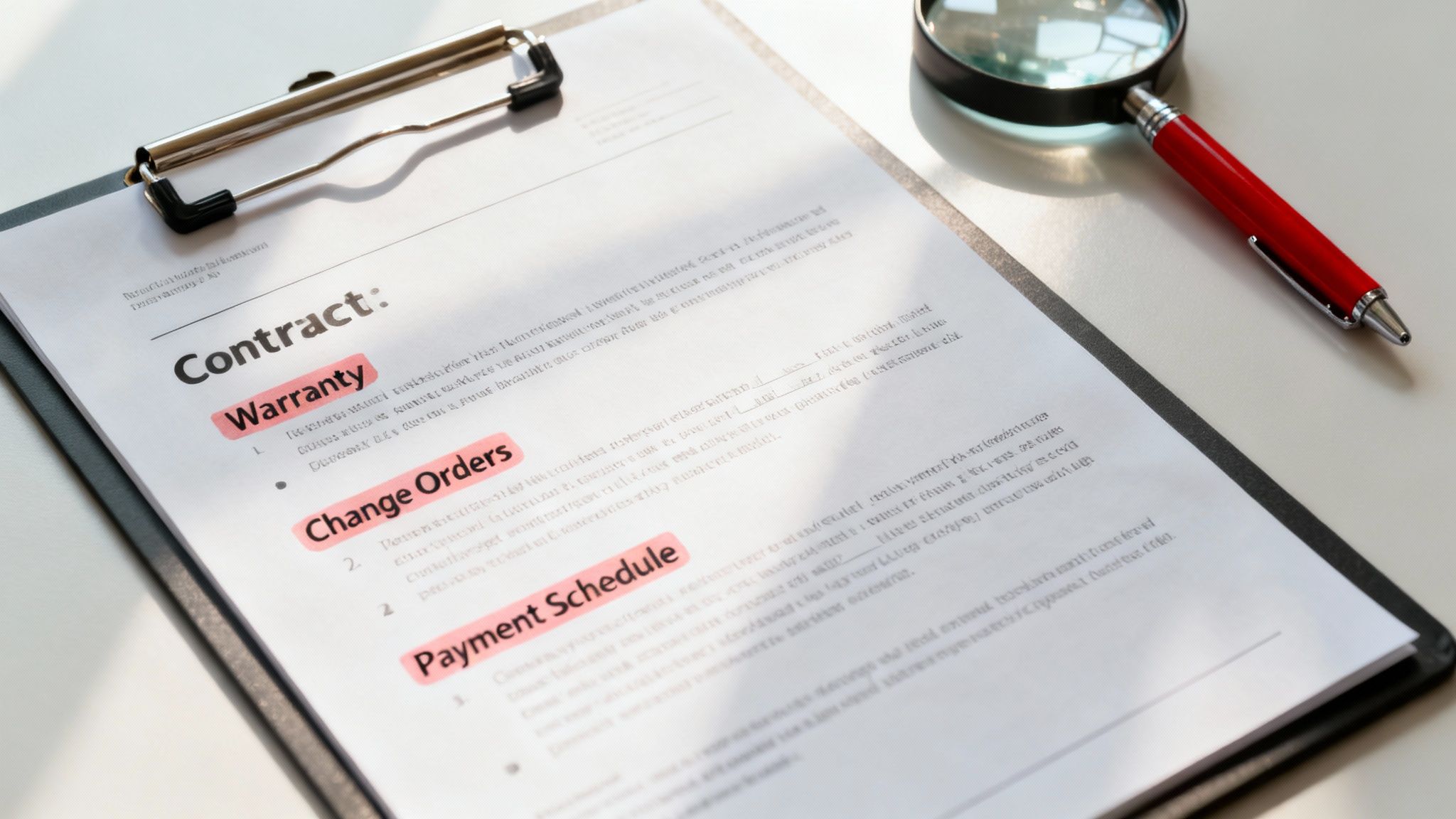
The handshake is a nice touch, but the contract is the real foundation of your project. Think of it as the official rulebook—it's not just a formality. Every verbal agreement, every decision, every single detail you’ve hashed out needs to be written down in black and white. This document is what protects you, your investment, and your contractor.
Here at SEGC, our status as a Native American-owned, 8(a) and HUBZone certified firm means we live and die by contracts that are precise, compliant, and crystal clear. We believe every client in Fayetteville and Lumberton deserves that same standard of care. Getting this document right from the start is the only way to ensure the legacy you envision is the one that gets built.
Zeroing In on the Clauses That Matter Most
A construction contract can look like a wall of intimidating legal jargon. It’s easy to get lost. The secret is to ignore the boilerplate and focus your energy on the clauses that will actually impact your wallet, your timeline, and your sanity.
Don't just take my word for it. Research from World Commerce & Contracting found that the limitation of liability is the single most negotiated contract term, with over 75% of organizations flagging it as a top priority. Right behind it are price and payment terms, which more than 70% of parties focus on. These are where the battles are won and lost.
Before you even think about signing, make sure you have these key areas nailed down:
- Scope of Work: This needs to be a perfect mirror of your project plan. It should spell out exactly what the contractor will do and, just as crucially, what they won't do. Any ambiguity here is an open invitation for expensive change orders down the road.
- Payment Schedule: If a contractor asks for a massive upfront payment, walk away. A fair contract ties payments to tangible progress—things like the foundation being poured or framing passing inspection. This way, you only pay for work that's actually been completed and verified.
- Change Order Process: Let's be real: changes happen. Your contract must have a clear process for how they're handled. How are changes proposed? How are they priced and approved in writing? How do they affect the schedule? Get it all in writing.
- Warranties: What's the plan if your brand-new roof springs a leak six months after you move in? The contract should detail which materials and labor are covered by a warranty, for how long, and who is responsible for fixing it.
Spotting Red Flags vs. Fair Language
Once you know what a good clause looks like, the bad ones stick out like a sore thumb. A fair contract protects everyone involved. A one-sided contract is a giant red flag telling you to run.
We saw a perfect example of this on a recent custom build near Fayetteville. The client showed us a contract from another builder that had a sneaky little clause. It allowed the builder to substitute materials with something of "similar quality" without asking for permission. No way. We insisted on adding language that required our client’s written approval for any material change. It’s their vision, their money—they get the final say.
A contractor who pushes back on reasonable, clear contract terms is showing you exactly how they will handle disagreements on the job site. Trust is built on transparency, and it starts with the contract.
To give you a head start, we've put together a resource based on our years in the trenches. Our Design-Build Contract Template is a solid framework of what a fair, thorough, and protective agreement should look like.
Negotiating Your Key Protections
Okay, you've identified the critical clauses. Now it's time to negotiate. The goal isn't to be a pain; it's to make sure the agreement is fair, clear, and sets everyone up for success.
Indemnification and Liability:
These are the legal heavyweights. The indemnification clause explains who's on the hook if something goes wrong—like if a subcontractor damages your neighbor's fence. A "limitation of liability" clause puts a cap on how much a contractor can be held responsible for. You need to ensure these are mutual and don't leave you holding all the risk.
Dispute Resolution:
What happens when you and your contractor just can't see eye to eye? A smart contract outlines a clear path for resolving disagreements. It usually starts with mediation and only moves to arbitration or court as a last resort. Having this roadmap in place can save you a mountain of stress, time, and money.
For an even deeper dive into the world of contracts, check out this essential guide to architectural contracts.
Remember, negotiating the contract is the final, and most important, step in protecting your investment. It solidifies your partnership and sets the stage for building something that lasts.
Using Technology for Smarter Negotiations
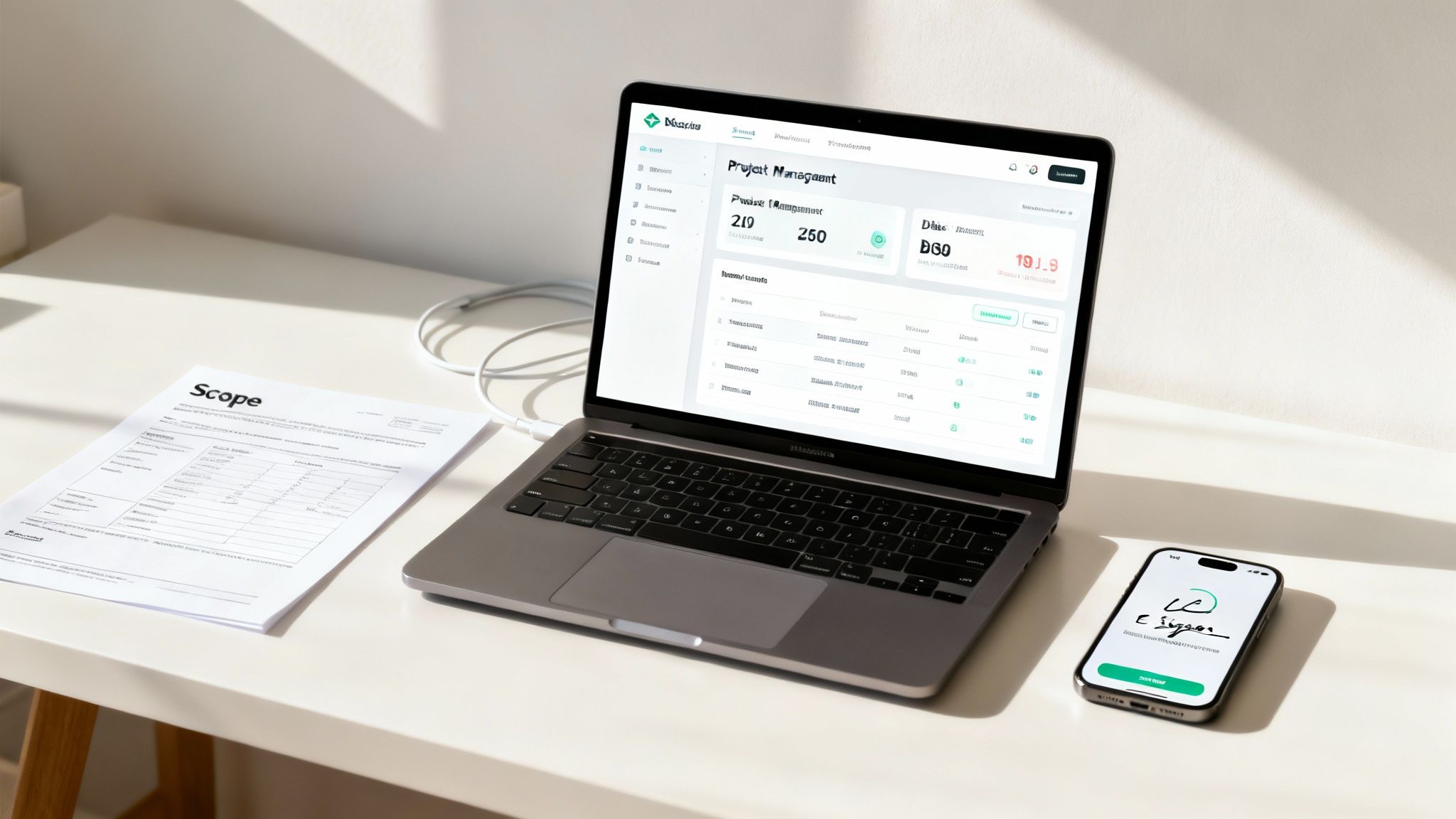
In a world overflowing with data, just "winging it" during a high-stakes negotiation is a fantastic way to lose money. Seriously. The right digital tools can give you a massive upper hand, transforming a messy paper trail into a clean, professional process. And this isn't just for the big commercial firms; simple, everyday tech can make you a much sharper, more organized client.
Here at SEGC, we’ve built our reputation on pairing 21+ years of boots-on-the-ground local leadership with the right technology. It’s a killer combo that brings rock-solid clarity to every single project, whether that’s a custom dream home in Lumberton or a complex federal facility in Fayetteville. You can borrow that same tech-savvy playbook to make your own negotiations smoother and a whole lot more successful.
Creating Your Digital Command Center
First things first: you need to get organized. Stop trying to manage a project through a chaotic mix of emails, text messages, and notes scribbled on the back of a napkin. A basic project management tool can be your best friend here, creating a single source of truth for everything. Think simple platforms like Trello, Asana, or even just a meticulously organized Google Drive folder.
This digital hub becomes the home for all your critical info:
- Every contractor bid, neatly itemized and sitting side-by-side for a true apples-to-apples comparison.
- Your master scope of work document—the project bible.
- All your inspiration photos, material choices, and important links.
- A running log of every call, email, and meeting with potential contractors.
Having this organized audit trail is a game-changer. When you can instantly pull up a specific quote or a message from three weeks ago, you're negotiating from a position of fact, not foggy memory. It sends a clear signal to contractors that you’re buttoned-up, serious, and not someone to be taken lightly.
Applying Lessons from the Pros
The big players in construction and procurement have this down to a science. They use sophisticated Contract Lifecycle Management (CLM) platforms to wrestle massive, complex agreements into submission. You don't need to shell out for an enterprise system, but you can absolutely steal the core principles for your own project.
The data tells a compelling story. Companies that use CLM platforms get their negotiation cycles done a staggering 80% faster than those still stuck in the manual dark ages. Why? Because everything is organized and accessible. Better yet, digitizing contracts boosts post-negotiation compliance by 55%—meaning the terms you fought so hard for actually get followed. You can discover more about these powerful negotiation statistics and see how they can swing your own project in the right direction.
Here’s how you can mimic their professional approach without the hefty price tag:
- Use Templates: Create your own standardized request-for-bid form. Sending the same template to every contractor forces them to give you information in a format you can easily compare.
- Version Control: This is non-negotiable. As you go back and forth on the contract, save each new version with a clear naming system (e.g., "Contract_v2_comments," "Contract_v3_Final"). This simple habit prevents a world of confusion.
- Digital Signatures: It’s 2024. Use services like DocuSign or Adobe Sign. They are legally binding and make the final step clean and efficient. No more printing, signing, scanning, and emailing.
Technology doesn’t replace a good old-fashioned conversation, but it provides the undeniable proof to back it up. A digital paper trail is your best friend when it comes to ensuring transparency and holding everyone accountable to what was agreed upon.
The SEGC Approach to Tech-Driven Transparency
We’ve seen firsthand how the right tech can build incredible client trust. On a recent custom build in the Fayetteville area, we used a shared digital portal to track every single decision. Midway through the project, the client started wondering about a different countertop material.
Instead of a drawn-out, emotional debate over cost, we were able to instantly model the price and schedule impact. The conversation shifted. It became a simple, data-driven choice. The client could see the trade-offs in black and white and made an informed decision with total confidence. That’s the power you unlock when you pair modern tools with a real commitment to open communication—a strategy that turns a stressful negotiation into a collaborative partnership.
From Signed Contract to Successful Partnership
You've gone through the bids, nailed the negotiation, and the contract is sitting on your desk. It’s a huge relief, right? You're probably tempted to sign it, pop the champagne, and call it a day. But hold on. Signing the contract isn't the finish line—it's the starting gun.
Now the real work begins. You're shifting gears from a tough negotiator to a collaborative partner. This is the part where you turn all that careful planning and hard-won agreement into a real, successful project.
Here at SEGC, we’ve learned over our 21+ years in this business that a project’s success isn't just about the finished building. It’s about the relationship you build along the way. We’re in the business of building legacies, and that starts by treating every client, from Fayetteville to Lumberton, like a partner from day one. It's the bedrock of the trust we've earned as local leaders.
The Final Pre-Flight Check
Before your pen even thinks about touching that paper, take a deep breath and do one last, critical review. This is your absolute final chance to make sure every verbal promise, every "oh yeah, we'll include that," made its way into the written document. It’s so easy to get swept up in the excitement of getting started, but five minutes of diligence now can save you five months of headaches later.
Run through this quick sanity check:
- Scope Showdown: Does the "scope of work" in the contract perfectly mirror what you agreed on? Pull out your notes and compare them side-by-side. Don't skim.
- The Nitty-Gritty: Are specific brand names, model numbers, and colors for big-ticket items like windows, faucets, and appliances listed? "Builder-grade faucet" is not the same as "Moen Genta LX in Matte Black."
- Money Milestones: Does the payment schedule line up with real, verifiable progress on the job site? You should be paying for work completed, not work promised.
- The "What If" Clause: Is the process for handling change orders crystal clear? You need to know exactly how costs and timeline shifts will be handled and approved in writing.
This isn't about being difficult or showing mistrust. It's just smart business. A quality contractor will respect your attention to detail because it protects them just as much as it protects you.
Kick Things Off with a Purpose
Okay, the ink is dry. Now what? The single most important thing you can do is schedule a real kickoff meeting. I don't mean a quick phone call. I'm talking about a proper sit-down with the key players: you, the contractor, and the project manager who will actually be on-site every day. This meeting sets the whole tone.
The goal here is simple: move from paper to practice. You'll talk through how you'll communicate, walk through the schedule again, and set up a rhythm for progress updates. This is your chance to say, "How about we plan on a quick 15-minute check-in every Friday afternoon to see where we are and what's coming up next week?" It gets everyone on the same page and starting with the same expectations.
A signed contract gets the project started. A great kickoff meeting gets the partnership started right. It’s the moment you stop being just a client and start being a team.
Building a Relationship That Lasts
Believe it or not, how you act as a client has a huge impact on your project. The best contractors are in high demand, and they want to work with the best clients. When you're a good partner, you get their A-game. As a Native American-owned firm with 8(a) and HUBZone certifications, we at SEGC know that respect and reliability are the currencies that build lasting relationships.
So, how do you become the client every great contractor wants to work with again? It’s simpler than you think:
- Pay on Time. Period. Follow the payment schedule you both agreed to. Nothing keeps a project running smoothly—and keeps the subcontractors happy—like prompt payments.
- Communicate Like a Pro. If an issue pops up, address it calmly and directly. Don't let frustrations simmer. Bring up concerns as they happen in a "how can we solve this together?" way.
- Trust the Pros You Hired. You hired them for their expertise, so let them use it. It’s still your vision, of course, but micromanaging every little thing just creates friction and slows everyone down.
When you take this approach, you don't just get a better result on your current project. You start building a network of top-tier, reliable contractors you can call on for years to come. You turn a one-time project into a long-term professional asset.
Got Questions About Negotiating With a Contractor? You're Not Alone.
Even with the perfect game plan, a few questions are bound to pop up. When you're getting ready to talk numbers on a major project, a little uncertainty is completely normal. After more than 21 years of guiding clients through this exact process here in Fayetteville, Lumberton, and beyond, we've heard just about every question in the book.
Our whole philosophy at SEGC is built on empowering our clients with actionable insights. When you walk into a negotiation armed with knowledge, everyone leaves the table feeling good, respected, and ready to get to work.
What’s a Reasonable Discount to Ask For?
This is the big one, but honestly, it's asking the wrong question. Forget about chasing a specific percentage off the top. A contractor's bid is a finely tuned recipe of skilled labor, material costs, overhead, and a pretty thin profit margin. Just asking for "10% off" can come across as a bit insulting, suggesting you don't value the work or the business behind it.
A much better angle? Talk about value.
Try opening with something collaborative, like, "Could we walk through the itemized bid together? I'd love to understand all the moving parts and see if there are any creative ways to get the project scope to line up with our budget."
This simple shift turns a confrontation into a problem-solving session. You might find that swapping one material for a similar but less expensive one, or tweaking the schedule slightly, can create real savings without compromising an ounce of quality.
Quick tip: An estimate that comes in way, way lower than all the others isn't a bargain—it's a giant red flag. Real value is found in fair pricing for top-notch work.
What if a Contractor Won’t Budge on Price?
A flat "no" on price isn't necessarily a deal-breaker. The real tell is their attitude. A top-tier, in-demand contractor might be firm on their price because they know their crew's worth and their schedule is packed. That confidence is usually built on a long history of happy clients and stunning results.
But if that "no" comes with a side of arrogance, a dismissive tone, or a "take it or leave it" vibe? That’s a sneak peek of how they'll handle the inevitable hiccups that happen on any job site. A real partner, like the team we've built at SEGC, is always willing to have a conversation and explain their numbers. If they're combative from the get-go, it’s probably best to thank them for their time and find someone who sees you as a collaborator, not a hassle.
Is a Fixed-Price or a Time-and-Materials Contract Better?
This one comes down to a single question: how clear is your project scope?
- Fixed-Price Contract: This is your best friend when your project is planned down to the last nail. If every design choice is made and every material is selected, a fixed price gives you that sweet, sweet budget certainty. No surprises.
- Time-and-Materials (T&M) Contract: This is the way to go for projects with a few more question marks. Think of a complex renovation where you have no idea what’s hiding behind that drywall. T&M offers flexibility, but it comes with less predictability on the final cost.
The pro move? Ask for a hybrid. You can often get a T&M contract with a "not-to-exceed" clause. This gives you the flexibility to adapt while still putting a hard ceiling on your budget. As a HUBZone and 8(a) certified firm, we specialize in tailoring the contract structure to fit the project, ensuring everyone is protected and on the same page.
How Big Should the Upfront Deposit Be?
Tread very, very carefully here. A standard, reasonable deposit is usually between 10% and 30% of the total project cost. That's enough to cover the initial material orders and get the crew mobilized.
If a contractor demands 50% or more before a single hammer has been swung, your alarm bells should be screaming. This can be a sign of a shaky business that needs your cash to cover debts on their last job—or, even worse, it could be an outright scam.
At SEGC, we live by milestone-based payments, and you should insist on it. This structure is simple: you pay in agreed-upon installments after specific phases of the project are 100% complete and signed off on. It’s the fairest way to protect you and the contractor, creating a partnership built on tangible progress, not blind faith.
At Southeastern General Contractors, we believe an educated client is an empowered partner. Negotiating your contract is the first step in a journey toward creating something lasting. If you're ready to build a legacy, not just a structure, let's start the conversation. Learn more about our process and how we build relationships grounded in trust and quality by visiting us at https://www.southeasterngc.com.