7 Small Mountain Home Designs to Inspire Your 2025 Build
The dream of a mountain home often evokes images of sprawling lodges, but the true artistry lies in creating intimate, efficient spaces that harmonize with the landscape. For homeowners in North Carolina and beyond, small mountain home designs offer a pathway to a simpler, more connected lifestyle without sacrificing style or comfort. At South Eastern General Contractors (SEGC), we believe a home is a legacy. With over 21 years of proven results and a foundation of client trust, we’ve guided families, especially in our home communities of Fayetteville and Lumberton, in translating their visions into reality.
As a Native American-owned, 8(a), and HUBZone-certified firm, our commitment goes beyond construction; we build lasting relationships and empower our clients, from first-time custom builders to military families relocating to the area. This guide explores seven distinct small mountain home designs, offering not just inspiration but actionable insights drawn from our decades of experience. We'll break down the strategic advantages, construction realities, and aesthetic highlights of each style. Our goal is to provide you with the expert knowledge needed to make informed, confident decisions for your future mountain retreat, ensuring the structure we build together becomes a cherished part of your legacy.
1. A-Frame Mountain Cabin: The Iconic Triangle
The A-frame is perhaps the most quintessential of all small mountain home designs, instantly recognizable by its dramatic triangular profile where the steep roofline doubles as the home’s walls. This iconic structure isn't just about aesthetics; it’s a masterclass in pragmatic, weather-resilient architecture. The steep pitch is incredibly effective at shedding heavy snow and rain, a critical feature for any mountain-top dwelling, while its simple, self-supporting frame provides immense structural integrity against high winds.
Strategic Analysis: Form Meets Function
The primary genius of the A-frame lies in its efficient use of materials and space. By eliminating traditional vertical walls, the design minimizes the exterior surface area, which can reduce construction costs and improve energy efficiency. The open-plan interior, often featuring a soaring ceiling and a lofted second story, creates a feeling of spaciousness that belies its compact footprint. Modern interpretations, like the Tahoe A-Frame by Johnsen Schmaling Architects, showcase how this classic form can be updated with expansive glazing to connect the interior with the surrounding landscape.
This infographic breaks down the essential specifications for a typical A-frame build.
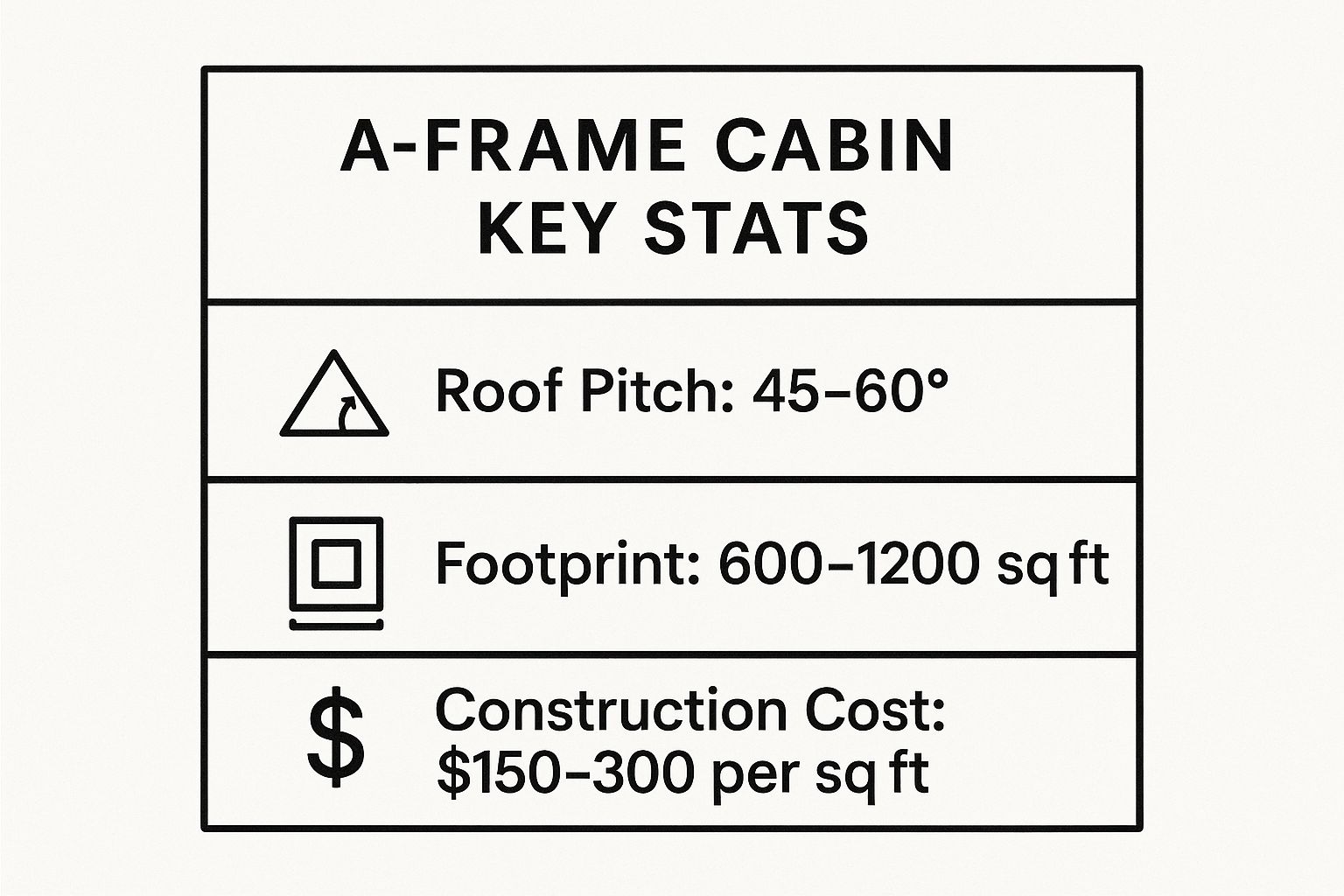
The data highlights how the steep roof pitch directly contributes to the design's effectiveness in snowy climates, while the cost and footprint figures confirm its status as an accessible option for small mountain homes.
Actionable Takeaways & Best Practices
For clients considering this design for a project in areas like the North Carolina mountains, maximizing its potential requires strategic planning.
- Integrate Dormers: Adding shed or gable dormers to the roof plane can dramatically increase headroom and usable square footage on the upper level, transforming a tight loft into a functional bedroom or office.
- Embrace Built-ins: The sloped walls present a unique challenge. Address this by designing custom built-in storage, shelving, and furniture that fit snugly against the angles, turning awkward spaces into smart, functional features.
- Plan Utilities Meticulously: Running plumbing and electrical wiring through an A-frame's integrated roof and wall structure requires careful forethought. Working with an experienced contractor like SEGC, who understands complex structural systems, ensures these elements are planned from the outset to avoid costly retrofitting. Our 21+ years of proven results guarantee that every detail is considered, from foundation to peak.
2. Modern Mountain Cube: Minimalist Form, Maximum View
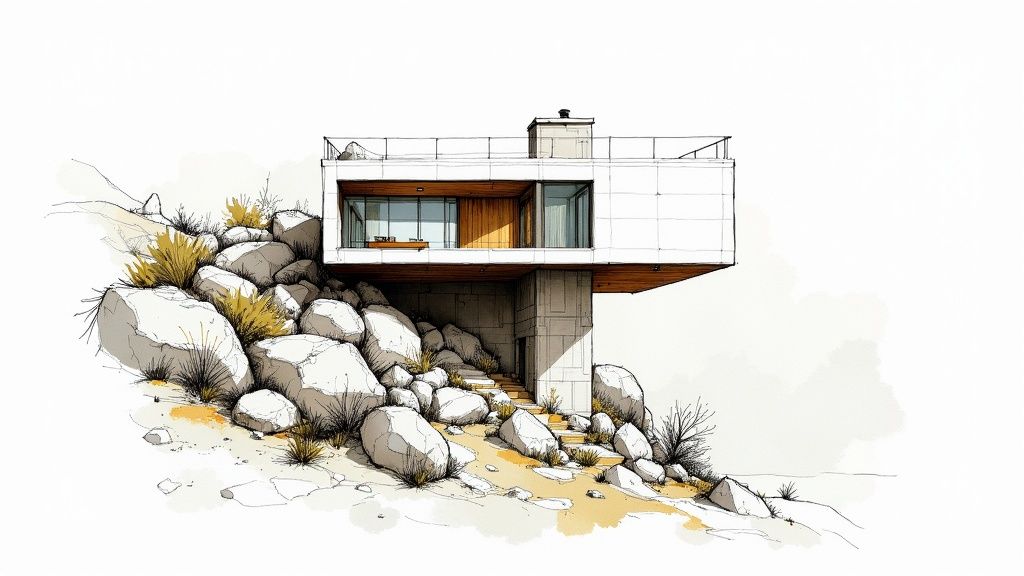
The Modern Mountain Cube represents a bold departure from traditional rustic designs, embracing geometric simplicity and a minimalist aesthetic. These homes are defined by their clean lines, flat or low-slope roofs, and a "stacked box" appearance that prioritizes interior volume and expansive views. More than just a stylistic choice, this design is a highly functional approach to modern mountain living, focusing on energy efficiency and a seamless connection between the indoor and outdoor environments.
Strategic Analysis: Form Meets Function
The core advantage of the cubic design is its efficient use of space and materials. A simple cube maximizes interior volume while minimizing the exterior surface area, which helps reduce thermal loss and improves overall energy performance. This design philosophy is perfectly executed in renowned examples like Olson Kundig’s Tye River Cabin, where vast walls of glass dissolve the boundary between the compact interior and the sweeping landscape. The open-concept floor plans common to these homes create an airy, light-filled atmosphere that feels far larger than the actual footprint suggests. This makes the Modern Mountain Cube an intelligent choice among small mountain home designs for those seeking contemporary style without sacrificing comfort.
Actionable Takeaways & Best Practices
For clients interested in building a contemporary cube-style home, success hinges on technical precision and thoughtful planning, especially in a climate like North Carolina's varied mountain terrain.
- Prioritize High-Performance Windows: Large glass panels are central to this design's appeal, but they must be energy-efficient. Specify triple-pane, low-e coated windows to minimize heat loss in winter and heat gain in summer, maintaining comfort and reducing utility costs.
- Engineer for Water and Snow: Flat roofs require meticulous engineering to manage water and potential snow loads. This includes robust waterproofing membranes, proper drainage systems with scuppers or internal drains, and potentially automated snow-melting systems for heavier snowfall regions.
- Integrate Landscape and Access: The stark, geometric form of a mountain cube is best softened by integrating it with the natural landscape from day one. A well-defined building process is crucial for managing logistical challenges like equipment access on remote sites. You can explore our custom home building process to see how our HUBZone-certified team handles site complexity and planning, especially in communities like Fayetteville. At SEGC, our 21+ years of experience ensure every technical detail, from foundation to roof, is flawlessly executed.
3. Rustic Log Cabin: Timeless Strength and Natural Harmony
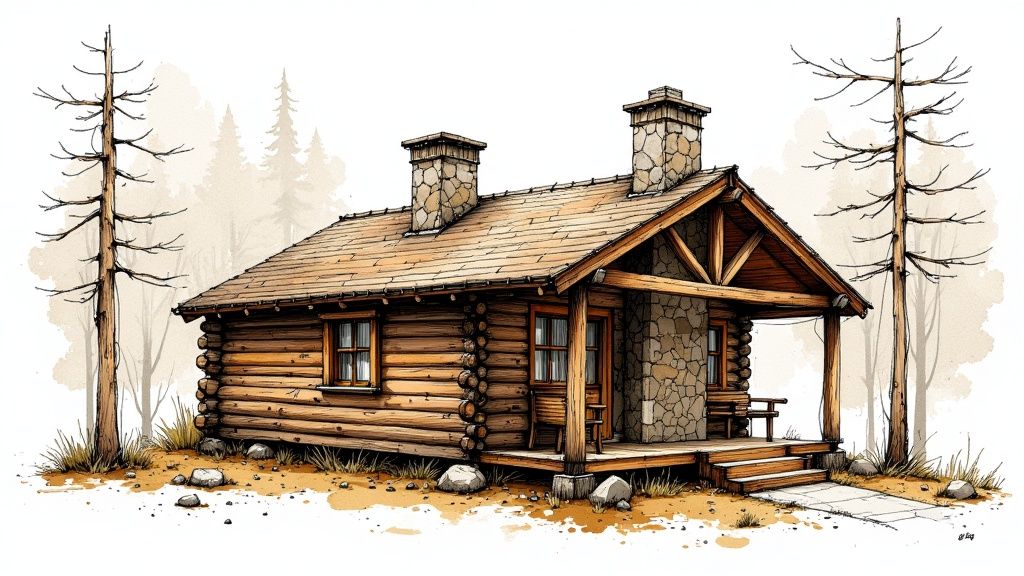
The rustic log cabin is the embodiment of mountain living, a design deeply rooted in tradition and natural materials. Built using substantial, interlocking logs, these homes offer unparalleled thermal mass, creating a structure that is naturally insulated and energy-efficient. This approach, brought to North America by Scandinavian immigrants and perfected in National Park Service architecture, creates a dwelling that feels intrinsically connected to its forested surroundings.
Strategic Analysis: Form Meets Function
The core advantage of a log cabin lies in the structural and insulating properties of the logs themselves. Unlike conventional framing, the logs serve as both the support system and the finished wall, reducing the need for separate insulation, siding, and drywall. This creates a robust, durable home capable of withstanding harsh mountain weather. Modern craftsmen, such as those at Pioneer Log Homes or Expedition Log Homes, have elevated this traditional form, integrating large windows and open-concept interiors to prevent the dark, cramped feel of historic cabins while preserving their authentic charm.
This handcrafted construction method is a hallmark of authentic small mountain home designs, delivering a unique aesthetic and long-term resilience. The key is in the details of the joinery and the quality of the timber, which define the home's character and longevity.
Actionable Takeaways & Best Practices
Building a log home requires specialized knowledge to manage the unique behavior of natural wood. For clients in North Carolina, from the Blue Ridge Mountains to the communities around Lumberton, successful construction depends on expert planning.
- Plan for Settling: Logs naturally settle as they dry and compress. A design must account for 3-6 inches of settling, incorporating features like slip joints for windows and doors and adjustable jack posts to prevent structural issues.
- Use Kiln-Dried Logs: Whenever possible, specify kiln-dried logs. This process removes most of the moisture before construction, significantly minimizing shrinkage, twisting, and checking (cracking) over time for a more stable structure.
- Expert Utility Integration: Running electrical and plumbing through solid logs is a complex task. It demands careful pre-drilling and planning to accommodate log movement. Building a legacy of quality requires a partner you can trust. SEGC’s 21+ years of experience with complex structural systems ensure that all utilities are meticulously planned from day one, reflecting our commitment to client trust.
4. Shed-Style Mountain Home: Modern Simplicity on a Slope
The Shed-Style design offers a contemporary and highly practical solution for building small mountain homes, especially on challenging sloped terrain. Characterized by a single, steeply pitched roof plane, this asymmetrical form is both visually striking and functionally brilliant. This simple roofline provides excellent drainage for rain and snow, creates a dynamic interior volume, and allows for strategic placement of large windows to capture panoramic views and passive solar heat.
Strategic Analysis: Form Meets Function
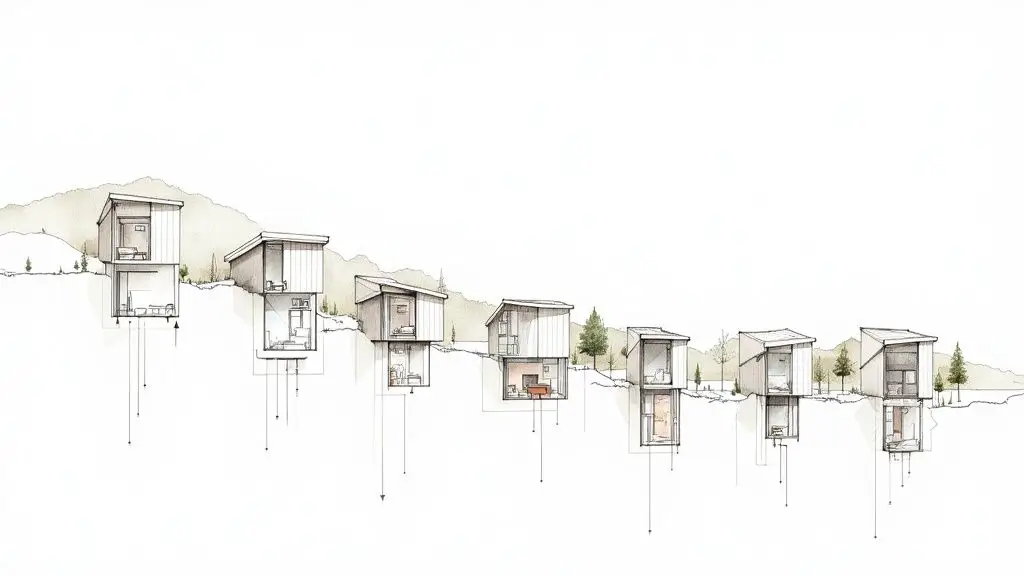
The core strength of the shed-style home is its adaptability to the landscape. By aligning the single-slope roof with the natural grade of a hill, architects can minimize extensive excavation and foundation work, reducing both environmental impact and construction costs. The taller wall, often filled with glass, faces the primary view, while the lower wall can be nestled into the hillside for thermal insulation and privacy. Designs like the Mountain Residence by Carney Logan Burke masterfully use this orientation to create a home that feels both expansive and intimately connected to its surroundings.
The high ceiling created under the roof's peak gives even compact floor plans an airy, open feel, while the lower side is perfect for cozier spaces like bedrooms or utility areas. This inherent split-level potential makes it one of the most efficient small mountain home designs for maximizing space on a small footprint.
Actionable Takeaways & Best Practices
For those considering a shed-style home in a location like the rolling hills near Fayetteville or the Appalachian highlands, thoughtful design is key to harnessing its full potential.
- Orient for Views and Sun: Position the tall, windowed wall to face the most desirable view and orient it for optimal solar gain in winter. This passive heating strategy can significantly reduce energy bills.
- Incorporate Clerestory Windows: On the taller walls, add clerestory windows (a high band of windows) to bring in balanced natural light throughout the day without sacrificing privacy from neighbors below.
- Manage Water Runoff: The single-slope roof funnels a large volume of water to one side. A robust gutter and downspout system, combined with a well-planned foundation drainage strategy, is critical. Collaborating with an experienced team like SEGC ensures that your site plan properly addresses water management, protecting your foundation for the long term. As a local, Native American-owned firm, we understand our region's climate and soil.
5. Tiny Mountain House: The Ultimate in Minimalist Living
The Tiny Mountain House embodies the philosophy of minimalist living, condensing all the essential comforts of a home into a footprint often under 600 square feet. Far from being a compromise, this design approach is a deliberate choice for efficiency, sustainability, and a deeper connection to the outdoors. These compact dwellings challenge conventional notions of space, proving that thoughtful design can create a functional and comfortable sanctuary in even the most rugged mountain environments.
Strategic Analysis: Form Meets Function
The core principle of a tiny mountain house is maximizing utility in every square inch. This is achieved through clever, multi-functional design elements, such as convertible furniture, vertical storage, and compact, high-efficiency appliances. The reduced scale significantly lowers construction costs and environmental impact, making homeownership more accessible. Designs like the popular Escape Traveler models demonstrate how a small footprint doesn't mean sacrificing style or comfort, often featuring high-end finishes and large windows that blur the line between inside and out.
The goal is to eliminate wasted space and focus on what is truly necessary for a fulfilling mountain lifestyle. This approach to small mountain home designs is not just about downsizing; it's about rightsizing for a life centered on experience rather than possessions.
Actionable Takeaways & Best Practices
For those drawn to the simplicity and efficiency of a tiny home, especially in a challenging mountain setting, careful planning is paramount.
- Prioritize High-Quality Compact Appliances: Invest in durable, energy-efficient appliances designed for RVs or small apartments. This ensures reliability and performance without consuming precious space.
- Design for Four-Season Living: A mountain home must withstand diverse weather. Ensure your design includes robust insulation, a durable metal roof for snow loads, and a reliable heating source. Year-round accessibility should also be a key consideration.
- Extend Living Space Outdoors: A well-designed deck, patio, or screened-in porch can double your usable living area during warmer months, providing a crucial connection to the surrounding landscape.
- Plan Utilities with Precision: Integrating plumbing, electrical, and HVAC systems into a compact frame requires expert coordination. Partnering with a builder like SEGC ensures these critical systems are designed efficiently from the start. Our extensive experience with complex custom projects means we can navigate the unique challenges of tiny home construction, ensuring every system is flawlessly integrated.
6. Mountain Chalet Style: Alpine Charm and Rugged Durability
Drawing from the rich architectural heritage of the European Alps, the Mountain Chalet style is synonymous with cozy, yet robust, mountain living. These designs are characterized by their sturdy timber construction, wide overhanging eaves, and distinctive balconies adorned with decorative woodwork. More than just a charming aesthetic, the chalet is a time-tested example of one of the most practical small mountain home designs, engineered to handle harsh alpine conditions with grace. Its traditional form, often featuring a heavy stone foundation, helps it blend seamlessly into rugged landscapes from Vail, Colorado, to the Swiss-inspired town of Leavenworth, Washington.
Strategic Analysis: Form Meets Function
The chalet’s design brilliance is rooted in its response to the environment. The gently sloping, wide roof overhangs are not merely decorative; they protect the wooden balconies and walls from snow and rain, preserving the structure's integrity and reducing maintenance. The elevated stone or concrete ground floor anchors the home to the hillside and provides a resilient barrier against moisture and heavy snowpack. Modern chalets often incorporate large window walls beneath these protective eaves, allowing for breathtaking views and abundant natural light without exposing the home to the full force of the elements.
This design masterfully balances interior coziness with an expansive connection to the outdoors. The multiple levels, often built into a slope, create distinct living zones while maintaining a sense of openness.
Actionable Takeaways & Best Practices
For those building in mountainous regions, like the rolling hills of North Carolina, the chalet style offers both beauty and performance. Executing it well requires attention to detail and materials.
- Embrace Natural Materials: Use locally-sourced stone for foundations and retaining walls to anchor the home authentically to its site. Combine this with heavy timbers and quality wood siding to create the classic, warm chalet feel.
- Design for Snow and Water: The characteristic balconies require meticulous planning. Ensure they are properly sloped for drainage and that all decorative trim and railings are installed with robust flashing to prevent water intrusion, a key detail to avoid long-term rot.
- Prioritize Modern Comfort: The cozy chalet aesthetic is perfectly complemented by modern heating solutions. Radiant floor heating provides a luxurious, silent, and highly efficient way to heat the home from the ground up, eliminating cold spots and drafts common in older mountain homes. As experienced custom builders, SEGC can integrate these advanced systems seamlessly into the foundation and floor plans from the very start of your project, a commitment to quality our Lumberton clients can attest to.
7. Prefab Mountain Cabin: Efficiency Meets Customization
Prefabricated mountain cabins have revolutionized the construction timeline, shifting much of the building process from the unpredictable job site to a controlled factory environment. These structures are built in modules and then transported and assembled on-site, offering remarkable consistency, speed, and often, significant cost savings. Far from the cookie-cutter boxes of the past, modern prefab designs, like those from Unity Homes or Lindal Cedar Homes, offer extensive customization, allowing for contemporary small mountain home designs that are both beautiful and efficient.
Strategic Analysis: Form Meets Function
The core advantage of prefab construction lies in its precision and predictability. Building within a factory setting eliminates weather delays and allows for higher quality control, resulting in tighter seams, better insulation, and reduced material waste. This factory-first process streamlines the on-site phase to primarily foundation work and module assembly, drastically shortening the overall project timeline from months to weeks. The system's efficiency makes architecturally interesting yet affordable mountain living more accessible than ever.
This controlled environment also integrates complex systems like plumbing and electrical wiring with factory precision, a key benefit for remote mountain sites where skilled labor may be scarce. Companies like Blu Homes even utilize steel frames for enhanced durability and design flexibility, proving that prefab is a forward-thinking solution for modern mountain architecture.
Actionable Takeaways & Best Practices
For those intrigued by the efficiency of prefab for a mountain home in North Carolina, success hinges on meticulous logistical planning.
- Verify Site Access: Before committing, confirm that delivery trucks and cranes can safely access your property. Winding mountain roads and steep driveways can pose significant challenges for large modules.
- Prepare Foundations Precisely: The foundation must be poured to the exact specifications provided by the manufacturer. Any deviation can cause major delays and complications during assembly, so working with a precise and experienced local contractor is non-negotiable.
- Coordinate Utilities and Assembly: Ensure that a qualified local team is ready to connect the home's systems once the modules are set. Planning utility trenching and hookups in advance is critical. A trusted general contractor like SEGC, with over 21 years of proven results in complex site logistics, can manage the entire process. Our 8(a) certification reflects a standard of reliability and process management you can count on, ensuring every detail aligns perfectly.
7-Style Small Mountain Home Comparison
| Mountain Home Style | Implementation Complexity 🔄 | Resource Requirements ⚡ | Expected Outcomes 📊 | Ideal Use Cases 💡 | Key Advantages ⭐ |
|---|---|---|---|---|---|
| A-Frame Mountain Cabin | Moderate – simple post-and-beam with some structural constraints | Low to moderate cost, efficient materials | Cost-effective, quick build, snow resistant | Heavy snow regions, moderate to cold climates | Excellent snow load management, iconic aesthetic |
| Modern Mountain Cube | High – requires skilled contractors and precise execution | Higher cost materials, mixed media | Contemporary, energy efficient, spacious interiors | Contemporary mountain settings, solar energy focus | Maximum interior efficiency, strong structural integrity |
| Rustic Log Cabin | High – specialized log construction and craftsmanship | Moderate to high costs, quality logs | Durable, authentic mountain aesthetic with natural insulation | Traditional forest settings, durable homes | Excellent insulation, timeless appeal |
| Shed-Style Mountain Home | Low to moderate – simple single sloping roof system | Cost-effective materials | Efficient drainage, flexible interior, good solar orientation | Sloped lots with southern exposure | Simple structure, cost-effective, good solar use |
| Tiny Mountain House | Low – compact build, often owner-built | Very low materials and resource use | Minimal environmental impact, low costs, compact living | Minimalist lifestyle, tiny living enthusiasts | Very low cost, minimal footprint |
| Mountain Chalet Style | High – complex build with decorative elements | Moderate to high due to detailing | Traditional alpine charm, good snow shedding, multi-level | Alpine/mountain resorts, cultural heritage areas | Excellent snow management, strong heritage |
| Prefab Mountain Cabin | Low to moderate – factory-built, faster assembly | Controlled material costs, depends on transport | Faster build, consistent quality, predictable pricing | Remote sites with good access, fast timeline needs | Faster construction, consistent quality |
From Blueprint to Legacy: Your Mountain Home Awaits
As we've explored, the world of small mountain home designs is rich with possibility, offering a style for every landscape and lifestyle. From the iconic A-Frame that mirrors the peaks themselves to the sleek efficiency of a Modern Cube, each design offers a unique blueprint for connecting with nature. We've analyzed how strategic window placement in a Shed-Style home can capture panoramic views and how the compact ingenuity of a Tiny Mountain House maximizes every square foot.
The common thread weaving through these successful designs is not just aesthetics, but a deep understanding of the environment. Smart material choices, foundational integrity, and layouts that embrace both shelter and scenery are paramount. Mastering these concepts is the difference between simply building a house and crafting a true mountain sanctuary.
Core Principles for Your Mountain Retreat
The journey from initial concept to a finished home requires translating these inspiring ideas into a tangible structure. The key takeaways from our deep dive into these diverse examples consistently point to three foundational pillars:
- Site-Specific Design: The most compelling homes don't fight the landscape; they collaborate with it. This means orienting the structure to maximize passive solar gain, positioning windows to frame the best views, and selecting a foundation that suits the unique topography of your lot.
- Material Authenticity and Durability: Whether it's the warm, rugged appeal of a Rustic Log Cabin or the low-maintenance resilience of metal and composite siding, the right materials are crucial. Your choices should reflect the local aesthetic while providing robust protection against mountain weather, from heavy snow loads to high winds.
- Interior Efficiency and Connection: Small mountain home designs thrive on clever space utilization. Open-concept living areas, multi-functional furniture, and seamless transitions to outdoor spaces like decks and patios are not just features; they are essential strategies for creating a home that feels both cozy and expansive.
Bringing Your Vision to Life with a Trusted Partner
Choosing the right design is the first step. The most critical one, however, is selecting a building partner who can execute that vision with precision, integrity, and a commitment to your legacy. A blueprint is only as good as the hands that build it, especially when navigating the unique challenges of mountain construction.
At South Eastern General Contractors (SEGC), we understand that building a custom home is a significant investment in your family's future. For over 21 years, our team has built a legacy of trust and quality throughout North Carolina, from the Fayetteville and Lumberton communities to the serene mountain landscapes. As a Native American-owned, 8(a), and HUBZone-certified firm, our commitment to excellence is woven into everything we do. We don't just build structures; we build lasting relationships by empowering our clients through a transparent, collaborative process. Our expertise ensures your small mountain home design becomes a durable, beautiful, and timeless retreat.
Ready to turn your dream of a mountain retreat into a reality? The experts at South Eastern General Contractors have the proven experience to guide you through every step, from initial design to final construction. We build legacies, not just structures. Contact us today to start the conversation and build your legacy with a team you can trust. South Eastern General Contractors