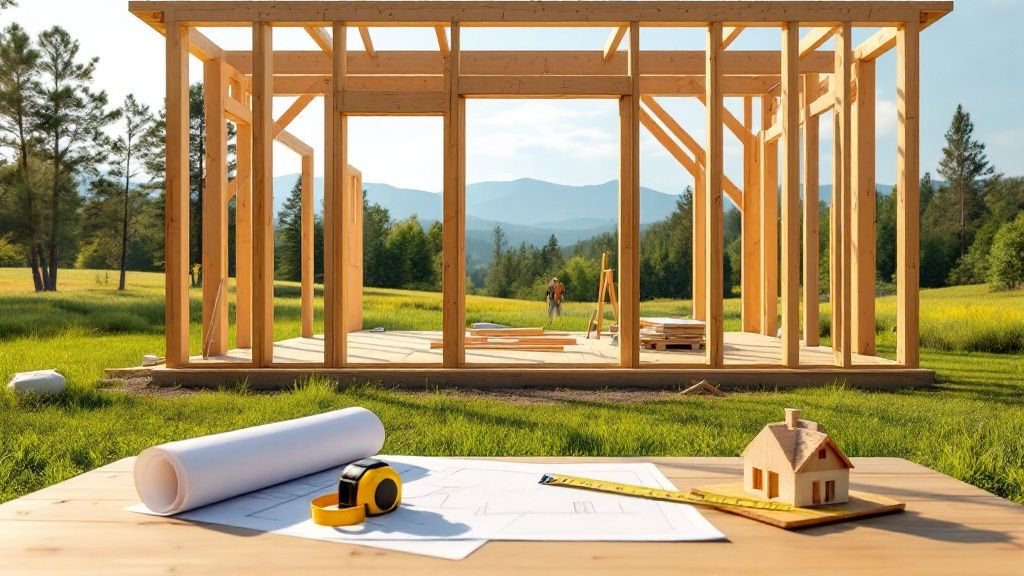
Building a Legacy: The True Cost of a Custom Home in North Carolina
Dreaming of a custom home in North Carolina is one thing; understanding the investment is another. So, let's talk about the real numbers. What does it actually cost to build your legacy from the ground up?
While every project has a unique story, a solid starting point for a standard custom home in NC is between $300,000 and $450,000. This covers the structure itself—the land is a separate, crucial part of the budget. Think of this as the foundation, not just for your home, but for our conversation about your vision. Our goal at South Eastern General Contractors (SEGC) is to empower you with clear, honest information, so you can move forward with confidence.
Your Quick Guide to NC Home Building Costs
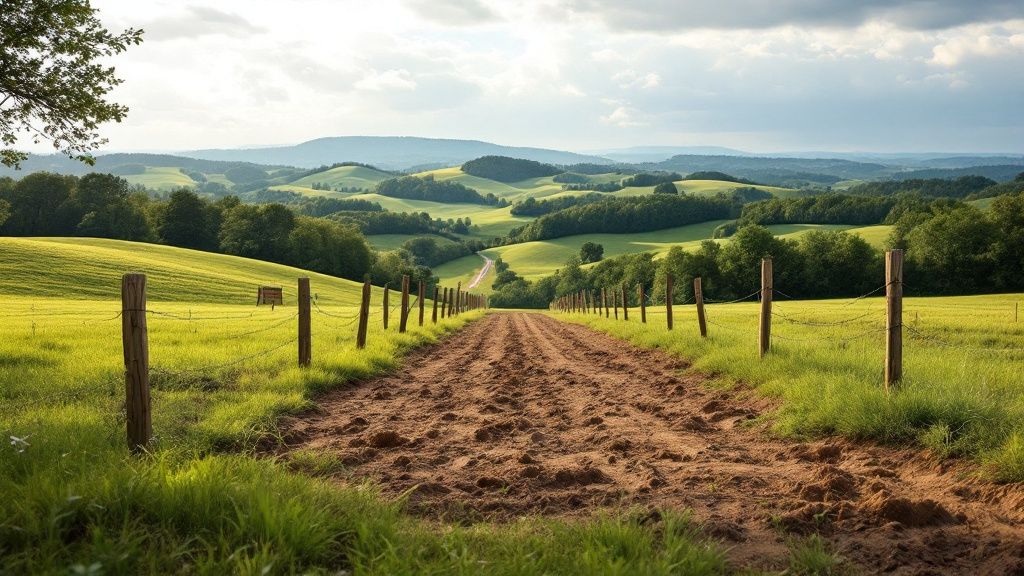
Building your dream home in the Tar Heel State is an incredible adventure. But before you get lost in blueprints and paint swatches, let's establish a firm grip on the budget. The final cost is influenced by a myriad of factors, from the specific zip code you choose to the finish on your kitchen faucet. We're here to help you navigate it all.
Understanding the Starting Numbers
Let's look closer at the details. The $300,000 to $450,000 figure generally translates to a construction cost of about $100 to $180 per square foot for a typical 3,000-square-foot home. Don't forget the land, which on average can add another $20,300 per acre to your budget. For a more detailed breakdown, you can dive deeper into North Carolina's construction costs.
This initial estimate is your financial North Star. It provides a solid baseline from which we can begin to layer in all the specific details that will make the house uniquely yours.
Here’s a look at how those costs might break down for your initial planning.
North Carolina Home Building Costs at a Glance
| Cost Category | Typical Price Range |
|---|---|
| Land Purchase (per acre) | $20,300 – $60,000+ |
| Foundation | $4,000 – $25,000 |
| Framing | $20,000 – $50,000 |
| Exterior Finishes (Siding, Roof) | $20,000 – $70,000 |
| Interior Finishes (Drywall, Flooring, Paint) | $50,000 – $175,000 |
| Major Systems (HVAC, Plumbing, Electrical) | $30,000 – $75,000 |
This table offers a general framework, but remember that your choices in materials, finishes, and location will ultimately shape the final numbers.
Finding a Partner You Can Trust
Crunching numbers is one thing, but navigating the building process requires a partner you can count on. Here at SEGC, we’ve been helping families in communities like Fayetteville and Lumberton build their legacies for over 21 years. As local leaders, we’re more than just builders; we’re part of the fabric of this community, and our unique certifications reflect that commitment:
- Native American-Owned: We are deeply rooted in our community’s heritage and future.
- SBA 8(a) Certified: A mark of our proven results, reliability, and operational strength.
- HUBZone Certified: We are dedicated to investing in and strengthening our local economies.
We are in the business of building legacies, not just structures. That means being upfront and transparent from day one, ensuring you feel confident and in control every step of the way. Our mission is to build a relationship with you based on client trust, exceptional quality, and a shared passion for creating your perfect home.
Let’s Talk Turkey: What Actually Goes Into Your Construction Budget?
Think of your home's construction budget as a detailed blueprint of its own. You can’t just focus on the total cost; you need to understand each line item—from the foundation to the framing and the roof. This is the "core construction" phase, where your dream home transitions from paper to a physical structure. Every single decision, from the concrete under your feet to the shingles over your head, has a price tag.
Breaking it down demystifies the process. This graphic provides a clear overview of how a typical budget is allocated.
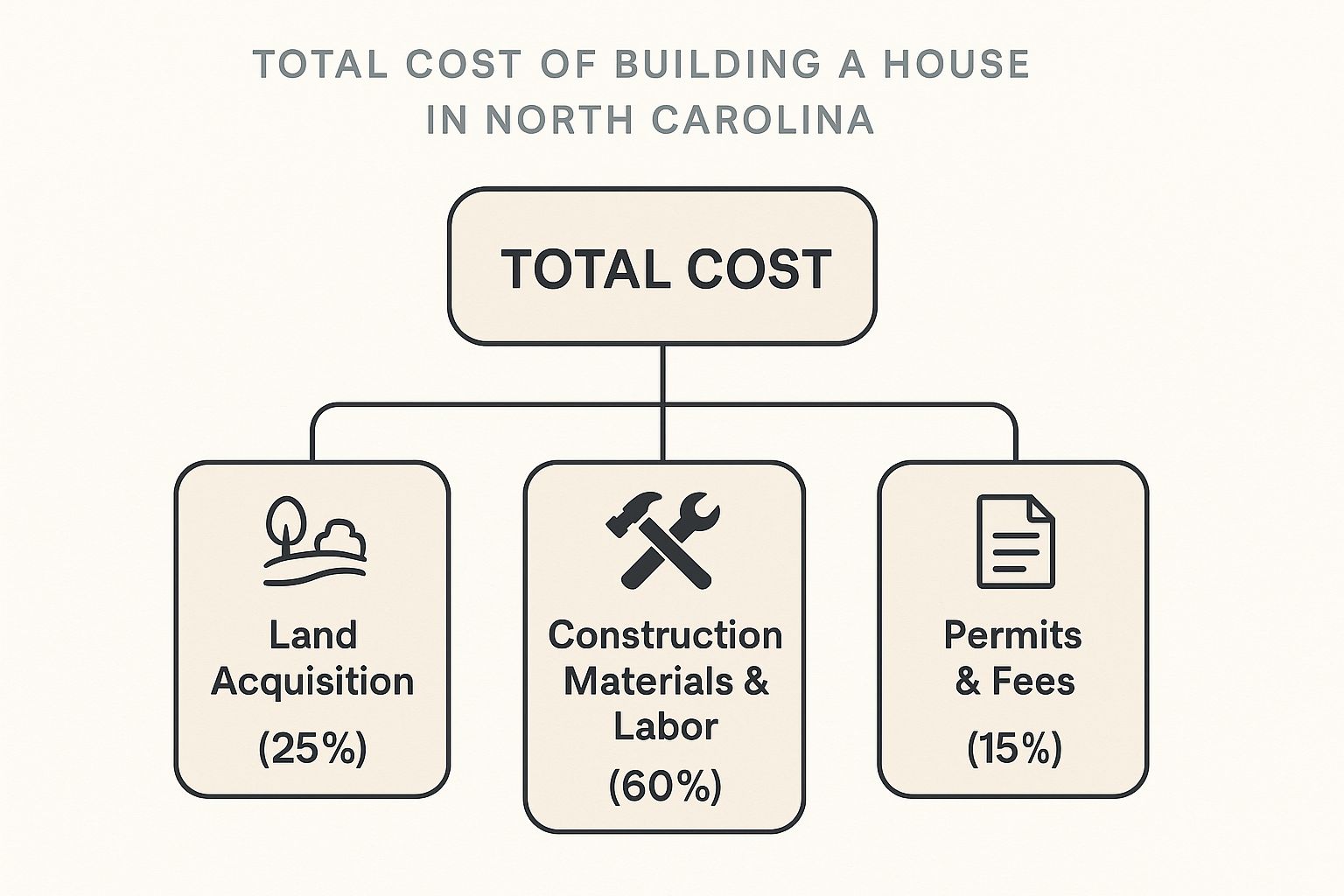
As you can see, the core of your budget—about 60% of it—is dedicated to the actual build. That's the lumber, the materials, and the skilled craftspeople who bring it all together. Understanding this helps you see precisely where your investment is going.
From the Ground Up: Foundation and Framing
Everything—absolutely everything—begins with a solid foundation. Here in North Carolina, you have several options, from a straightforward slab to a full crawl space, each with its own costs and benefits. Once the foundation is set, the framing crew arrives, and the skeleton of your home begins to take shape. It’s a truly magical moment when the lines on the page transform into a three-dimensional reality.
These first two steps are the bedrock of your home's structural integrity. Here at SEGC, we've poured foundations and raised frames for countless homes across Fayetteville and Lumberton. We know that executing this phase flawlessly isn't just a good idea; it's essential for building a legacy that will stand the test of time.
The Protective Shell: Roofing and Siding
Next, we wrap the frame in its protective shell. This is your home’s armor against North Carolina's sun, rain, and storms. Your choices here represent a balance between aesthetics, durability, and your budget.
Standard asphalt shingles are a reliable and cost-effective option. A standing-seam metal roof, while more expensive upfront, offers unparalleled longevity. The same logic applies to siding, with choices ranging from budget-friendly vinyl to timeless brick or durable fiber cement. After 21+ years of proven results, we have the expertise to help clients select an exterior that not only looks stunning but will protect their investment for decades to come.
Power, Pipes, and Air: The Essential Systems
Hidden behind the drywall are the unsung heroes of your home: the HVAC, electrical, and plumbing systems. While no one gets excited about circuit breakers or P-traps, these systems are what make a house a comfortable, livable home. Skimping here can lead to future regrets. In fact, investing in a high-efficiency HVAC system now is an actionable insight that can save you a significant amount on energy bills down the road.
So, what do these major components cost? In North Carolina, a foundation can run from $4,039 to $14,848, while framing typically falls between $1,408 and $7,670. A new roof will set you back $5,867 to $13,209, and siding can range from $5,075 to $20,300, depending on the material. You can dive deeper into these specific NC building costs to refine your budget.
This is where partnering with a proven, 8(a) certified builder like SEGC provides immense value. We operate at the intersection of quality and cost-effectiveness, ensuring every dollar you spend is an investment in building a true home, not just another house.
Where You Build Matters: How Location Shapes Your Final Price Tag
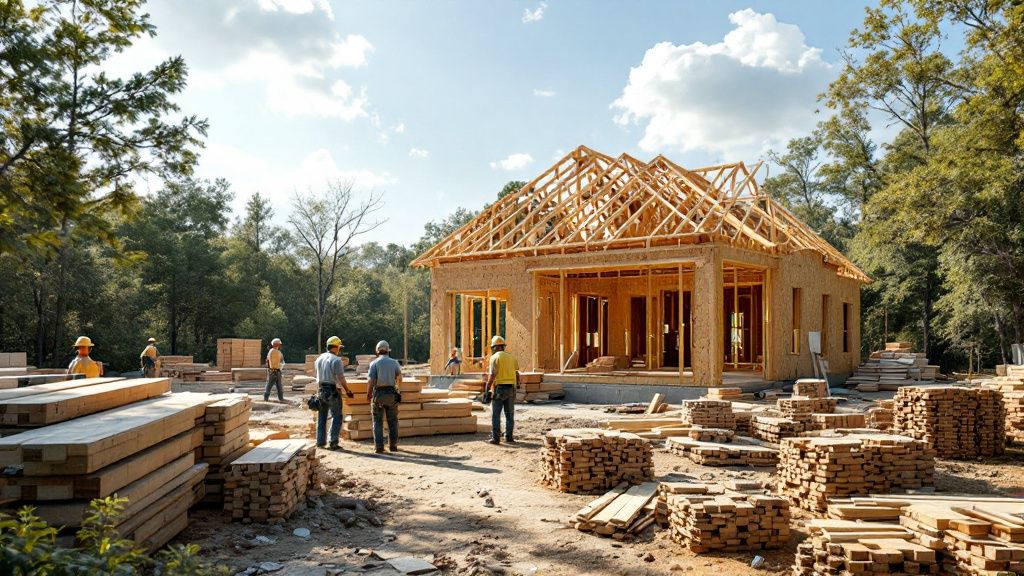
In North Carolina, the real estate mantra—"location, location, location"—is the golden rule for building, not just buying. The final number on your custom home quote is deeply tied to the specific patch of earth you choose. Building in the heart of Charlotte is a completely different financial ballgame than putting down roots in the quiet, rolling hills of the Sandhills.
The cost variation is significant. A recent survey highlighted that a 2,000-square-foot home can swing from $230,000 to $500,000, with major metro areas driving that figure skyward. The same logic applies to the cost of building a house in North Carolina. To see how our state compares on a national scale, it's worth reviewing some state-by-state construction cost guides to gain a broader perspective.
Land and Labor: The Two Big Regional Drivers
So, what creates such a substantial price gap? It primarily comes down to two factors: land and labor.
The first major investment is the land itself. A quarter-acre lot in a popular Raleigh suburb can easily cost ten times more than a full acre in a more rural county. This initial land purchase sets the financial tone for the entire project before a single nail is hammered.
Next is labor. The market for skilled tradespeople—carpenters, electricians, and plumbers—is intensely local. While urban hubs have a larger talent pool, wages are significantly higher to match the cost of living. Here in our home communities of Fayetteville and Lumberton, we’ve spent 21+ years cultivating a trusted network of local craftsmen. These long-standing relationships help us manage labor costs without ever compromising on the quality and client trust that are hallmarks of our work.
Navigating the Maze of Local Rules
Beyond land and labor, every county and city has its own set of regulations. Permit fees, zoning laws, and inspection schedules can vary dramatically from one town to the next, adding layers of complexity—and cost—to your budget. For example, building on the coast requires adherence to hurricane-resistant building codes that don't apply inland.
At SEGC, we don’t just see a map of North Carolina; we see a network of communities we know and serve. As a HUBZone certified firm and local leader, our expertise lies in cutting through that red tape, whether we’re in Fayetteville, Lumberton, or anywhere in between. We manage the logistical details so you can focus on what truly matters—watching your legacy take shape.
Uncovering the Hidden Costs of Building a Home
When a builder hands you a quote, it's easy to get swept up in the excitement. You see the figures for framing, roofing, and beautiful finishes, and you start envisioning your new life. But it's crucial to understand that this quote is just one piece of a much larger financial puzzle.
Too many first-time homebuilders are caught off guard by what the industry calls "soft costs." These are essential expenses that aren't part of the physical structure but are vital to the project's success. Think of it like buying a car: the sticker price is just the beginning. You still have taxes, title fees, and insurance to account for. The same principle applies here.
At SEGC, we believe in radical transparency. With over 21 years of experience building legacies in Fayetteville, Lumberton, and beyond, we know that a clear, honest financial picture is the bedrock of a successful project and lasting client trust. No surprises, no last-minute "gotchas"—just you, fully informed and empowered.
Expenses Beyond the Blueprint
So, what are these costs that often hide in the fine print? They are the professional services and site-related work that make the project possible. You won't see them when you're admiring your new kitchen, but you cannot build without them.
Here are the key ones to anticipate:
- Architect & Designer Fees: These creative professionals translate your vision into a buildable reality. Their fees can range from 5% to 20% of the total construction cost.
- Permits & Inspections: Local authorities require permits before any work begins, and this comes with a price tag. In North Carolina, building permits can cost between $525 and $3,000+, depending on your county and project scope.
- Utility Connections: A house isn't a home without power, water, and sewer. The cost to connect to municipal services can vary widely, especially if your lot is far from the main lines.
Preparing Your Canvas: The Cost of Site Prep
One of the largest and most unpredictable hidden costs is site preparation. This is all the work required to get your raw land ready for a foundation. It’s far more than clearing a few trees; it is a meticulous process that lays the groundwork for everything to come.
A successful home build is like a great painting—it all starts with a properly prepared canvas. Rushing or underestimating site prep is like trying to paint on a crumpled, dirty surface; the final result will always suffer.
Preparing your homesite is a complex job. It involves clearing the land, grading for proper drainage, and excavating for the foundation, which alone can range from $1,500 to $10,000. Our deep understanding of comprehensive site preparation for building construction ensures this critical first phase is handled with the precision it demands, preventing costly problems down the road.
This checklist outlines common expenses that can catch homeowners by surprise, along with our actionable insights.
Common Hidden Costs in Home Construction
| Expense Category | Typical Cost Impact | SEGC Pro Tip |
|---|---|---|
| Soil Testing & Surveys | $500 – $2,500 | Don't skip this! Poor soil might require a more expensive foundation. |
| Unexpected Site Work | Varies widely | A contingency fund is your best friend. Set aside 10-15% for surprises. |
| Temporary Utilities | $300 – $1,000+ | Your build site needs its own power and water during construction. |
| Landscaping & Driveways | $5,000 – $30,000+ | Often not in the main contract. Budget for this separately to avoid sticker shock. |
| Closing & Financing Fees | 2% – 5% of loan | Just like a traditional mortgage, construction loans have their own closing costs. |
| Post-Construction Cleanup | $500 – $1,500 | You’ll want a professional crew to make your new home sparkle before move-in. |
Finally, don’t forget the elements that truly turn a house into a home. Landscaping, driveways, and walkways are often budgeted separately but are vital for curb appeal and daily life. Factoring these in from the start helps create a complete, realistic budget for the legacy you’re building.
Smart Ways to Manage Your Building Budget
Building a custom home in North Carolina is a rewarding journey, but it requires careful financial stewardship. Keeping the cost of building a house in North Carolina under control isn’t about luck—it’s about a smart, proactive game plan. This ensures your legacy starts on solid ground, both structurally and financially.
Thoughtful planning and savvy choices are your best tools. With over 21+ years of proven results, our team at SEGC has guided countless families through this exact process. We don't just build houses; we empower you to build with confidence.
The Power of Value Engineering
One of the most effective strategies we employ is value engineering. This isn't about finding the cheapest materials or cutting corners. It's an intelligent approach to finding substitutions that deliver the aesthetic and quality you desire for a better value.
For example, we worked with a client in Fayetteville who loved a stunning but costly exotic hardwood for their floors. Our team sourced a luxury vinyl plank (LVP) that perfectly matched the wood's grain and color at nearly half the price. They saved thousands and received a floor that is more durable and easier to maintain. That is value engineering in action—achieving the dream without breaking the budget. This is the kind of actionable insight that comes from decades of experience.
When mapping out interior finishes, understanding where costs are concentrated is key. For a deep dive into one of the home's most expensive rooms, this complete shower remodel budget guide is a fantastic resource.
Custom Design vs. Stock Floor Plans
Another critical decision is your floor plan. A completely custom design offers ultimate personalization but often comes with higher architect fees and potential engineering challenges.
A stock floor plan, on the other hand, can be a brilliant starting point. These are tried-and-true blueprints that have been built before, making costs more predictable. We often collaborate with clients to modify a stock plan to fit their lifestyle, creating a semi-custom home that feels unique while being more cost-effective.
For a comprehensive playbook of cost-saving strategies, explore our guide on how to reduce construction costs. It's filled with practical tips that can lead to significant savings.
Finally, consider the long-term value of energy efficiency. Choosing better insulation, high-performance windows, or a top-tier HVAC system may slightly increase your upfront cost. However, these decisions pay dividends for years through lower utility bills, turning a small initial investment into thousands in long-term savings.
Why Your Builder Is Your Most Important Investment
Ultimately, the final cost, quality, and overall success of your dream home rest on one critical choice: your builder. This decision transcends merely selecting the lowest bid. It's about choosing a partner for one of the most significant financial and personal journeys of your life.
An experienced builder is your expert navigator. They skillfully manage unexpected supply chain issues, coordinate subcontractors to maintain momentum, and—most importantly—keep your project on schedule to avoid budget-breaking delays.
At SEGC, our unique certifications—Native American-owned, 8(a), and HUBZone-certified—are a testament to our commitment to excellence and community. These are not just labels; they are a promise of our dedication to investing back into the Fayetteville and Lumberton communities we proudly call home. A forward-thinking partner is also crucial; many modern builders leveraging advanced drone technology for smarter, more efficient site management.
Trust Built Over 21+ Years
After more than two decades of building legacies, we know that constructing a home is a journey grounded in clear communication and unwavering trust. We don't just build structures; we build lasting relationships with the families we serve.
"Working with SEGC in Lumberton was a breath of fresh air. They listened to our vision, kept us informed every step of the way, and delivered a home that exceeded our every expectation. The trust we built with their team was invaluable." – A Lumberton Client Testimonial
That partnership is everything. If you are at the beginning of this process, our guide on how to choose a general contractor offers practical advice to help you find the perfect match for your project.
A great builder doesn't just provide a quote. They provide peace of mind, ensuring the legacy you’re creating is built on the strongest possible foundation of quality and trust.
Got Questions About Building in NC? We’ve Got Answers.
When you're planning to build a home from the ground up, questions are inevitable—and they are a good thing! After more than 21+ years of building custom homes in communities like Fayetteville and Lumberton, our team at SEGC has heard nearly every question imaginable.
Here are a few of the most common ones, along with our direct, expert answers.
How Long Does It Really Take to Build a House in North Carolina?
Let's get straight to it: from breaking ground to handing you the keys, you are typically looking at 9 to 12 months for a custom home in North Carolina.
Of course, this timeline can be influenced by factors like complex architectural designs, permitting delays, severe weather, or supply chain disruptions. That’s why we provide a detailed project schedule from the outset. This actionable insight into the timeline ensures you always know what to expect and when.
Is It Cheaper to Build or Just Buy an Existing Home?
This is the classic "build vs. buy" debate. The honest answer is that it depends on your priorities.
Building a custom home often involves a higher upfront cost. However, the value is immense: you get exactly what you want, designed for your lifestyle. Every outlet, closet, and window is placed according to your vision. Buying an existing home might seem faster, but in today's market, you could face bidding wars and still need to invest heavily in renovations to make it feel like your own.
We often help our clients analyze the numbers—comparing the true cost of building a house in North Carolina with the cost of buying and renovating—to determine which path makes the most sense for their family's legacy.
What’s the Biggest Reason Projects Go Over Budget?
It’s usually a combination of three factors:
- Change orders: These occur when homeowners decide to make changes after construction has begun. Moving a wall or upgrading windows mid-project will almost always add to the cost.
- Surprises in the ground: Sometimes excavation reveals unexpected issues, like poor soil that requires additional engineering.
- Material price hikes: The cost of materials like lumber or steel can fluctuate, impacting the budget.
Partnering with a seasoned, 8(a) and HUBZone certified builder like SEGC means you have experts who are adept at anticipating these risks. We plan meticulously, communicate transparently about every dollar, and solve problems before they become budget-busters. Our commitment is to keep your project on solid financial ground from start to finish.
At South Eastern General Contractors, we believe a home is more than just a structure; it's a legacy. And the process of building it should be founded on trust, quality, and a shared vision.
If you’re ready to move from dreaming to planning, let's start the conversation. We would be honored to hear about the legacy you want to build and show you how our proven results can bring it to life.