Trusted Home Builders Who Build On Your Lot
So, you’ve found the perfect slice of North Carolina heaven. That beautiful plot of land is your canvas, and now comes the big part: finding the right builder to bring your dream home to life.
This isn't just about hiring a contractor. It's about finding a true partner, someone you can trust to take a piece of dirt and turn it into a place your family will create memories in for generations. As a Native American-owned firm deeply rooted in communities like Fayetteville and Lumberton, we believe this journey is about building a legacy, not just a structure.
Your Guide to Finding the Right On Your Lot Builder
Building a home on your own land is the ultimate expression of freedom. You get to call all the shots—the location, the floor plan, the finishes—everything. It’s a path more and more people are choosing. In fact, custom homes now make up about 19% of all new single-family houses, the highest it’s been since 2022. Seems like everyone's catching on to the idea of building a home that's truly theirs.
This journey is incredibly exciting, but it’s one you don’t want to walk alone. You need an expert guide, a builder with real-world experience and a deep understanding of the local landscape. The best home builders who build on your lot don't just put up walls; they walk you through every single step with honesty, expertise, and a commitment to your vision.
What Sets a Great Builder Apart
A top-notch on-your-lot builder brings a whole lot more to the project than just a tool belt and a pickup truck. They should be your all-in-one resource, offering expert support long before the first shovel hits the ground.
Here’s what you should really be looking for:
- Deep Local Roots: A builder who knows the ins and outs of areas like Fayetteville and Lumberton is worth their weight in gold. They understand the local zoning quirks, what the soil is like, and how to navigate the permitting office without breaking a sweat. This local leadership saves you headaches and money.
- A Proven Track Record: You want a company that's been around the block. Look for someone with a history of happy clients and beautiful homes. With over 21+ years of proven results, SEGC has built a reputation one successful project at a time, earning trust the old-fashioned way.
- Credentials You Can Count On: Don't be shy about asking for credentials. As a Native American-owned, 8(a) and HUBZone certified firm, for example, we're held to rigorous standards of excellence and accountability. These certifications are a clear sign of a professional, reliable operation committed to quality.
At SEGC, we don't just build structures; we build legacies. Our entire mission is to turn your vision into a home built with integrity, ensuring the process feels just as good as the day you get the keys. It's about empowering you with knowledge and building a foundation of client trust from day one.
Ultimately, finding the right builder is about finding a team that sees this as a partnership. Our guide on how to build on your lot in NC dives deeper into what this collaborative journey looks like, so you can feel confident and in control from start to finish.
Custom vs. Production vs. Modular: Picking the Right Builder for Your Land
So, you have the perfect plot of land. Now for the fun part: finding the right person to build your dream home on it. But here's something a lot of people don't realize—not all builders who work on private lots are the same. In fact, picking the wrong type of builder can throw a major wrench in your plans, budget, and overall happiness.
Let’s break down the main players you’ll encounter.
The Big Three: Understanding Your Options
Think of it like this: are you buying a stunning, ready-to-hang print, or are you commissioning a one-of-a-kind oil painting? Both are great, but they serve very different needs. The same goes for builders.
A production builder is your high-quality print. They offer a portfolio of proven, popular floor plans you can choose from. You'll get to pick your finishes—cabinets, countertops, flooring—but from a pre-selected menu. It's a streamlined, efficient, and often more budget-friendly approach. Perfect if you find a plan you love and don't want to get bogged down in a million tiny decisions.
Then you have the modular builder. These guys build your home in sections, or "modules," inside a massive, climate-controlled factory. Once complete, they transport the modules to your lot and crane them into place. The big win here is speed and precision. No rain delays, no warping wood—just a fast, high-quality build.
And finally, there’s the true custom builder. This is your commissioned artist. You start with a blank canvas—your land—and an idea. There are no templates. No set floor plans. Every single detail, from the way the morning light hits your kitchen to the exact curve of the staircase you saw in a magazine, is designed from the ground up, just for you.
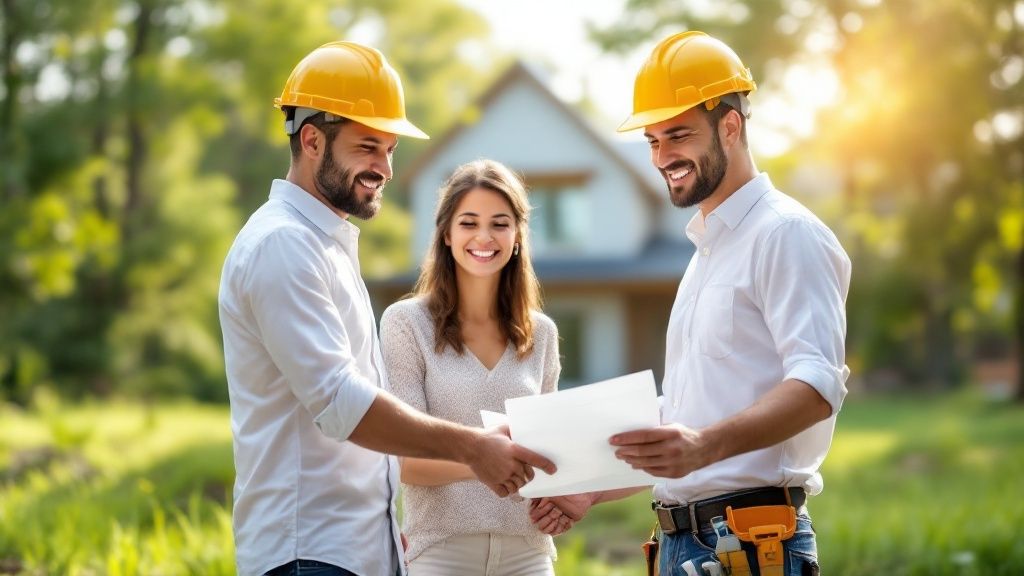
This is what the beginning of a true custom journey looks like. It’s more than just a foundation; it’s a promise of a home that will be uniquely, unequivocally yours.
To make it even clearer, let's stack them up side-by-side.
Comparing On Your Lot Builder Types
This table breaks down the key differences between custom, production, and modular home builders to help you choose the right fit for your project.
| Builder Type | Customization Level | Typical Cost Structure | Best For |
|---|---|---|---|
| Custom Builder | Unlimited. If you can dream it, they can build it. | Cost-Plus or Fixed-Price | Homeowners with a unique vision who want total control over the design. |
| Production Builder | Limited. Choose from a set menu of plans & finishes. | Fixed-Price | Buyers looking for a proven layout, a streamlined process, and cost certainty. |
| Modular Builder | Moderate. Some floor plan and finish customization. | Fixed-Price | People prioritizing speed, quality control, and a predictable timeline. |
Ultimately, your choice depends on what you value most: complete creative freedom, streamlined efficiency, or factory-built precision.
The True Custom Home Experience
As a custom builder with over 21 years of proven results, we live for the creative challenge. We don’t just build houses; we partner with you to translate your story and lifestyle into a physical structure. It’s a deeply collaborative process built on client trust, open communication, and a shared passion for getting every detail just right.
A true custom builder is part architect, part project manager, and part dream-interpreter. They create a legacy, not just a building.
This path offers incredible freedom, but it also means you’ll want a builder who’s an expert in more than just construction. For instance, if energy efficiency is a priority, you'll want to ask if they have experience meeting specific green building certification requirements.
Making this one decision—choosing the right type of builder—is the most important first step you'll take. It sets the foundation for the entire project.
Finding and Vetting the Right Builder for Your Lot
Alright, this is the big one. Picking your builder is hands-down the most important decision you'll make in this entire process. It's so much more than just a quick Google search and a few phone calls. This is where you roll up your sleeves and do some real homework.
Think of it this way: you're not just hiring a contractor; you're choosing a partner who will hold your life’s savings and your family's future home in their hands. A builder with deep roots in the community and a solid reputation won't just tolerate your questions—they'll welcome them.
First things first, let's cover the absolute must-haves: proper licensing and insurance. Any builder worth their salt will have no problem showing you their general contractor's license, along with proof of general liability and workers' compensation insurance.
But don't just glance at the paperwork. Call your state's licensing board to verify everything. It’s a small, actionable step that protects you from a world of potential headaches and financial risk.
Next, it's time to play detective with their portfolio. Go beyond the glossy, professional photos on their website. Look closely at the details. Is the trim work clean and precise? Do the homes they built ten years ago still look as solid as the ones they finished last year? This is where true craftsmanship—or a lack thereof—really shows.
Asking the Questions That Actually Matter
Here’s where you get the real story: talking to their past clients. A confident builder will have a list of references ready to go. When you get them on the phone, don’t just ask, "So, were you happy?" That's a softball question.
You need to dig deeper with actionable questions that reveal how they really operate when things get tough.
- How did they handle the inevitable curveballs and unexpected problems that popped up?
- Was the communication open and consistent, or did you feel like you were left in the dark?
- Did the final cost come close to the initial estimate? And how did they manage change orders and extra costs?
The answers to these questions will tell you everything about a builder’s character and their ability to manage a project with honesty and integrity. For more expert insights, we've got a whole guide on what questions to ask a good contractor.
At SEGC, we’ve always believed our reputation is built on client trust, not just timber and nails. Our 8(a) and HUBZone certifications aren't just fancy acronyms; they are independently verified proof of our reliability and our commitment to building quality homes in our local Fayetteville and Lumberton communities.
The truth is, the custom homebuilding world has proven to be incredibly stable, especially for folks building a unique, high-quality home on their own land. People in this market tend to care more about getting the craftsmanship and customization just right than they do about nickel-and-diming every line item.
We love it when potential clients bring us the tough questions. It shows they're serious, and we’re confident that the legacies we build can stand up to the scrutiny.
Getting to Know Your Land: The Site Evaluation and Pre-Construction Game Plan
So, you've got the land. Fantastic! But that beautiful plot of dirt is more than just a pretty view—it's the canvas for your future home, and it’s full of secrets. Before you even think about blueprints, the first and most important step is a deep-dive site evaluation. This isn't just a quick look-see; it's a full-on investigation into what's happening above and below ground.
We're talking about a comprehensive assessment that uncovers the details that can either save you a bundle or sink your budget. This means getting your hands dirty with soil stability tests, checking how the land drains, and running percolation tests if you're planning on a septic system. A seasoned builder will also be your guide through the maze of utility access, property easements, and the jungle of local zoning laws that can change from one town to the next.
Why a Local Pro Is Your Best Bet
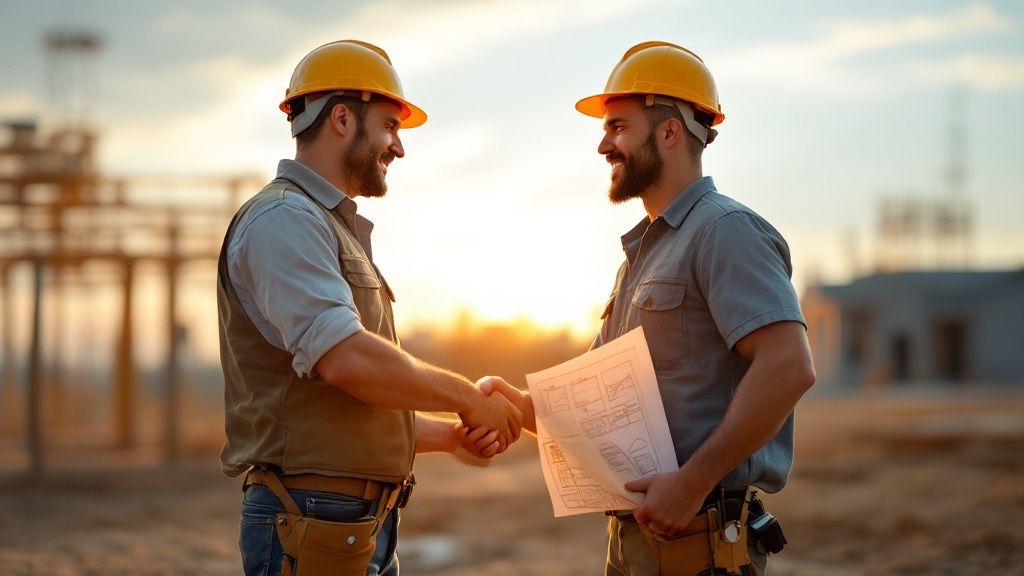
This is exactly where hiring a builder with deep local roots pays off big time. You want someone who knows the lay of the land—literally. An expert who’s built in the Fayetteville and Lumberton areas for years will already know about regional quirks, like the sandy soils common around the Sandhills, which can completely change how your foundation needs to be designed.
Trust me, I’ve seen it happen. Projects get derailed and budgets explode by tens of thousands of dollars because an out-of-town builder hit an unexpected patch of rock or couldn't get the soil to compact properly. They just didn't know what to look for.
Over our 21+ years building in this community, we've learned a simple truth: the pre-construction phase reveals everything about a builder's honesty and skill. Nailing this part prevents nasty surprises and starts the project off on a foundation of solid client trust.
Preparing your lot is a serious undertaking. If you want a deeper look at what it takes, this excavation land clearing guide offers some great insights into the whole process. A great builder’s job isn’t to react to problems—it’s to see them coming a mile away and have a plan ready.
That proactive mindset is at the heart of how we do business. As a Native American-owned and HUBZone-certified firm, our reputation is built on sweating the small stuff from day one. That way, the only surprises you get are the good kind.
What to Expect When the Hammers Start Swinging
You’ve done the hard work of picking a builder and signing off on the plans. Now, the real adventure begins—watching a patch of dirt transform into your dream home. This is where all that planning pays off, and it all hinges on two things: a solid contract and even better communication.
Think of your construction agreement as the project's bible. It's not just a formality; it’s the rulebook that keeps everyone on the same page. It needs to detail everything, from the payment schedule and budget allowances for things like tile and lighting, to the process for handling those inevitable "hey, what if we…" moments, officially known as change orders.
Here at SEGC, we believe this document should be crystal clear and protect everyone. That's why we take the time to go through it with you, line by line. We’ve found that this level of transparency is the bedrock of the trust we’ve built over 21+ years in communities from Fayetteville to Lumberton.

From Foundation to Final Walkthrough
With the paperwork sorted, it's time for the first bulldozer to roll onto your site. Building a house follows a pretty logical order, and understanding the major milestones helps you know what’s happening and when. It’s way more exciting when you can follow along.
- Breaking Ground: This is the messy, muddy, and thrilling start. The crew will excavate the site, pour the concrete foundation, and get the basic utility lines in place.
- Framing and Dry-In: Suddenly, it looks like a house! The walls go up, the roof gets decked, and everything is wrapped to keep the weather out.
- The Guts of the Home: This is when the electricians, plumbers, and HVAC pros descend, running all the wires, pipes, and ducts that will hide behind your walls.
- The Fun Finishes: Now for the personality. Drywall goes up, paint goes on, and you’ll finally see the cabinets, flooring, and light fixtures you picked out months ago come to life.
A builder’s job isn’t just to manage subcontractors and materials; it’s to manage expectations. We turn a complex process into an exciting, collaborative journey by keeping you in the loop every step of the way. Our commitment is to quality and building a trusting relationship with you.
It's no secret that the demand for personalized homes is booming. The entire residential construction market is projected to hit nearly $7.68 trillion globally by 2030, and a huge part of that growth comes from people like you who want more than a cookie-cutter house. You can find more insights about the residential construction market here. We see it every day—building a great relationship with our clients is just as important as building a sound home.
Got Questions About Building on Your Lot? We’ve Got Answers.
When you decide to build a home on your own land, the questions start piling up fast. It’s totally normal. After more than 21 years of building homes for folks in places like Fayetteville and Lumberton, we've heard just about every question imaginable.
Let's tackle a few of the big ones we hear all the time.
So, What's the Real Bottom Line on Cost?
This is the million-dollar question, sometimes literally. The truth is, the cost can swing wildly depending on everything from the specific dirt your house will sit on to the fancy faucets you pick out.
You've got the cost of the house itself, of course. But then you have the site work—the not-so-glamorous but absolutely essential stuff. We're talking about clearing trees, leveling the ground, and running power and water lines. That part alone can easily run anywhere from $10,000 to over $50,000.
Any builder worth their salt will break this all down for you. You should see a clear, itemized quote where site costs and construction costs are separate. No fuzzy math, just a straight-up look at where your money is going. That transparency is key to building client trust.
On-Your-Lot vs. Custom Builder: Aren't They the Same Thing?
It's a bit of industry jargon, but there is a difference. People often use the terms interchangeably, but they're not quite the same.
- An "on-your-lot builder" is a specialist who builds on land you already own. They often have a portfolio of fantastic, field-tested home plans that you can tweak to make your own.
- A "true custom builder" usually starts from a completely blank page, often working with an architect to create a home that is 100% unique.
The good news? A seasoned builder, like us here at SEGC, can wear both hats. We can start with one of our proven floor plans or help you bring a one-of-a-kind vision to life. It all comes down to what you're dreaming of.
How Long Is This Really Going to Take?
Patience is a virtue in home building. A realistic timeframe from the first handshake to getting your keys is usually somewhere in the 9 to 18-month range, and sometimes longer.
Think of it in two big chunks:
- The "Getting Ready" Phase (2-4 months): This is all the critical prep work—finalizing designs, getting permits from the county, and evaluating your site.
- The "Boots on the Ground" Phase (7-14 months): This is when the hammers start swinging and your home actually takes shape.
A good builder will be upfront about the schedule and keep you in the loop. Life happens—unexpected rainstorms, a delay on that special-order tile—but open communication is what separates the pros from the amateurs.
These are just a handful of the questions that will pop up along the way. For a much deeper dive, you'll want to check out our complete guide on the questions to ask your home builder. It's a must-read before you sign any contracts.
At South Eastern General Contractors, our philosophy is simple: an informed client makes the best partner. As a Native American-owned firm with over 21 years of proven results in North Carolina, we are committed to building legacies, not just structures. When you're ready to transform that piece of land into a place you'll call home for years to come, we're ready to talk. Contact us today and let's start building your legacy together.