Decoding Stick Built Home Prices in Fayetteville NC
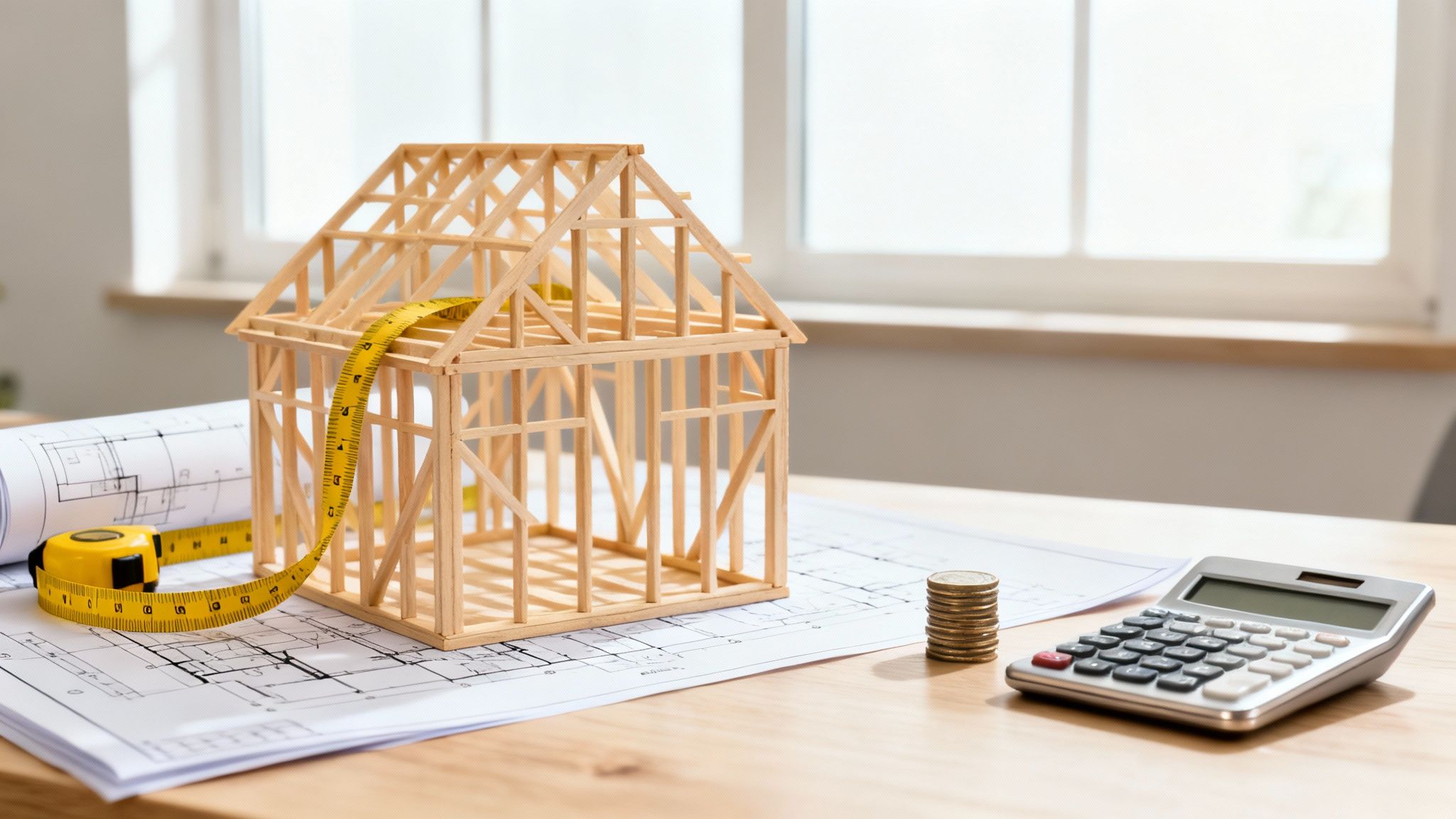
Trying to nail down the cost of a stick-built home can feel like trying to catch smoke. The truth is, there’s no single answer. Here in North Carolina, you’ll see prices swing from $150 to over $250 per square foot for a new custom home. What makes the difference? Everything from the zip code to the kitchen faucet.
As a Native American-owned, 8(a), and HUBZone certified firm, our team at SEGC has spent over 21+ years providing families in Fayetteville and Lumberton with transparent, actionable insights into the building process. Our mission is to empower you with the knowledge needed to build not just a structure, but a lasting legacy.
What's The Real Price Tag on a Stick-Built Home?
Think of "cost per square foot" as a handy ballpark guess, not a hard-and-fast rule. It's an excellent tool for sketching out an initial budget, but the final number is a story written by the thousands of decisions you'll make along the way. At SEGC, we believe in building on a foundation of trust. That means laying all the cards on the table from day one.
More Than Just a Number
That "per square foot" figure is a mash-up of everything—the concrete under your feet, the shingles over your head, and every light switch in between. It's a useful starting point, but it's not the whole story.
Let's say you have two homes, both exactly 2,500 square feet. One might have standard vinyl siding and laminate countertops. The other? Custom brickwork and shimmering quartz. Same size, completely different price tag. Our job, backed by two decades of proven results, is to walk you through those choices, making sure every dollar you invest helps build the family legacy you're dreaming of.
Actionable Insight: Start by creating a detailed "must-have" vs. "wish list" for your home. This simple act of prioritizing helps us align your vision with your budget from the very first conversation. It's a foundational step in our commitment to client trust and quality.
National Averages vs. Fayetteville Reality
It helps to zoom out and see the big picture. Nationally, the average new home construction cost has crept up to around $428,215, which works out to about $162 per square foot. Thanks to inflation and high demand for materials, construction is eating up a bigger slice of the pie than ever. If you're a data nerd, you can dive deeper into national home building costs to get the full scoop.
But what truly matters is what's happening right here in our backyard. As local leaders in the Fayetteville and Lumberton communities, our deep roots and long-standing relationships with local suppliers and craftspeople often mean we can build more efficiently and with greater cost certainty.
To give you a clearer idea, here’s a quick look at what you can generally expect in our area. Just remember, these are starting points to get the conversation going.
Estimated Stick Built Home Price Ranges in Fayetteville NC
| Home Size (Sq. Ft.) | Average Cost Per Sq. Ft. | Estimated Total Price Range |
|---|---|---|
| 1,800 | $175 – $225 | $315,000 – $405,000 |
| 2,500 | $185 – $240 | $462,500 – $600,000 |
| 3,500+ | $200+ | $700,000+ |
As you can see, size and finishes are the two main characters driving the plot of your final budget. Building a home is one of the biggest investments you’ll ever make, and our team is committed to making sure it’s a smart one.
Breaking Down Your Home Building Budget
Building a new home isn't just about picking out paint colors and countertops. It's a complex puzzle with a lot of moving financial pieces, and if you don't know what they are, you're setting yourself up for some nasty surprises. Think of it like this: your total budget has two sides to its personality—the obvious "hard costs" and the sneaky "soft costs."
Hard costs are all the things you can physically kick the tires on: lumber, concrete, drywall, and windows. Soft costs are the behind-the-scenes necessities, like the architect who draws your dream plans and the permits that make it all legal. After 21+ years of building homes for families in Fayetteville and Lumberton, we at SEGC have become experts at navigating both, ensuring every dollar is accounted for.
This breakdown gives you a bird's-eye view of how all those different expenses come together to create the final price tag.
As you can see, it’s a delicate balance between the land itself, the mountain of materials needed, and the skilled hands required to put it all together.
The Foundation: Your Hard Costs
The lion's share of your budget will go to the hard costs. These are the non-negotiable, nuts-and-bolts expenses that actually get your house built from the ground up.
-
Site Work & Foundation: Before we can even think about walls, we have to prep your land. That means clearing trees, grading the earth so water runs away from your home, and pouring a rock-solid foundation. Here in North Carolina, with our unique soil, getting this step right is absolutely crucial for the long-term health of your home.
-
Framing: This is literally the "stick" in stick-built. We’re talking about the lumber that creates the skeleton of your house—the walls, the floors, the roof. The more complex your design (think soaring ceilings or funky angles), the more this part will cost.
-
Major Systems: These are the unsung heroes working inside your walls. Your plumbing, electrical wiring, and the all-important HVAC system are the functional core of your home. They’re what keep you comfortable and safe, day in and day out.
Put together, these three categories can easily eat up over 50% of the total construction cost. For a deeper dive into the numbers, check out our complete guide on the cost to build a house in North Carolina.
The Fun Part: Exterior and Interior Finishes
Once the bones of the house are in place, it’s time to give it some personality. This is where your style shines through, but it's also where a budget can go off the rails if you're not careful.
On the outside, you’ll be choosing everything from roofing (asphalt shingles are a classic, but a metal roof has a different look and lifespan) to siding (vinyl, brick, and stone all come with different price tags and maintenance needs).
Inside is where the real magic happens. This is a huge category covering drywall, paint, flooring, cabinets, countertops, light fixtures—you name it. A simple laminate countertop, for example, will cost a tiny fraction of a high-end quartz or granite slab. The choices are endless, and they all have a direct impact on your bottom line.
The Sneaky Stuff: Your Soft Costs
Finally, we have the soft costs. These are the expenses that are easy to forget when you're dreaming about your new kitchen, but they are absolutely essential to a successful, legal, and well-managed project.
- Architectural & Design Fees: You need a professional to turn your ideas into a buildable set of blueprints.
- Permits & Inspection Fees: The local government—whether in Cumberland or Robeson county—needs its cut to ensure your home is built safely and up to code.
- Builder Fees & Insurance: This covers the builder’s project management, overhead, and the crucial insurance policies that protect your investment while the house is under construction.
As a HUBZone certified firm with deep roots right here in our community, SEGC handles all these details with the precision they deserve. It's our job to make sure every "i" is dotted and every "t" is crossed, so you can focus on the exciting parts.
How Market Trends Affect Your Building Costs
Think of the construction market like the stock market—it has its ups, its downs, and it’s influenced by forces far beyond your control. Beyond the blueprints and your personal design choices, these powerful economic currents can have a massive impact on the final price tag of your stick-built home.
Getting a handle on these external pressures is the key to planning your project with a dose of reality and a lot of confidence. A shift in one area, like lumber prices, can send a ripple effect across the entire industry, shaking up project timelines and the bottom line for homeowners everywhere.
The Rollercoaster of Material Costs
The very bones of your home—the lumber, steel, and concrete—are commodities. That means their prices can be wildly unpredictable. Global supply chain hiccups, new trade policies, and even natural disasters halfway across the world can cause prices to spike without warning. We’ve all seen this play out with lumber prices in recent years.
It's a tough environment out there. Construction costs are feeling the squeeze from tariffs and soaring material prices. Lumber alone jumped a staggering 26% year-over-year, and some industry experts estimate that tariffs could tack on an extra $20,000 to the cost of a new home. You can get a deeper dive into what's coming by checking out the 2025 housing market outlook.
This is where working with a builder who has deep local roots really pays off. Here in Fayetteville, our 21+ years in the trenches means we’ve built rock-solid relationships with our suppliers. We’re constantly talking with our partners, trying to get ahead of price changes and lock in the best possible rates for our clients. It’s about creating a buffer of stability in a volatile market.
Navigating the Construction Labor Shortage
The other big elephant in the room is the labor market. For years, the construction industry has been wrestling with a serious shortage of skilled tradespeople—the talented carpenters, electricians, plumbers, and masons who bring a home to life. This isn't just a Fayetteville problem; it's a national challenge that hits your wallet directly.
Here’s a quick look at how the labor shortage can throw a wrench in the works:
- Higher Wages: When there are fewer skilled workers to go around, the competition to hire the best ones gets fierce. That drives up wages, and those costs inevitably find their way into the final price of the home.
- Stretched Timelines: If your builder has to wait in line for their trusted HVAC crew or go-to electrician to free up, it can create frustrating delays for the whole project.
- Quality Risks: A reputable builder will never cut corners on quality. But the pressure of a labor shortage might tempt some less-established companies to hire crews without the right experience, which can lead to big headaches down the road.
This is where SEGC's local leadership and community connections become a game-changer. As a Native American-owned, 8(a), and HUBZone certified firm, we are woven into the fabric of Fayetteville and Lumberton. We’ve spent more than two decades building loyalty with the most skilled and reliable craftspeople in the region.
Actionable Insight: We don’t just hire any crew; we partner with artisans who share our dedication to building homes that last for generations. This ensures your project stays on track and is built to the highest possible standard of quality. It’s a core part of our 21+ year commitment to our clients.
The economic climate might feel like a whirlwind, but you don't have to face it alone. Understanding strategies for investing during inflation is a smart move, as the rising cost of living impacts everything, including building materials and labor. By partnering with an experienced local builder like SEGC, you get the foresight and expertise needed to navigate these choppy waters, turning market uncertainty into a solid plan for your dream home.
Stick-Built Or Modular? That Is The Question.
So you’re ready to build a new home. Awesome! Right after the excitement sinks in, one of the first big decisions you’ll need to make is how to build it. You’ve basically got two main camps: the classic, tried-and-true stick-built method and the increasingly popular modular approach.
Figuring out which one is right for you, your family, and your wallet is a huge step. Let's break it down.
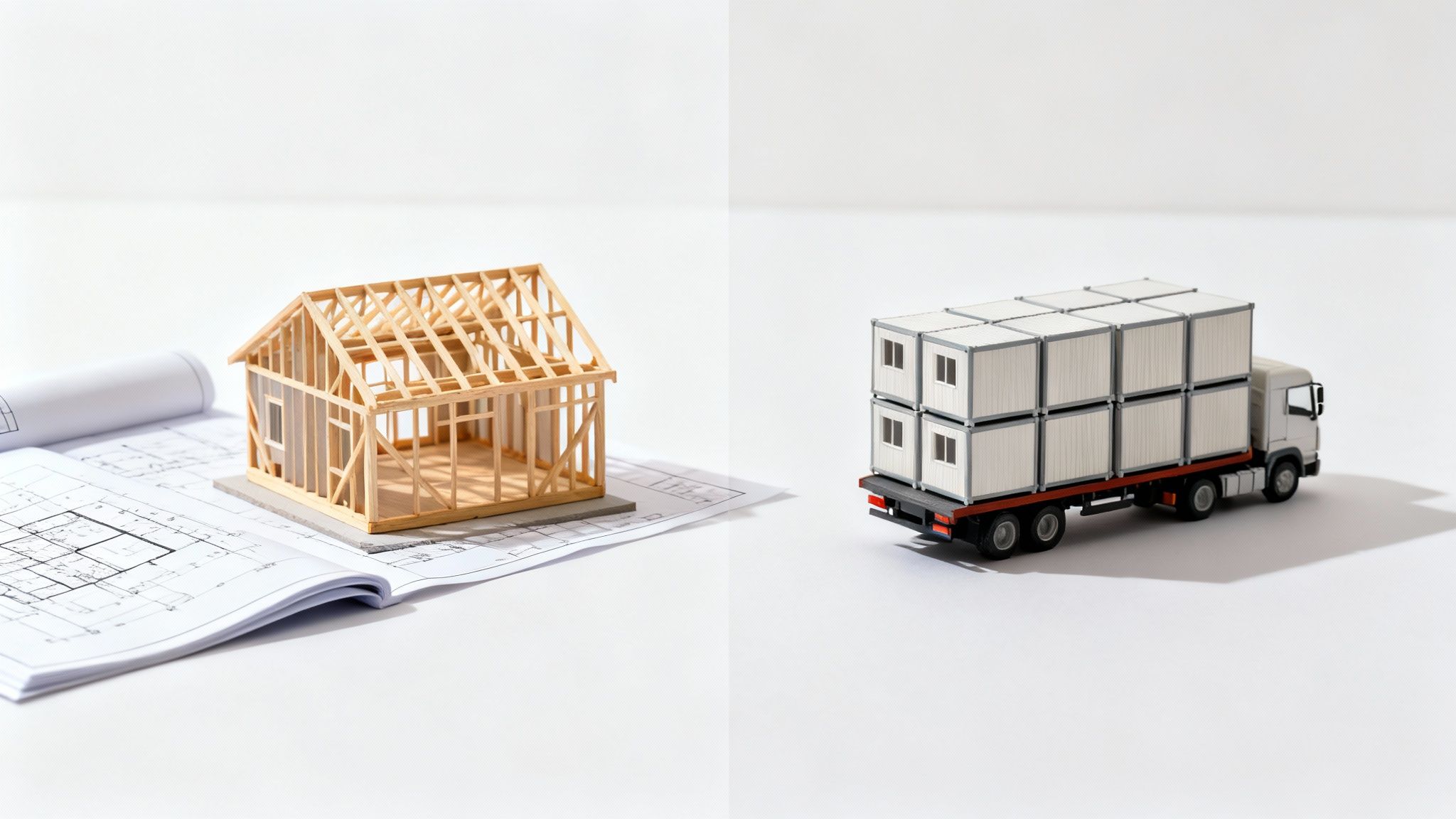
Think of a stick-built home as custom-tailored art. It’s built piece by piece, board by board, right there on your plot of land. It’s the way homes have been built for generations, and it offers incredible freedom.
Modular homes, on the other hand, are like high-end LEGOs. They're built in big sections (or "modules") inside a climate-controlled factory, then trucked to your property and pieced together with a crane. Both get you a beautiful house, but the journey from A to Z is totally different.
H3: You Dream It, We Build It: Customization Is King
The single biggest reason people choose a stick-built home is simple: customization. We're talking about near-total freedom. Want a two-story library with a spiral staircase? A quirky octagonal breakfast nook that catches the morning sun just right? No problem.
With stick-built, every wall, window, and roofline is up for discussion. You’re not limited by what can fit on the back of a truck.
Modular homes have gotten much more flexible over the years, but they still have their limits. The size of the modules, ceiling heights, and wild architectural designs are often constrained by the realities of road transportation. For folks in Fayetteville and Lumberton who want a home that’s a true one-of-one, stick-built is still the reigning champ.
"Our clients in Lumberton come to us because they don't want a cookie-cutter house. They want to build a legacy. The flexibility of stick-built construction allows us to honor that vision, creating a home that is deeply personal and perfectly suited to their land." – SEGC Project Manager
H3: The Great Debate: Timeline and Cost
Okay, let's talk about the big two: time and money.
Modular construction is often praised for its speed. Since the house is being built in a factory while we're prepping the foundation on-site, the whole process can be wrapped up in about 3-4 months. A stick-built home is a more sequential process and is at the mercy of Mother Nature, so it typically takes 5-6 months or even longer.
But faster doesn't automatically mean cheaper. While modular homes might seem like a bargain—sometimes up to 20% less expensive upfront—that gap can close pretty fast. You have to factor in the costs of trucking those huge modules to your site, renting a massive crane to put them in place, and all the on-site finish work to stitch it all together seamlessly.
When you weigh that against the long-term investment and higher resale value of a truly custom stick-built home, the numbers often tell a different story. For a really deep dive, we've put together a full guide on the differences between modular and stick-built homes.
H3: Craftsmanship and The Test of Time
At SEGC, we’re in the business of building legacies. As a Native American-owned firm with over 21 years of experience, we know that quality is built-in, not bolted on. The on-site nature of stick-built construction lets us obsess over every single detail. We see every joint framed, every nail driven, and every finish applied right there on your homesite. It’s a level of hands-on quality control that’s tough to beat.
To make things a bit clearer, let's put these construction methods head-to-head.
Comparing Home Construction Methods
This table gives you a quick snapshot of how stick-built, modular, and other prefab options stack up against each other across the factors that matter most.
| Feature | Stick-Built Home | Modular Home | Prefab Home |
|---|---|---|---|
| Customization | Virtually unlimited design freedom. The sky's the limit. | High, but with some structural and transportation limits. | Varies wildly, from basic kits to semi-custom panels. |
| Timeline | Typically 5-6+ months, can be affected by weather. | Often faster, around 3-4 months, due to parallel work. | Can be very fast, but depends on the system's complexity. |
| Initial Cost | Generally higher upfront investment for a custom build. | Can be up to 20% lower upfront, but add-ons add up. | Wide range; kit homes can be cheap, high-end panels aren't. |
| Resale Value | Traditionally the highest, seen as a premium "custom" home. | Good, but perception can vary by market and quality. | Can be lower, sometimes perceived as less permanent. |
| Quality Control | Continuous, hands-on supervision right on your property. | Excellent factory control, but final on-site assembly is key. | Quality is dictated by the factory's standards. |
Ultimately, there's no single "best" answer—just the best answer for you. If getting in the door as fast as possible on a tight budget is your number one goal, modular is a fantastic route.
But if your dream is a home with no compromises, built with hands-on craftsmanship to reflect your unique vision and stand as a long-term investment, then a stick-built home is the clearest path to building your family’s forever home.
Smart Ways to Keep Your Construction Budget in Check
Building your dream home is one of life's biggest milestones. But let's be real—what keeps that dream from turning into a financial nightmare is a firm grip on the budget. Managing stick-built home prices isn’t about cheaping out or skipping the good stuff; it’s about making smart, strategic moves that make every dollar count. This is where having an experienced builder in your corner makes all the difference.
After 21+ years of building homes for families in Fayetteville and Lumberton, we’ve learned a thing or two at SEGC. We don’t just build houses; we build legacies. And that starts with a budget that works for you, not against you.
Nail Down Your Must-Haves vs. Nice-to-Haves
First things first: you need to get brutally honest about what you truly need versus what you want. Grab a pen and paper (or your favorite notes app) and make two columns.
- Must-Haves: These are your non-negotiables. We're talking about the number of bedrooms that fits your family, a kitchen layout that actually works for cooking, or maybe a main-floor bedroom for aging in place. These are the bones of your home.
- Nice-to-Haves: This is the fun list! Think imported Italian marble, that fancy home theater system you’ve been dreaming of, or a professionally landscaped backyard oasis.
This simple exercise is a game-changer. It forces you to focus the budget on the things that will genuinely improve your day-to-day life. The "nice-to-haves" can always be added later if the numbers work out—or they become perfect future upgrade projects!
Actionable Insight: We sit down with every single client and hash this out. Our job is to listen and help you see the difference between features that will serve your family for years and shiny trends that just add to the bottom line. It's about client trust.
Smart Design Choices Equal Big Savings
You know where the biggest savings are found? In the blueprints, long before anyone breaks ground. The complexity of your home's design is one of the biggest drivers of cost.
Think about it: a home with a simple, clean rectangular shape is way cheaper to build than one with a dozen corners, bump-outs, and a wild roofline. Every extra angle adds labor and material costs to the foundation, framing, siding, and roofing. An efficient design doesn't have to be boring—it just means you’re investing in smart architecture, not complicated construction.
When carefully managing your construction budget, consider strategies that not only save money but also contribute to long-term gains, such as ways to Increase Property Value.
Spend a Little Now to Save a Lot Later
It might sound backward, but sometimes you have to spend more to save more, especially when it comes to energy efficiency.
Shelling out a bit more upfront for better insulation, high-performance windows, and an efficient HVAC system might bump up the initial stick-built home prices, but the long-term payoff is huge. These choices can dramatically lower your monthly utility bills for decades, saving you thousands of dollars over the life of your home. As a company rooted in the Lumberton community, we see this as simply building the right way—creating homes that are beautiful, sustainable, and affordable to own for generations to come. That’s how you build a real legacy.
Why Your Choice of Builder Matters Most
Let's be honest. Drowning in spreadsheets, comparing material costs, and trying to make sense of fluctuating market trends is exhausting. After all that analysis, you realize the biggest decision you'll make isn't about granite versus quartz—it's about who you trust to build your home.
That one choice ripples through everything: your budget, the schedule, and the actual quality of the place your family will grow up in. It’s a huge deal.
This is exactly where the SEGC difference becomes your unfair advantage. We're not just another general contractor. We're a Native American-owned, 8(a), and HUBZone certified firm with deep roots in the Fayetteville and Lumberton communities. With over 21+ years of proven results, our focus has always been simple: we build legacies, not just structures.
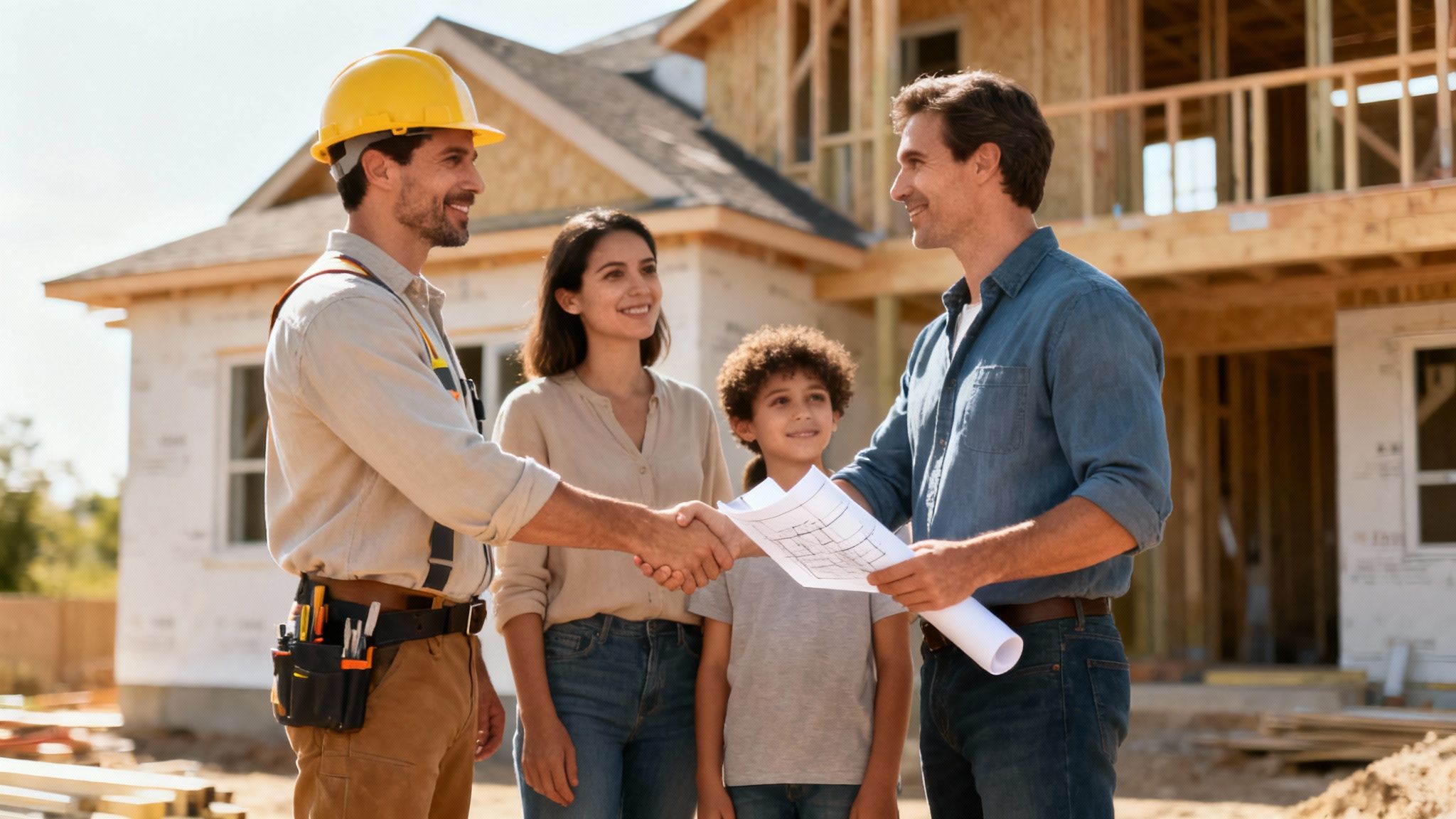
A Partnership Built on Trust
We recently worked with a military family moving to the Fayetteville area. They knew exactly what they wanted for their forever home, but their budget was tight, especially with costs on the rise. Instead of just handing them a high price tag, we sat down with them. We treated their dream like our own.
Our team got creative, value-engineering the plans by suggesting clever material swaps and small design adjustments that maintained quality while reducing cost. The result? They saved thousands of dollars without giving up an inch of the "wow" factor they dreamed of.
That’s how we operate. It's a true partnership, built on the kind of trust we earn through open communication, expert advice, and a rock-solid commitment to quality. You can get a better feel for our process by learning what makes a great custom home builder in North Carolina.
Navigating an Unpredictable Market Together
In a market this wild, a local, established builder is your anchor. The U.S. is currently facing a housing deficit of 3.8 million homes, which keeps pushing prices up. While you might hear that new home inventory is at its highest point since 2007, that's often because sales are slowing down, not because the supply problem is solved. An experienced guide can help you steer through these choppy waters.
Actionable Insight: Your home is more than an investment; it's the stage for your family's future. It's where memories are made and traditions are passed down. Let's talk about your vision. We're here to listen, guide, and help you build something that will truly last.
Our mission at SEGC is to empower you. Building a home should be an exciting journey, not a stressful transaction. It's about starting a conversation, building a relationship, and ultimately, building a legacy.
Got Questions About Home Building Costs? We've Got Answers.
Building a custom home is a huge journey, and it's totally normal to have a ton of questions about the price tag. With over 21+ years of building dream homes for families in Fayetteville and Lumberton, you can bet we’ve heard just about everything. Let's tackle some of the most common questions we get.
How Accurate Is That "Cost Per Square Foot" Number, Really?
Think of "cost per square foot" as a compass, not a GPS. It gives you a general direction for your budget, but it’s far from the final destination. It's a great starting point, but it can't account for the unique personality of your project.
The real price is a mix of three big things: the piece of land you're building on, how complex your architectural design is, and the quality of finishes you can't live without. A simple, flat lot is a world away from a sloped property needing major grading. Likewise, high-end marble countertops will have a very different impact on the budget than standard laminate.
That’s exactly why we ditch the fuzzy math. At SEGC, we give you a detailed, line-item budget before a single shovel hits the dirt. You'll see precisely where every dollar is going, giving you total clarity and the confidence to move forward.
What Are The Biggest "Gotchas" Or Hidden Costs?
If there's one thing that can throw a budget for a loop, it's the ground itself. Unexpected site work is the number one surprise. We’re talking about things you can't see, like poor soil that needs extra engineering for the foundation or finding out you need to run utilities a quarter-mile to the nearest hookup.
Permits and local impact fees can also be a real wild card, varying dramatically from one area to another. Our pre-construction process, which we’ve perfected over two decades, is all about digging into these details before we dig into the ground. Our deep roots in the Fayetteville community mean we know how to navigate the local requirements efficiently, saving you from nasty surprises.
Our whole philosophy is to solve problems on paper first, not after the concrete has been poured. It’s a huge part of the trust our clients place in us as a premier Native American-owned and HUBZone-certified builder.
Can I Save A Bundle By Being My Own General Contractor?
It’s tempting, right? On paper, cutting out the general contractor looks like an easy way to save money. In reality, it often ends up costing you more—in both cash and sanity.
Professional builders have a network of trusted, skilled subcontractors they've worked with for years. We also get access to builder pricing on materials that the general public doesn't. More importantly, an experienced builder is like an orchestra conductor, making sure the framers, plumbers, and electricians all show up in the right order and do their jobs correctly. This prevents the kind of costly mistakes and frustrating delays that can blow a DIY budget to bits.
Let us handle the stress. Your job should be to enjoy the process of watching your vision come to life.
Ready to stop guessing and start planning? The team at South Eastern General Contractors is here to build your legacy, not just a structure.