
Walk Through New House Checklist: 8 Key Tips for 2025
That final walk-through is more than just a formality; it's the moment your dream home becomes a reality. It’s the last crucial step before you're handed the keys to a legacy. But excitement can easily overshadow diligence, causing you to miss details that matter for years to come. So, what exactly should you be looking for? At South Eastern General Contractors (SEGC), we've spent over 21 years guiding families, military officers, and business owners through this exact process, not just in Fayetteville and Lumberton, but across North Carolina.
As a Native American-owned, 8(a), and HUBZone-certified firm, our commitment to quality and client trust is woven into every structure we build, from custom family homes to large-scale commercial projects. We believe in building legacies, not just structures, and that begins with getting every detail right before you move in.
This isn't just another generic list; it's a distillation of two decades of proven results and on-the-ground expertise, designed to empower you with the knowledge of a seasoned contractor. We’ve created the ultimate walk through new house checklist to give you peace of mind. We'll guide you through inspecting the critical systems and finishes, sharing the same meticulous attention to detail that marks an SEGC project. Our goal is to ensure you can close with absolute confidence, knowing your new home is truly sound, safe, and ready for your family's story. Let's make sure the house you've worked for is everything you envisioned.
1. Structural Integrity Assessment
Before you start picking out paint colors or arguing over who gets the bigger closet, let’s talk about the literal foundation of your future happiness: the home’s structure. A Structural Integrity Assessment is your deep dive into the bones of the house. Think of yourself as a detective looking for clues in the foundation, walls, ceilings, and roof. Spotting a problem here isn't about being picky; it's about avoiding a financial nightmare that could turn your dream home into a money pit.
This step is the most critical part of your walk through new house checklist because structural issues are often the most expensive and disruptive to fix. A buyer in Phoenix, for example, noticed subtle diagonal cracks near a doorway, which led to the discovery of major foundation settling. This observation saved them a future headache and negotiated a cool $25,000 off the purchase price for repairs. As a Native American-owned firm with over 21+ years of proven results in communities like Fayetteville and Lumberton, we've seen firsthand how a vigilant eye during this phase protects a family’s largest investment.
Your Structural Detective Toolkit
Get ready to channel your inner Sherlock Holmes. Here are some pro-level, actionable tips to guide your assessment:
- The Marble Test: Bring a small marble or ball bearing. Place it on various hard surfaces throughout the house. If it starts rolling on its own, you might have a sloping floor, which can indicate foundation or joist issues.
- Crack Analysis: Not all cracks are created equal. Small, vertical hairline cracks are often just paint or plaster settling. The ones to worry about are diagonal cracks, especially those wider than a quarter-inch that run from the corners of doors or windows. These can signal serious structural movement.
- Go Low, Then High: Crouch down and look along the exterior foundation from multiple angles. Look for cracks, crumbling concrete (spalling), or any signs that the foundation is bowing or bulging. Then, get a good look at the roofline from a distance. Does it look straight and even, or does it sag in the middle?
- Post-Rain Reconnaissance: If possible, schedule a visit after a heavy rain. This is the best time to spot active water intrusion in basements, crawl spaces, or attics, which can compromise structural elements over time.
By focusing on these core elements, you are not just walking through a house; you are evaluating the legacy and long-term stability of your potential home. A well-built structure is the cornerstone of any lasting legacy, a principle that guides every project we undertake.
2. Electrical System Evaluation
Beyond the surface appeal, it's the unseen network of wires and circuits that truly powers your modern life. An Electrical System Evaluation is your X-ray vision into the home's nervous system. You're not just flipping switches; you're investigating the safety, capacity, and reliability of the electrical infrastructure. Overlooking this step is like buying a high-performance sports car without checking the engine, a gamble that could leave you in the dark or worse, facing a serious safety hazard.
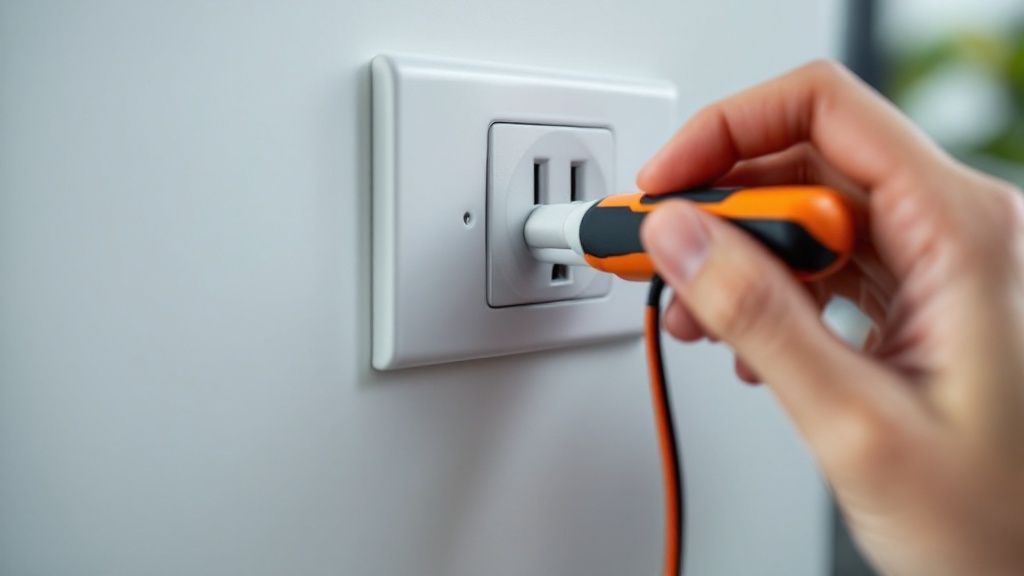
This part of your walk through new house checklist is crucial for both safety and functionality. An outdated or overloaded system can be a fire risk and won't support the demands of modern electronics and appliances. A couple in New Jersey, for instance, discovered their dream home had an ancient 60-amp service, completely insufficient for their needs. This discovery during the walkthrough allowed them to negotiate a $3,500 credit for a necessary panel upgrade. As a Native American-owned firm that has powered countless homes and federal projects in communities from Fayetteville to Lumberton, we know that a robust and safe electrical system is non-negotiable for a legacy home.
Your Electrical Investigator's Gear
Time to put on your inspector's hat and get some shocking (in a good way) insights. Here are some actionable tips to assess the home's electrical health:
- Bring an Outlet Tester: For about $10, an outlet tester is your best friend. Plug it into every outlet to check for correct wiring, proper grounding, and GFCI functionality. It’s a small tool that provides immense peace of mind.
- Panel Inspection: Open the main electrical panel (breaker box). Do the circuits have clear, legible labels? An unlabeled or messy panel is a red flag for amateur work. Count the circuits and check the main breaker's amperage (100 amps is a modern minimum, 200 is preferred).
- Feel the Heat: As you test switches and outlets, lightly touch the faceplates. Any warmth is a warning sign of a loose connection or overloaded circuit, which can be a serious fire hazard.
- The Extension Cord Clue: Look for an excessive number of extension cords or power strips in use. This often indicates an insufficient number of outlets, a common issue in older homes that can lead to overloading circuits.
- Outdoor Outlet Check: Ensure all exterior outlets are GFCI-protected and have weatherproof covers to prevent moisture from getting in. This is a critical safety feature often overlooked.
By methodically evaluating the electrical system, you ensure your new home can safely and reliably power your family's life for years to come. A well-designed electrical plan is foundational to any quality build, a standard of excellence we bring to every project.
3. Plumbing and Water System Inspection
Once you've confirmed the house won't fall down, it's time to check if it can hold water, literally. The Plumbing and Water System Inspection is your chance to play hydro-engineer, investigating everything from the water heater to the tiniest drain. This isn't just about avoiding a drippy faucet; it's about preventing catastrophic leaks, ensuring you don't run out of hot water mid-shower, and avoiding plumbing repairs that can drain your bank account faster than a clogged sink.

This part of your walk through new house checklist is crucial because plumbing problems are often hidden behind walls and can cause thousands in water damage before they're even noticed. For instance, a family in Nevada found an 18-year-old water heater on its last legs, negotiating a $1,200 replacement credit. In our 21+ years of building legacy homes in Fayetteville, we’ve seen how verifying a home’s plumbing integrity prevents future disasters and protects your family's daily comfort and health. It’s a core principle of the quality we deliver.
Your Plumbing Investigator's Checklist
Unleash your inner inspector with these actionable tips to assess the home's waterworks. You'll want to get a little hands-on here:
- The Simultaneous Flow Test: Turn on all faucets, flush all toilets, and run the showers at the same time. If the water pressure drops to a sad trickle, it could signal issues with the pipes or the municipal supply that need addressing.
- The Toilet Tank Dye Trick: Add a few drops of food coloring to the toilet tank (not the bowl). Wait 15-20 minutes without flushing. If any color appears in the bowl, you have a silent leak that's wasting water and money.
- Hot Water Marathon: Turn a faucet to full hot and let it run for at least five minutes. This tests the water heater's capacity and recovery rate. Note the manufacturer's date on the unit; if it's over 10-12 years old, it’s nearing the end of its life expectancy.
- Undercover Operations: Use your phone's flashlight to inspect under every sink and around the base of every toilet. Look for any signs of past or present leaks, like water stains, mold, soft wood, or active drips. Check any visible pipes in the basement or crawlspace for corrosion or leaks.
- Listen to the Drains: As you run water, listen to the drains. They should gurgle freely. A slow drain could be a simple clog or a sign of a more serious main sewer line issue, a costly repair we help our clients avoid through meticulous planning.
4. HVAC System Performance Check
Moving beyond the structure and into the systems that make a house a comfortable home, we arrive at the heart of your future comfort: the HVAC system. This is the expensive, complex machinery that keeps you cool in the summer and toasty in the winter. A full HVAC System Performance Check is a non-negotiable part of your walk through new house checklist. It involves testing the furnace, air conditioner, and all associated ductwork and controls. Ignoring this can lead to sweltering nights, chilly mornings, and a budget-busting replacement bill.
An HVAC system is one of the most expensive components to replace, making a thorough inspection vital. A family in Minnesota, for instance, noticed the furnace kicking on and off too frequently during their walkthrough. This short-cycling pointed to a faulty heat exchanger, a critical safety issue, which led to a $3,500 repair credit. As a local, Native American-owned firm with deep roots in North Carolina, we understand that a reliable HVAC system isn't just a luxury; it's essential for creating a safe and comfortable home for your family.
Your HVAC Investigation Checklist
Become an energy auditor for a day. These actionable tips will help you assess the health and efficiency of the home's climate control systems:
- Pre-Walkthrough Warm-Up (or Cool-Down): Ask for the seller to turn on the heat or AC at least 15-20 minutes before you arrive. This gives the system time to reach its operating temperature, allowing you to get an accurate performance reading as soon as you step inside.
- Feel the Flow: Place your hand or a light tissue over every vent in the house. You should feel consistent and strong airflow. Weak or non-existent flow in certain rooms could signal crushed, disconnected, or clogged ductwork.
- Listen for Trouble: A healthy HVAC system should hum along quietly. Pay close attention to any unusual sounds like grinding, high-pitched squealing, or loud banging when the unit kicks on or off. These are often the first signs of mechanical failure. While checking, it's also wise to understand what air duct cleaning entails to maintain optimal air quality and efficiency.
- Check the Filter: A quick peek at the air filter can tell you a lot about the system's maintenance history. A filter caked in dust and grime is a major red flag, suggesting the system has been neglected, which can strain components and shorten their lifespan.
- Age Isn't Just a Number: Locate the manufacturer's label on the indoor and outdoor units to determine their age. Air conditioners typically last 15-20 years, while furnaces can last 20-25 years. If the system is nearing the end of its life expectancy, you should budget for its eventual replacement.
A functional and efficient HVAC system is crucial for your family's comfort and your home's energy bills. If you uncover issues that require a professional touch, knowing how to find a good contractor is the next critical step.
5. Windows and Doors Assessment
Beyond providing a view and a way in, your windows and doors are the gatekeepers of your home's comfort, security, and energy budget. A thorough Windows and Doors Assessment is your chance to test these critical components for functionality, sealing, and overall condition. Think of it as interviewing each one for its job: Does it open smoothly? Does it lock securely? Does it keep the outside, outside? Spotting a faulty seal or a sticky lock now is about more than convenience; it's about preventing high energy bills, security vulnerabilities, and costly future replacements.
This part of your walk through new house checklist is vital because these elements are your home's first line of defense against the weather and unwanted guests. For example, a client of ours in the Fayetteville area was relieved when our team pointed out failed seals in several large windows during their build walkthrough, a catch that saved them from future energy loss and replacement costs. As a Native American-owned firm that builds with a commitment to local leadership and quality, we emphasize this inspection because we know that well-maintained windows and doors are fundamental to a secure, efficient, and comfortable home legacy.
Your Window and Door Inspector Kit
It’s time to get hands-on. Test every single window and door with the meticulousness of a security expert. Here are some actionable tips to guide your evaluation:
- The Full Cycle Test: Don't just peek through them. Open and close every single window and door completely. Do they stick, squeak, or jam? Do they operate smoothly? This simple action is your best indicator of their functional health.
- The Condensation Clue: Look closely at double-pane windows. Do you see any fog, moisture, or condensation trapped between the glass panes? This is a tell-tale sign that the seal has failed, drastically reducing its insulating properties.
- The Draft Detective: On a breezy day, or even using just your hand, run your fingers along the edges of all closed windows and door frames. Can you feel a draft? These small air leaks can add up to significant energy loss and discomfort. Check that weather stripping is intact and not brittle or cracked.
- Lockdown Protocol: Test every lock, latch, and deadbolt on every door and window. Do they engage easily and feel secure? Wiggle the door or window when locked to ensure there's no excessive play. Also, take inventory of all window screens and check their condition.
By methodically checking these portals, you are ensuring your home is a secure and efficient sanctuary. A home that is sealed from the elements is a home that is built to last, a core principle that informs every project we build.
6. Roof and Attic Condition Review
If the foundation is the home's bones, the roof is its first line of defense against the elements. A Roof and Attic Condition Review is far more than a quick glance upwards; it's a critical investigation into the most expensive protective layer of your home. A failing roof doesn't just mean a leak; it can lead to catastrophic damage to the attic, insulation, ceilings, and even the home's structure. Getting this wrong is an invitation for water damage, mold, and wallet-draining repairs.
This step is a non-negotiable part of your walk through new house checklist because a roof replacement is a massive expense. A family we worked with in Pennsylvania found tell-tale water stains in the attic, tracing them back to ice dam damage that had compromised the roof sheathing. This discovery allowed them to negotiate an $8,000 credit for roof repairs and attic remediation. As a Native American-owned firm with deep roots in North Carolina communities like Fayetteville, we emphasize that protecting what's under the roof starts by thoroughly inspecting the roof itself.
To help you understand the long-term implications, here is a quick reference on the typical lifespan of common roofing materials.
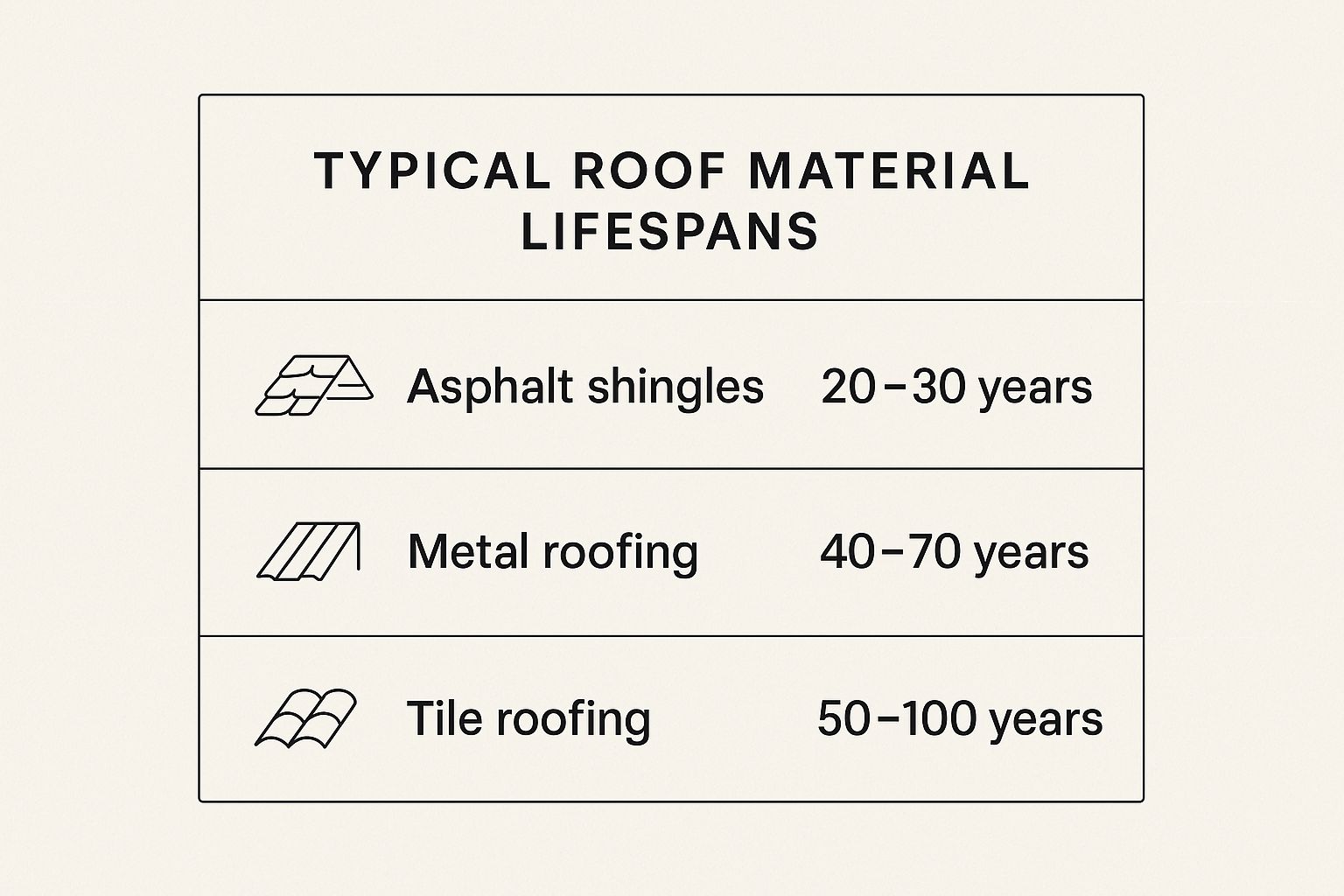
This quick comparison highlights how the initial roofing material choice impacts long-term maintenance costs and the home's overall resilience.
Your High-Altitude Inspection Guide
You don't need to climb a ladder to be an effective roof inspector. From the ground and the attic, you can spot the most common red flags.
- Binocular Reconnaissance: From a safe distance on the ground, use a pair of binoculars to scan the entire roof surface. Look for missing, cracked, or curling shingles. Pay close attention to the flashing around chimneys, vents, and skylights, as these are common failure points.
- The Gutter Clue: Check the gutters for an accumulation of black, sand-like granules. These granules protect asphalt shingles from UV rays, and a large amount in the gutters means the shingles are nearing the end of their life.
- Attic Sunshine Test: On a bright, sunny day, head into the attic (if it's safely accessible) and turn off any lights. Look for any pinpricks of daylight coming through the roof. Even a tiny hole can let in a surprising amount of water over time.
- Stain and Insulation Check: While in the attic, look for dark streaks or water stains on the underside of the roof deck or on the insulation. Also, measure the insulation depth; in North Carolina, you should see at least 10-14 inches to ensure proper energy efficiency. Inadequate ventilation (look for soffit and ridge vents) can cook your shingles from the inside out, drastically shortening their lifespan.
By meticulously examining the roof and attic, you are proactively protecting your investment from the top down. A sound, well-maintained roof is essential for the long-term integrity and legacy of a home, a standard of quality we bring to every project we build.
7. Appliances and Built-in Systems Testing
Now that you've confirmed the house won't fall down, let's move to the fun part: playing with all the gadgets. Testing the appliances and built-in systems is about ensuring the home’s modern conveniences are actually convenient. This is your chance to go on a button-pushing spree to check everything from the oven to the garbage disposal. Discovering a faulty appliance now prevents that "oh no" moment when your first celebratory dinner is half-cooked or your first load of dishes floods the kitchen.
This part of your walk through new house checklist is crucial for budgeting and negotiation. Appliances are expensive, and an unexpected replacement can strain your finances. A couple in Illinois, for instance, ran the dishwasher during their final walkthrough and noticed it wasn't draining. This simple test got them a $600 credit at closing. As a Native American-owned firm that has guided countless families through new home inspections in Fayetteville and Lumberton, we know that verifying these systems saves money and ensures your home is truly move-in ready from day one.
Your Appliance Whisperer Checklist
Time to put on your consumer investigator hat. These pro tips will help you thoroughly vet every machine in the house:
- Confirm What Stays: Before you start, double-check your purchase agreement to confirm exactly which appliances are included in the sale. Don't waste time testing a refrigerator the sellers are taking with them.
- The Dishwasher Dash: Run the dishwasher on a partial or rinse cycle. Listen for unusual grinding noises and, most importantly, open it at the end to ensure it drained properly. Keep an eye on the floor around it for any signs of leaks.
- The Heat Is On: Test every single burner on the stove and turn on the oven. If you have time, let the oven preheat to a set temperature to see if it heats up correctly and doesn’t emit strange smells (beyond the normal "first use" scent).
- Disposal Due Diligence: Run cold water and flip the switch on the garbage disposal. It should run smoothly without excessive rattling. Listen to make sure the water is draining quickly and not backing up.
- The Dollar Bill Seal Test: Take a dollar bill and close it in the refrigerator and freezer doors. If you can pull it out easily, the seal is weak, which means the appliance is wasting energy and not cooling efficiently.
- Age Before Beauty: Look for a manufacturer's sticker (often inside the door or on the back) to find the appliance's age. Most major appliances have a lifespan of 10-15 years. If they are nearing the end, you can start budgeting for replacements.
8. Interior Finishes and Safety Features Inspection
Now that we've covered the big structural stuff, it's time to zoom in on the details that make a house a home, and more importantly, a safe one. The Interior Finishes and Safety Features Inspection is where you scrutinize everything from the paint on the walls to the smoke detectors that protect your family. It's about spotting cosmetic flaws that signal deeper issues and verifying that critical safety equipment is present and functional. This isn't just about aesthetics; it’s about ensuring your home is move-in ready and up to code.
This part of your walk through new house checklist protects you from both hidden dangers and future expenses. Recently, a family in Virginia doing their walkthrough on a 3,000 sq ft home found only one lonely smoke detector. Bringing the house up to modern code with interconnected detectors cost them nearly $400, a cost they successfully negotiated with the seller. As a Native American-owned firm with HUBZone certification, we’ve managed complex projects in communities from Fayetteville to Lumberton, where attention to detail in the final finishes is paramount for both safety and client satisfaction.
Your Interior Detail and Safety Toolkit
Put on your inspector's hat, because the devil is truly in the details. Here are some actionable tips to ensure the inside of your home is as sound as its structure:
- The Sound & Sight Test: Walk every inch of the flooring, listening for squeaks and looking for loose or damaged boards. For tile, gently tap each one with a coin; a hollow sound can indicate it's loose. Then, look at walls from a sharp angle with a flashlight to reveal paint drips, patchy spots, or poor drywall work.
- Safety System Sweep: Press the 'test' button on every single smoke and carbon monoxide detector. They should all emit a loud alarm. Check their manufacturing dates; most need replacing every 10 years. Verify that legally required GFCI (Ground Fault Circuit Interrupter) outlets are installed within six feet of water sources like sinks and tubs.
- Cabinet & Counter Recon: Open every single cabinet and drawer. Check for smooth operation, proper alignment, and any signs of water damage, strange odors, or pests, especially under sinks. Run your hand along countertop seams to ensure they are smooth and flush.
- The Stairway Shake: Firmly grasp all stair railings and handrails. They should be rock-solid with zero wobble. Use a tape measure to check the spacing between balusters (the vertical posts); building codes, like the IRC, typically require them to be less than 4 inches apart to prevent children from getting stuck.
Focusing on these finishes and safety features ensures your new home is not only beautiful but also a secure environment. This commitment to quality control, from the foundation to the final touches, is what we pride ourselves on. For a more detailed look at what goes into a high-quality build, explore our comprehensive construction quality control checklist on southeasterngc.com.
New House Inspection Checklist Comparison
| Aspect | Structural Integrity Assessment | Electrical System Evaluation | Plumbing and Water System Inspection | HVAC System Performance Check | Windows and Doors Assessment | Roof and Attic Condition Review | Appliances and Built-in Systems Testing | Interior Finishes and Safety Features Inspection |
|---|---|---|---|---|---|---|---|---|
| Implementation Complexity 🔄 | High – Requires professional skills and detailed inspection | Medium – Needs tools and knowledge for electrical tests | Medium – Some hidden elements, needs thorough fixture checks | Medium – Seasonal limits, some hidden ductwork | Medium – Manual operation and visual inspection | Medium – Safety concerns for close roof inspection | Low to Medium – Functional tests, time-consuming | Low to Medium – Mostly visual and functional checks |
| Resource Requirements ⚡ | High – Professional inspector recommended | Medium – Outlet testers and circuit analyzers needed | Medium – Water flow and pressure testing equipment | Medium – HVAC equipment knowledge and some testing tools | Low – Basic tools and manual testing | Medium – Binoculars, safe roof access tools | Low – Basic appliance operation and visual checks | Low – Simple tools, test buttons, and visual inspection |
| Expected Outcomes 📊 | Early detection of costly, critical structural defects | Identification of hazards, code compliance, and upgrade needs | Detection of leaks, pressure issues, and system lifespan | Energy efficiency and comfort reliability assessment | Security, draft issues, and energy efficiency evaluation | Remaining lifespan and water intrusion risk assessment | Functionality confirmation and replacement budgeting | Safety hazards, cosmetic defect identification |
| Ideal Use Cases 💡 | Pre-purchase structural safety and negotiation leverage | Homes needing safe, modern electrical capacity | Homes with older or unknown plumbing conditions | Assessing HVAC comfort and efficiency pre-purchase | Evaluating home security and energy efficiency | Checking roof health and preventing water damage | Ensuring appliance operation at move-in and budgeting | Compliance and safety verification pre-move-in |
| Key Advantages ⭐ | Ensures occupant safety, prevents future legal issues | Prevents fire hazards, ensures adequate power supply | Finds hidden water damage, prevents mold and costly repairs | Improves energy savings, assures year-round comfort | Enhances security, reduces energy loss | Protects home structure, identifies urgent repairs | Prevents surprises, supports price negotiations | Enhances livability, ensures code compliance and safety |
Beyond the Checklist: Building Your Legacy with a Trusted Partner
Congratulations, you've made it! You are now armed with a formidable walk through new house checklist, a veritable swiss-army knife of knowledge designed to turn your final inspection from a daunting task into a confident stride toward homeownership. We've journeyed from the foundational bedrock of Structural Integrity to the intricate dance of the Electrical System Evaluation. We've dipped our toes into the Plumbing and Water System Inspection and felt the breeze of a perfectly calibrated HVAC System Performance Check.
You now know to scrutinize every seal during the Windows and Doors Assessment and to venture into the upper reaches for a thorough Roof and Attic Condition Review. You're prepared to put every gadget through its paces with the Appliances and Built-in Systems Testing and spot the tiniest flaw during the Interior Finishes and Safety Features Inspection. This isn't just about ticking boxes; it's about claiming your space with certainty and ensuring the canvas for your future is flawless.
The True Foundation of a Flawless Home
The ultimate goal of this exhaustive checklist is to ensure that the home you are about to inhabit is safe, functional, and finished to the standard you were promised. It’s your final opportunity to hold the builder accountable and to address issues before they become your responsibility. The real peace of mind, however, doesn't come from a sharp eye on walkthrough day. It comes from knowing your home was built on a foundation of integrity from the very first day of construction.
Key Insight: A perfect walkthrough is the final chapter of a story that began with a trustworthy builder. The quality you see at the end is a direct reflection of the character and commitment invested from the start.
This principle is the cornerstone of our philosophy at South Eastern General Contractors. For over 21 years, we have been that trusted partner for families, businesses, and government agencies throughout Fayetteville, Lumberton, and the surrounding communities. Our reputation, backed by over 100 five-star reviews and unique 8(a), HUBZone, and Native American-owned certifications, is built on a simple promise: we construct legacies, not just structures.
From Blueprint to "Welcome Home"
For our clients, the walk through new house checklist is often a formality, a final, pleasant confirmation of the quality they’ve witnessed at every stage. We believe the building process should be as sound and transparent as the final product. We’ve seen firsthand how a collaborative and client-focused approach prevents the very issues this checklist is designed to catch. From military families relocating to Fayetteville to retirees settling in North Carolina, we provide step-by-step guidance and utilize modern documentation tools to keep you fully informed and empowered.
Once your walkthrough is complete and any final adjustments are made, you can begin the exciting process of making your new house a home. This is where your personal story begins to fill the rooms, and where you might want to learn about effective space planning to make the most of your meticulously inspected layout. A well-built home is the perfect canvas for a well-lived life. The meticulous attention you've paid to every outlet and faucet is the same level of detail a true craftsman puts into every beam and joint. Your home is more than an asset; it’s the backdrop for your legacy.
A thorough walkthrough ensures your new house is move-in ready, but a partnership with the right builder ensures it’s legacy-ready. For over two decades, South Eastern General Contractors has been building trust and quality into every custom home and commercial project in the Fayetteville region. If you’re ready to build a lasting legacy on a foundation of integrity, visit South Eastern General Contractors to start the conversation today.